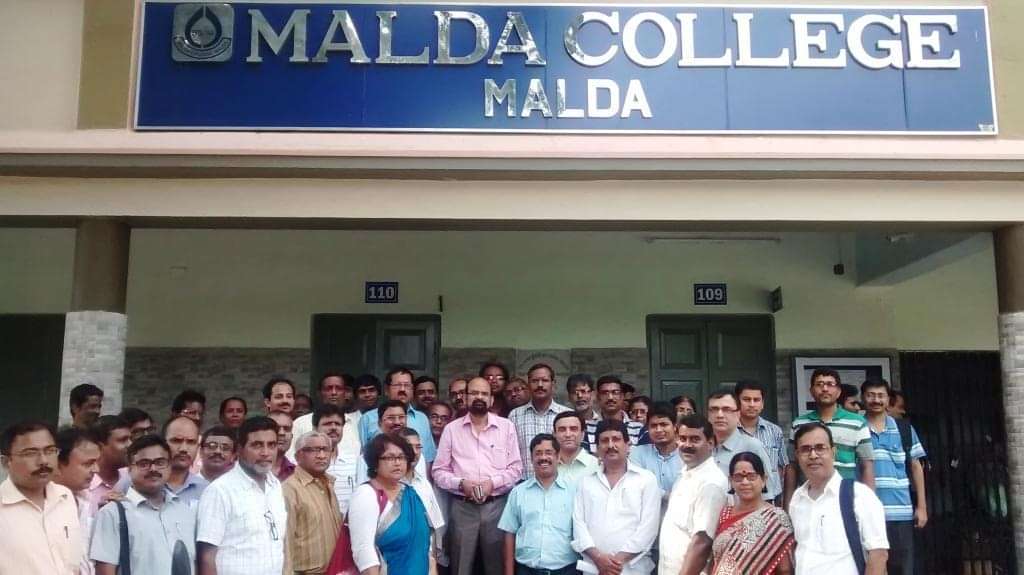
Malda College
About
OfficialMalda College is a other institution in Malda, established in 1944. Malda College, established in 1873, stands as one of the oldest and most historically significant educational institutions in Bengal, particularly in the Malda district of West Bengal. Founded during the British colonial era, the college has evolved from a single-faculty institution focused on classical humanities to a comprehensive university-affiliated college offering diverse programs spanning sciences, engineering, commerce, and humanities. The institution's longevity speaks to its resilience and adaptability through India's educational transformations, having survived colonial transitions, independence, and multiple educational reform cycles. The college is affiliated with the University of North Bengal, which imparts academic legitimacy and ensures curriculum alignment with national standards. While historically significant, Malda College operates within the constraints typical of tier-3 district colleges: limited research infrastructure, moderate faculty specialization, and dependence on university-prescribed syllabi rather than institutional autonomy in curriculum design. The college serves primarily the Malda district and surrounding regions, with a significant portion of its student body comprising first-generation learners and students from economically modest backgrounds. Academic Programs: The college offers undergraduate honors in Chemistry, Physics, Mathematics, Botany, Zoology, Microbiology, and Commerce. Postgraduate programs include MA Economics, MA History, MSc Chemistry, and MSc Physics. The institution does not offer engineering or professional programs like medicine or law. This limitation significantly impacts placement prospects for engineering aspirants, though it serves well those pursuing pure sciences and liberal arts education. The science departments maintain functional laboratories with equipment adequate for undergraduate practical training, though research-grade infrastructure remains limited. The commerce and economics departments focus on traditional accounting, business studies, and economic theory rather than applied management education. Research and Faculty: With approximately 45% of faculty holding PhDs, the research output is modest but emerging. Key research areas include organic chemistry, plant taxonomy, and historical studies of Bengal's regional past. The college has minimal industry partnerships and relies primarily on university-sanctioned research projects. Faculty members are generally accessible to students but constrained by heavy teaching loads (13-15 contact hours weekly) that limit mentoring capacity. Interdisciplinary collaboration is rare, and facilities for collaborative research between departments are minimal. Placement Reality: This is where prospective students must be candid with themselves. Malda College's placement record is below 40% for most programs, significantly lower than tier-1 and tier-2 institutions. Most placements occur through campus drives by teaching institutions, content writing firms, and small educational consultancies offering salaries in the 150,000-250,000 INR annual range. Mass recruitment into top-tier tech companies (TCS, Infosys, Wipro) does not occur. Students aspiring for management consulting, investment banking, or premium tech roles must pursue further studies (MBA, MS abroad) or relocate to metros for off-campus recruitment. The college does not have a dedicated placement cell with industry liaisons; placements occur somewhat haphazardly through alumni networks and individual faculty efforts. Campus Life: The 28-acre campus is aesthetically pleasant with century-old buildings reflecting architectural heritage, alongside modern classroom blocks constructed in the past two decades. The campus includes functioning libraries, sports facilities, and hostel accommodations. However, infrastructure maintenance is inconsistent—administrative offices are functional but not modern, sports equipment is aging, and WiFi coverage is patchy. The student body is culturally homogeneous, predominantly Bengali-speaking, with limited diversity in regional or international representation. Annual cultural fests and sports events occur but lack the scale and sponsorship of metropolitan institutions. The college maintains a conservative social environment; dating culture is subdued, and enforcement of curfews in hostels (particularly for women) is strict compared to urban college norms. Ragging incidents have been absent or minimal in recent years due to effective anti-ragging committees. Who Should Apply: Malda College is ideal for students prioritizing deep subject knowledge over career acceleration, those from Malda district seeking quality higher education without relocation, and learners preparing for competitive examinations like UPSC, banking, or teaching roles. It suits introverted personalities who thrive in smaller, tight-knit academic communities. The college is NOT recommended for those seeking tech internships, startup ecosystem immersion, or accelerated career advancement. Engineering aspirants must look to NITs or private engineering colleges. Medical aspirants must have AIIMS/NEET access. Business-focused students should consider tier-1 commerce colleges or IIMs. Notable Achievements: The college has produced several academics, journalists, and civil servants during its 150-year history. Recent graduates have cleared UPSC (administrative services), banking exams, and pursued higher studies in Indian and foreign universities. However, the college lacks prominent contemporary alumni in tech, entrepreneurship, or entertainment sectors. The institution's strength lies in producing informed citizens and dedicated educators rather than disruptive innovators or corporate leaders.