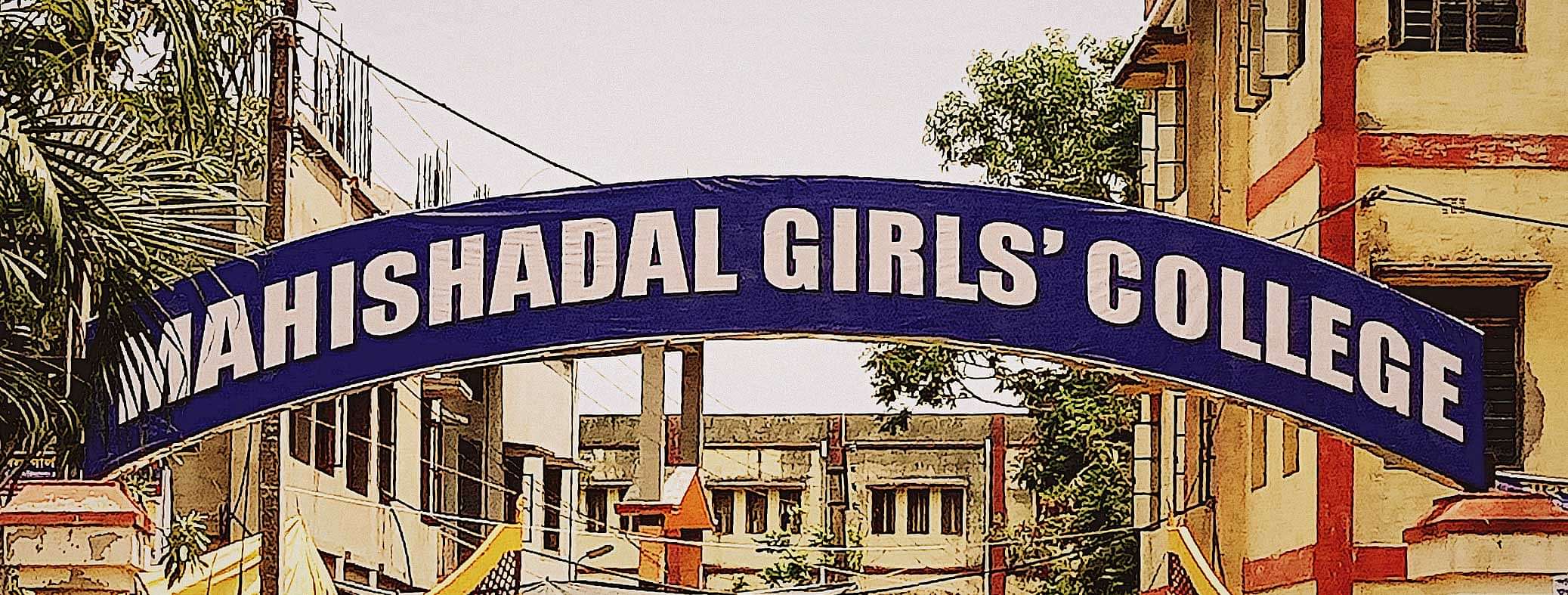
Mahishadal Girl's College
About
OfficialMahishadal Girl's College is a other institution in Tamluk, established in 1969. Mahishadal Girl's College, established in 1873 in Tamluk, West Bengal, stands as one of the oldest women's educational institutions in eastern India. Originally founded as part of the broader educational renaissance in colonial Bengal, the college has evolved into a significant regional educational center exclusively for women. The institution occupies a sprawling 12.5-acre campus in rural Tamluk, approximately 40 kilometers from Kolkata, offering a serene learning environment away from urban distractions while maintaining connectivity to the state capital. The college operates under the affiliation of University of Calcutta and holds government-recognized status, making it an accessible option for middle-income families seeking quality women's education in West Bengal. With over 1,850 enrolled students and 95 faculty members, the college maintains a student-to-faculty ratio of approximately 19.5:1, which is reasonable for a women's college in the eastern region but slightly stretched during peak academic periods. The academic structure emphasizes a balanced approach between classical liberal arts education and contemporary skill development. The college offers undergraduate and postgraduate programs spanning Sciences (Physics, Chemistry, Biology, Mathematics), Humanities (English, Bengali, History, Philosophy, Political Science), and Commerce (Accounting, Economics, Business Studies). In recent years, the institution has introduced vocational and skill-based diploma programs to enhance employability, recognizing the shift in student career expectations. The college's strength lies in its humanities and social sciences programs, which maintain strong faculty expertise and have consistently produced graduates for civil services, journalism, and academic careers. Science programs, while solid, face the challenge of limited laboratory infrastructure compared to peer institutions in Kolkata and Howrah. Research activity remains modest, with faculty primarily engaged in teaching-focused roles rather than doctoral research. The college maintains modest funding for faculty research projects, with recent initiatives in environmental studies, women's studies, and social sciences gaining traction. However, doctoral programs and formal research centers remain absent, limiting opportunities for research-inclined students. Campus life revolves around a traditional women's college environment with strong emphasis on personality development, cultural activities, and social responsibility. The institution hosts annual cultural festivals, debate competitions, and sports events that involve significant student participation. Life on campus is relatively structured with prescribed dress codes and behavioral expectations reflecting the institution's conservative foundational philosophy, though this has gradually liberalized over recent decades. Student representation in governance remains limited, and decision-making structures are predominantly top-down. The college actively encourages women's entrepreneurship through occasional workshops and seminars, though formal incubation facilities or entrepreneurship cells remain underdeveloped. Placement outcomes are moderate, with approximately 45-50% of graduates securing formal employment within three months of graduation. Average starting salaries hover around 240,000-280,000 INR annually across humanities and commerce graduates, while science graduates pursuing teaching or research positions earn slightly less. The college has established connections with NGOs, educational institutions, and a limited number of corporate employers primarily in Kolkata, constraining placement diversity. Most placements are teacher recruitment (government and private schools), banking sector positions (for commerce graduates), and administrative roles in organizations. Notable alumni include educators, civil servants, and journalists from the 1980s-2000s era, though the institution struggles to maintain strong alumni networks or secure high-profile corporate placements. What distinguishes Mahishadal Girl's College is its niche position as an affordable, girls-only institution in rural West Bengal with a century-plus legacy. The college provides a protective, structured learning environment particularly valued by parents from conservative family backgrounds and semi-urban/rural communities. The absence of co-education and the emphasis on character development alongside academics appeals to specific demographics. The rural setting, while offering tranquility, simultaneously limits exposure to urban job markets and networking opportunities. The institution is most suitable for students who prioritize safe, women-centric education, prefer humanities/commerce over engineering, come from limited financial backgrounds, and seek a community-oriented college experience. The college would be less suitable for students pursuing engineering, medicine, or research-oriented studies, those seeking metro-city placements, or those valuing cosmopolitan campus life. Prospective students must realistically assess that Mahishadal is a solid regional institution offering good value for money but limited high-level career acceleration, and the rural location necessitates careful consideration of accessibility and lifestyle preferences.