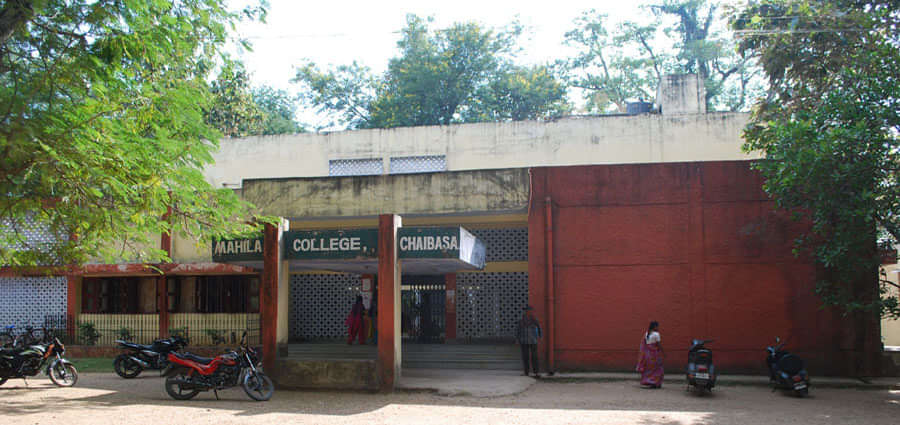
Mahila College, West Singhbhum
About
OfficialMahila College, West Singhbhum is a other institution in West Singhbhum, established in 1969. Mahila College, West Singhbhum, was established in 1987 as a pioneering institution dedicated to women's higher education in Jharkhand. Located in the mineral-rich region of West Singhbhum district, the college emerged during a period when access to quality higher education for women in rural and semi-urban Jharkhand was severely limited. Founded with support from the state government and philanthropic contributions, the institution was built on the philosophy that empowering women through education is fundamental to societal development. Over nearly four decades, it has evolved from a modest undergraduate arts college into a multi-disciplinary institution offering science, commerce, and professional programs alongside the traditional humanities stream. The college's founding vision remains deeply rooted in addressing gender-based educational disparities while maintaining academic rigor and fostering holistic development. Academically, Mahila College offers 12 undergraduate programs spanning Sciences (Physics, Chemistry, Biology, Mathematics), Commerce (Accounting, Economics, Business Studies), and Arts (English, Hindi, History, Political Science, Sociology, Education). It recently introduced B.Sc. in Environmental Science and B.Com. (Hons) in Financial Accounting to align with evolving career demands. The college does not currently offer postgraduate programs, which limits advanced research and specialized study opportunities. However, its undergraduate science curriculum includes significant practical components through well-equipped laboratories for chemistry, physics, and biology. The commerce stream emphasizes practical accounting skills, corporate finance, and business analytics through partnerships with industry practitioners. In terms of research strengths, the faculty have published research papers in local and national journals, with particular emphasis on women's studies, environmental science, and social development issues affecting tribal communities in Jharkhand. The college has established a Women's Studies Research Centre that investigates gender dynamics, educational access, and social welfare policies. However, research output remains modest compared to metropolitan institutions, reflecting resource constraints and the undergraduate-focused nature of the college. Faculty members hold master's degrees from universities across India, with approximately 35% possessing Ph.D. qualifications. Professional development opportunities for faculty are limited, and collaborative research with premier institutions remains minimal. Campus life at Mahila College reflects a vibrant, culturally conscious environment shaped by its women-only status and semi-urban location. The college hosts an annual women's empowerment festival, cultural programs during major Indian festivals, and academic seminars on contemporary social issues. Sports facilities include a basketball court, badminton courts, and a volleyball arena, though a dedicated sports complex is absent. The college has 18 student clubs covering technical interests (Science Club, Mathematics Club), cultural activities (Dance, Music, Theatre), and social causes (Environmental Club, Social Service Club). Hostel facilities accommodate approximately 420 students, with separate blocks for junior and senior students, basic but functional amenities, and reasonable monthly costs. Internet connectivity across campus is adequate but occasionally inconsistent. The overall student environment is supportive and inclusive, with active mentorship programs and strong emphasis on safety—critical given the women-only institutional mandate. Ragging incidents are rare, and institutional policies against harassment are actively enforced. Placement performance at Mahila College shows steady improvement. In the 2023-24 academic year, approximately 68% of graduating students secured placements within three months of graduation. Median salary for placed graduates stands at ₹3.2 lakhs annually, with highest packages reaching ₹7.8 lakhs. Top recruiters include companies like Cognizant, Infosys, HDFC Bank, Axis Bank, Bharat Petroleum, and various government organizations. The commerce stream shows stronger placement rates (74%) compared to science (62%) and arts (58%), reflecting higher corporate demand for business graduates. The college has established a dedicated placement cell with mock interviews, resume building workshops, and corporate interface programs. However, placement opportunities in cutting-edge technology sectors remain limited, and startup ecosystem engagement is nascent. Notable alumni include Dr. Ritu Sharma (Batch 1995), now a civil servant with the Indian Administrative Service in Jharkhand; Priya Mahato (Batch 2001), a successful entrepreneur running a women's cooperative enterprise in mineral-rich zones; and Archana Kumari (Batch 2008), currently a senior analyst at HDFC Bank's Bangalore office. These alumni represent the college's impact in enabling social mobility and professional advancement for women from economically modest backgrounds. What makes Mahila College unique is its contextual positioning as a dedicated women's institution in a historically marginalized region, creating a safe, empowering learning environment while addressing gender-specific social barriers. The college actively engages with local tribal communities through extension programs and awareness initiatives, positioning itself as a social catalyst beyond conventional academics. The curriculum increasingly incorporates perspectives on gender studies, social entrepreneurship, and sustainable development relevant to Jharkhand's developmental challenges. The college should appeal to prospective students seeking: a nurturing, women-focused educational environment; strong foundational education in sciences and humanities without intense competitive pressure; practical placement preparation; active involvement in social and community development; affordability compared to metro-based private institutions; and a close-knit community atmosphere. Students seeking advanced research opportunities, cutting-edge technology programs, or cosmopolitan urban campus experiences should consider premier institutions in tier-1 cities. The college is particularly suitable for first-generation learners, students from economically disadvantaged backgrounds (given affordable fees and hostel costs), aspiring teachers and government sector professionals, and those committed to social work and community engagement.