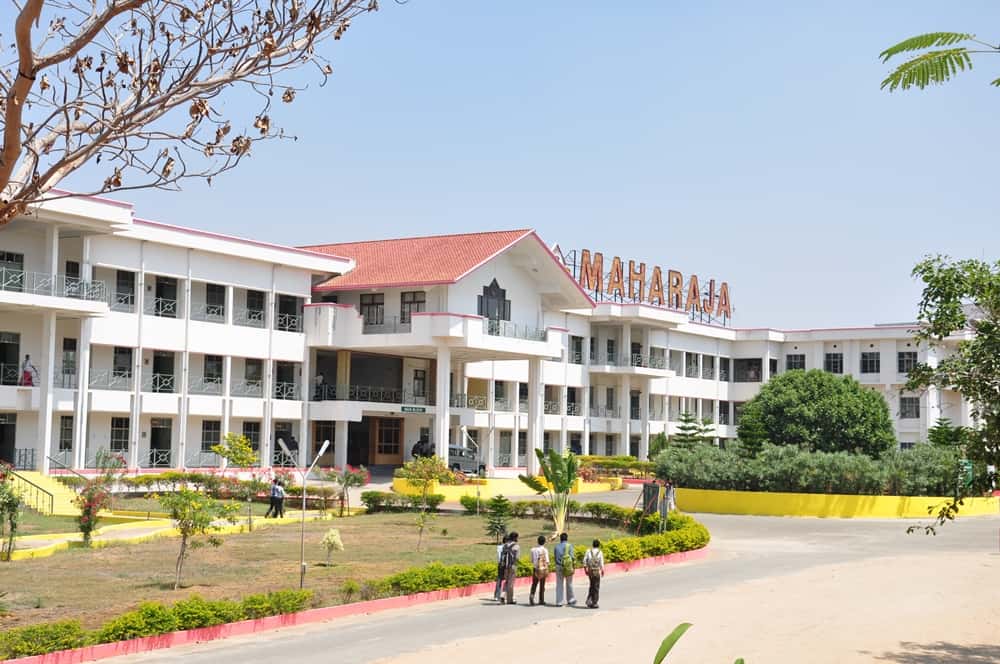
Maharaja College
About
OfficialMaharaja College is a other institution in Arrah, established in 1954. Maharaja College, Arrah, established in 1875, is one of Bihar's oldest and most respected undergraduate institutions with nearly 150 years of educational heritage. Located in Arrah, a historic town in Bhojpur district, the college serves primarily students from Bihar and Uttar Pradesh. The institution operates under affiliation to Aryabhatta Knowledge University (formerly Nalanda Open University) and maintains recognition from multiple academic bodies. The college offers a comprehensive range of undergraduate programs across Sciences, Commerce, and Arts streams, with recent expansion into vocational and diploma courses. Core programs include B.Sc. (Physics, Chemistry, Mathematics), B.Sc. (Biology), B.Com., B.A. (Hons & Regular), and various certificate programs. The student body is predominantly first-generation learners seeking quality education at affordable rates in their home region. Academic Structure: The college follows semester-based evaluation with internal continuous assessment components. Faculty engagement is traditional, with limited research output compared to metropolitan institutions. The library houses approximately 15,000 volumes with limited digital resources. Computer labs exist but are outdated with older systems and inconsistent internet connectivity. Research and Innovation: The institution operates as a teaching college with minimal formal research infrastructure. Faculty research publications are limited, and PhD programs are not offered. Some faculty members engage in independent research but lack dedicated funding mechanisms. The college does not maintain formal industry partnerships or collaborative research agreements. Placement Ecosystem: Placements are modest compared to premier institutions. The college has a dedicated placement cell that coordinates with regional recruiters. Most placements are in teaching, banking (clerical roles), government exams coaching, and local administrative positions. Engineering companies rarely visit. IT sector recruitment is virtually absent. Average salary packages range from ₹2.5-4 lakhs annually. Many students pursue civil service examination coaching or further education instead of direct placement. Campus Infrastructure: The 18.5-acre campus contains aging academic buildings, two library blocks, basic chemistry and physics labs, and a modest sports ground. The hostel infrastructure is functional but cramped, with 4-6 students per room standard. Electricity and water supply are inconsistent during summer months. Internet connectivity is available but operates at 4-8 Mbps, insufficient for online coursework. The canteen serves basic vegetarian and non-vegetarian meals at subsidized rates. Student Demographics: The college primarily attracts students from rural and semi-urban Bihar, with limited aspirations toward metropolitan job markets. Family incomes are typically middle-class or lower-middle-class. Students are generally well-mannered and focused on degree completion rather than competitive examinations. Gender ratio is approximately 55:45 (female:male) across streams. Notable Alumni: The college produced several IAS/PCS officers, university professors, and regional businessmen, though fewer contemporary success stories compared to metro-based institutions. Alumni network is weak for career advancement. Campus Culture: The environment is traditional and academically focused. Cultural and sports activities occur annually but lack professional organization. Ragging is minimal due to strict institutional policies. The social atmosphere is conservative; dating and mixed-gender socializing are socially discouraged. Who Should Apply: First-generation learners from Bihar/UP seeking affordable, quality undergraduate education without metropolitan pressure. Students comfortable with limited placements and willing to pursue competitive exams (UPSC, BPSC, SSC). Those prioritizing hometown location and affordable living costs. NOT suitable for students targeting IT/engineering careers, startup ecosystems, or metropolitan job markets. Not recommended for students needing world-class research infrastructure. Value Proposition: Exceptional affordability (₹20,000-35,000 annually), safe campus environment, proximity to hometowns, strong academic foundation for civil service aspirants. Drawbacks include limited placement opportunities, outdated infrastructure, weak international exposure, and minimal research culture. The college excels at providing foundational education but falls short on career acceleration or specialized training.