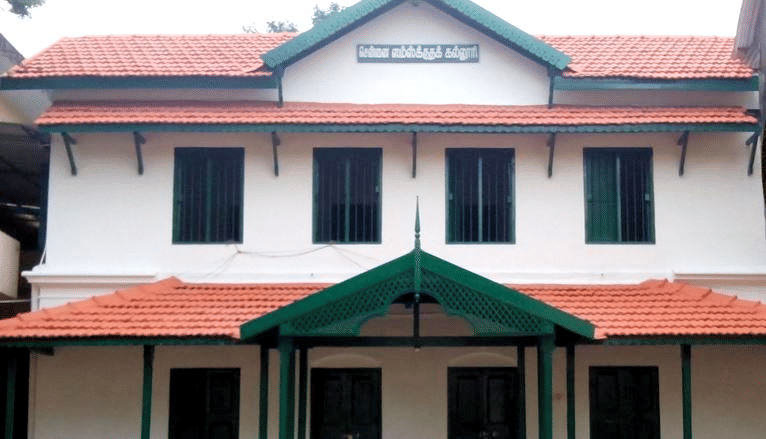
The Madras Sanskrit College
About
OfficialThe Madras Sanskrit College is a other institution in Chennai, established in 1906. The Madras Sanskrit College, established in 1806, stands as one of India's oldest Sanskrit educational institutions and a significant custodian of classical Sanskrit learning in South India. Located in the culturally rich Mylapore neighborhood of Chennai, the college has maintained its commitment to preserving, propagating, and advancing Sanskrit language, literature, and philosophy for over two centuries. Historically founded during the British colonial period, the institution emerged as a center for traditional Hindu scholarship and has evolved into a modern academic establishment that balances ancient pedagogical methods with contemporary educational approaches. The college's founding reflected the intellectual vision of scholars and community leaders who recognized the importance of preserving Sanskrit knowledge during a period of significant cultural transition. The institution's location in Mylapore—a historically significant area with temples, ashrams, and traditional learning centers—has been instrumental in maintaining its cultural identity and academic focus. The college operates under the affiliation of the University of Madras and functions as an autonomous institution, allowing it greater academic flexibility in curriculum design and pedagogical innovation. Its academic programs span undergraduate and postgraduate levels, with specialized concentrations in Sanskrit Grammar (Vyakarana), Vedic Studies, Sanskrit Literature, Philosophy (Darshana), and Classical Poetry. The college maintains rigorous Sanskrit-focused curricula while increasingly incorporating comparative literature, linguistics, and interfaith philosophical studies into its offerings. Research activities at Madras Sanskrit College focus on textual analysis, manuscript preservation, comparative philosophy between Sanskrit and Western traditions, and the application of classical knowledge systems to contemporary problems. The institution has developed specialized research units examining the Vedas, Upanishads, Puranas, and classical philosophical texts. Faculty members have contributed significantly to Sanskrit scholarship through publications in national and international journals, though the college's research output remains modest compared to larger state universities. The college has begun digital preservation projects for ancient manuscripts, recognizing the urgent need to digitize and protect Sanskrit texts housed in its archives. Campus life at Madras Sanskrit College reflects its cultural mission while accommodating modern student expectations. The institution hosts regular Sanskrit recitation competitions (Vag-Japa), debate forums on philosophical topics, and cultural programs featuring classical Indian arts and music. Student organizations focus on language preservation, community outreach in Sanskrit education, and interfaith dialogue. The college organizes annual Sanskrit festivals attracting scholars and students from across India, positioning itself as a nodal center for Sanskrit learning in South India. Placement outcomes for Madras Sanskrit College graduates differ significantly from professional institutions—the majority of graduates pursue academic careers through higher studies rather than conventional corporate placements. Alumni have secured positions in universities, research institutes, schools, cultural organizations, and heritage preservation bodies. Some graduates have ventured into publishing, content creation for cultural organizations, journalism with a focus on heritage, and consulting roles with institutions focused on traditional knowledge systems. Teaching remains the primary career path for Sanskrit graduates, with many pursuing doctoral studies in Sanskrit, Comparative Philosophy, or Linguistics. The college's location in Chennai, a major educational and cultural hub, provides networking opportunities with other institutions and cultural organizations. Notable alumni include Sanskrit scholars who have held positions at prestigious universities, published significant research on Vedic interpretation, contributed to UNESCO heritage preservation projects, and founded organizations dedicated to Sanskrit education and cultural preservation. The college also counts among its alumni successful teachers who have established Sanskrit programs in schools, cultural commentators and writers who promote classical knowledge to contemporary audiences, and administrative professionals in educational governance. Who should apply: Madras Sanskrit College is ideal for students with genuine passion for Sanskrit language, Indian classical philosophy, and cultural heritage preservation. Applicants should have interest in scholarly pursuits rather than conventional career advancement, as the institution's value proposition centers on intellectual development and academic enrichment rather than corporate placements. The college suits students interested in pursuing research, teaching, academic writing, or roles in cultural and heritage organizations. It appeals to individuals seeking an intellectually rigorous environment grounded in traditional knowledge systems, students from Sanskrit-medium schooling backgrounds, and those aspiring to contribute to the preservation and propagation of Indian classical knowledge. The institution works best for self-motivated learners who can navigate limited placement infrastructure by independently creating career pathways through higher studies and cultural organizations. Students uncomfortable with Sanskrit-intensive curricula or seeking primarily vocational training should explore alternative institutions. The college demands dedication to academic pursuits, comfort with language-intensive study, and appreciation for philosophical contemplation—qualities not universally aligned with contemporary higher-education expectations but deeply rewarding for matched students.