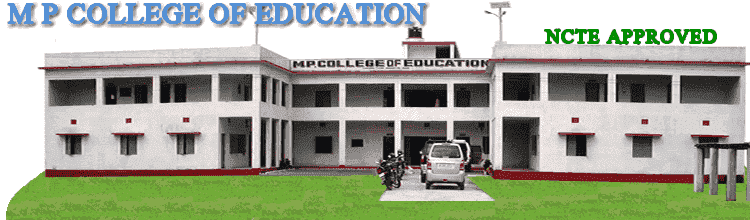
M P College of Education
About
OfficialM P College of Education is a other institution in Madhepura, established in 2009. M P College of Education is a teacher training institution located in Madhepura, a district town in North Bihar, India. The college is affiliated with the Lalit Narayan Mithila University (LNMU) based in Darbhanga, and operates under the regulatory framework of the Department of Education, Bihar Government. Founded in the early 2000s as a response to the acute shortage of trained educators in the region, the college has gradually established itself as a modest but functional facility for producing qualified teachers for primary and secondary schools across Bihar. The institution primarily focuses on undergraduate and postgraduate B.Ed (Bachelor of Education) and M.Ed (Master of Education) programs, which remain its core offerings. The college is situated in rural Madhepura, a district characterized by agricultural economy, limited urban infrastructure, and significant educational disparity. This setting presents both advantages and challenges: while the low cost of living makes education accessible to economically weaker students, the rural environment offers limited exposure to modern educational infrastructure, technology-driven learning, and networking opportunities that urban institutions provide. The college operates a modest campus with basic buildings, a small library, and limited laboratory facilities. Faculty members are primarily trained educators with master's degrees from various universities, though advanced research qualifications are limited. The curriculum follows the LNMU syllabus strictly, with minimal autonomy in course design. Academic emphasis is placed on teaching methodology, educational psychology, and pedagogy rather than research or innovation. Placements are primarily in government and private schools across Bihar and neighboring states, with successful alumni working as educators in schools ranging from primary to senior secondary levels. Several graduates have progressed to become school principals and district-level education officers. The college has produced trained teachers who serve remote villages and small towns across the region, contributing meaningfully to basic education access. However, it must be noted that the institution lacks facilities for advanced research, has limited digital infrastructure, offers no hostel facilities, and operates with constrained budgets. The college is NOT suitable for students seeking world-class education, international exposure, cutting-edge technology, or corporate placements. It is specifically designed for educationally ambitious students from rural and economically disadvantaged backgrounds who aspire to become qualified teachers and serve their communities. The college's strength lies in its affordability, focus on teaching excellence, and deep community integration. Its primary weakness is the limitation of rural setting, lack of urban amenities, and absence of research culture. Students who enroll here are typically local or from nearby districts, from families with limited means, and with genuine passion for teaching as a career. The institution serves a crucial social function in teacher education for an underdeveloped region, though it cannot compete with central universities or metro-based education colleges on infrastructure or placement packages.