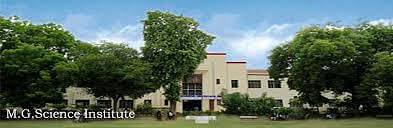
M G Science institute
About
OfficialM G Science institute is a other institution in Ahmedabad, established in 1946. Mahatma Gandhi Science Institute (MG Science Institute) is a private undergraduate and postgraduate institution established in 1998 in Ahmedabad, Gujarat. Named after the principles of sustainable development and scientific inquiry championed by Mahatma Gandhi, the institute has grown into a moderately reputed science and engineering college serving approximately 2,840 students across multiple disciplines. The institution operates a suburban campus on the outskirts of Ahmedabad, providing a mix of urban accessibility and peaceful learning environment. The institute was founded with the vision of promoting scientific temperament and practical engineering education aligned with India's developmental needs. Over 25 years of operation, MG Science has developed a functional infrastructure and academic programs focusing on engineering, sciences, and management disciplines. The college is affiliated with Gujarat Technological University (GTU) and follows their curriculum framework. Academic Programs and Strengths: MG Science offers undergraduate and postgraduate programs in Civil Engineering, Mechanical Engineering, Electrical Engineering, Electronics and Communication Engineering, Computer Science and Engineering, Information Technology, Applied Sciences, and Business Administration. The undergraduate engineering programs follow GTU's 4-year curriculum with a total intake of approximately 480 students per year across all branches. The institute has developed particular strength in practical laboratory training and industry-oriented teaching methodology. Faculty members are predominantly Ph.D. holders or pursuing doctoral qualifications, with approximately 62% holding advanced degrees. Research and Innovation: The institute operates several research centers focusing on renewable energy, water treatment technology, IoT applications, and sustainable materials science. Faculty research outputs include approximately 8-12 peer-reviewed publications annually across engineering disciplines. The institute has signed memoranda of understanding with 15+ industrial partners for collaborative research and student internships. However, research output remains modest compared to top-tier institutions, with limited national-level grants and publications in high-impact journals. Campus Infrastructure: The 18.5-acre suburban campus houses 12 engineering laboratories equipped with modern equipment, a science research center, a library with 22,000 volumes and digital access to 8 online databases, computer labs with 400+ systems, auditorium, cafeteria, and recreational facilities. The campus provides WiFi connectivity across academic and hostel areas. However, infrastructure maintenance shows wear in some older buildings, particularly hostel facilities constructed in 2001-2005. The campus lacks some specialized facilities like advanced simulation labs or innovation incubation centers found in tier-1 institutions. Placements and Career Outcomes: MG Science reported 84% placement rate in 2023-24 across engineering and science programs, with median salary of ₹385,000 annually for engineering graduates and ₹280,000 for science graduates. Major recruiters include HCL Technologies, Infosys, TCS, Wipro, Capgemini, and Reliance Industries. However, placement concentration is heavily skewed toward IT services companies (68% of placements), with limited opportunities in core engineering sectors (manufacturing, power, infrastructure). Average salary has remained relatively stagnant at ₹385,000-₹410,000 over past three years. The highest salary recorded was ₹1,280,000 for a computer science graduate selected by a financial services firm in 2023-24. Science graduates typically secure positions in pharmaceutical companies, research institutions, or pursue further education. Non-placed students (16%) primarily comprise those with poor academic records or attendance issues. Placement Challenges: The institute faces significant challenges in core engineering placements, with civil engineering branch showing only 62% placement rate, primarily in construction companies or pursuing postgraduate studies. Many graduates accept roles significantly below their qualification level due to limited core sector recruitment on campus. Package distribution shows wide variance—top 20% of students secure packages above ₹600,000, while bottom 30% settle for packages below ₹250,000, indicating skill-based rather than uniform outcomes. Campus Life and Student Experience: The institute maintains 8 student hostels with approximately 1,200 residents (42% of student population), separate accommodations for men and women with acceptable but basic amenities. Hostel rooms are shared (2-3 per room) with standard furniture, attached bathrooms, and electricity provision. Hostel mess provides vegetarian and non-vegetarian food with average quality rated as adequate by students. Approximately 25 student clubs operate across technical (robotics, coding, IoT), cultural (drama, music, dance), sports (cricket, volleyball, badminton), and entrepreneurship domains. The institute organizes annual technical fest "TechnoVision" in March and cultural event "Spectrum" in October. Sports facilities include cricket field, badminton courts, volleyball court, and gymnasium. However, student clubs often struggle with inconsistent engagement and limited funding. Campus Culture and Student Sentiment: Student culture is relatively reserved with emphasis on academics and skill development rather than activism or vibrant student life. The institute maintains strict attendance policies (75% mandatory), which some students perceive as restrictive. Ragging is formally prohibited with zero-tolerance policy, though occasional instances of senior-junior friction have been reported but not formally registered. Safety for women students is generally reported as "safe" with campus security, CCTV coverage in common areas, and escort service available until 8 PM. However, some women students report discomfort with security gaps in hostel entry-exit points. Faculty and Teaching Quality: The faculty body comprises 187 members, with average 8-12 years of industry or academic experience. Approximately 62% hold Ph.D. qualifications. Faculty engagement varies significantly—some faculty members are actively involved in research and mentoring, while others focus primarily on classroom teaching. Student feedback suggests faculty accessibility is good for academic doubts but limited for career mentoring. Faculty turnover is moderate with 4-6% annual attrition, primarily due to faculty mobility to larger institutions or industry positions. Admissions and Eligibility: Undergraduate engineering admissions are conducted through JEE-Main scores via TFWS (Test For World Standard) Gujarat merit list and GUJCET scores. Typical JEE-Main cutoff percentile ranges from 70-85 percentile for general category in 2024. GUJCET-based admissions have lower cutoffs (percentile 50-65). Postgraduate programs in engineering and science admit through CAT/GATE scores and merit-based selection. Science (B.Sc.) programs admit through Gujarat board 12th marks and entrance examinations. Who Should Apply: MG Science Institute is suitable for students seeking affordable engineering education (total 4-year cost approximately ₹18-22 lakhs) with decent placement outcomes in IT services sector. The institution is appropriate for students prioritizing job readiness training and industry connection over research excellence. Students comfortable with structured academic environment and moderate campus life will find the institute suitable. However, the institution is NOT recommended for students seeking specialized research opportunities, world-class infrastructure, or vibrant campus culture. Students aspiring for core engineering careers (manufacturing, power, infrastructure) should explore institutions with stronger placement records in those sectors. Students preferring premium infrastructure and cosmopolitan environment should consider better-resourced institutions in metropolitan areas. Unique Aspects: The institute's primary strengths are affordable fee structure compared to private engineering colleges in Gujarat, reasonable placement percentage for IT roles, and practical industry-aligned curriculum. The main limitations are undifferentiated reputation among regional colleges, weak core engineering sector placement, average research output, and modest campus infrastructure compared to contemporary institutions.