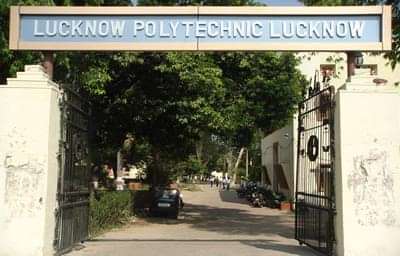
Lucknow Polytechnic
About
OfficialLucknow Polytechnic is a other institution in Lucknow, established in 1980. Lucknow Polytechnic is a government-aided polytechnic institution established in 1957, making it one of the older and more established diploma engineering colleges in Uttar Pradesh. Located in the heart of Lucknow, it serves as a significant feeder institution for diploma-level engineering education in North India. The college operates under the Department of Technical Education, Government of Uttar Pradesh, and is affiliated with the Board of Technical Education (BTE), Uttar Pradesh. Originally founded to meet the growing demand for skilled technical workforce in post-independence India, Lucknow Polytechnic has evolved into a respectable institution offering practical, industry-oriented education across multiple engineering disciplines. The institution's primary strength lies in its diploma programs, which are designed to produce job-ready technicians and engineers with hands-on skills. Over its six-decade history, it has developed a reputation for combining classroom instruction with practical lab work, which is crucial for diploma-level education. The college operates a three-year diploma structure, which allows students to enter the workforce relatively quickly compared to bachelor's degree programs. Lucknow Polytechnic offers specializations in Civil Engineering, Mechanical Engineering, Electrical Engineering, Electronics & Communication Engineering, Computer Science & Engineering, Automobile Engineering, and Biotechnology. Each program follows a curriculum aligned with industry standards and AICTE guidelines, though the quality of execution varies across departments. The faculty composition includes a mix of experienced professors and younger instructors, with a reasonable PhD percentage among senior faculty members. However, research output and academic publications are modest compared to IITs or premier NITs. The campus is situated in suburban Lucknow, providing relative proximity to the city's commercial and industrial areas while maintaining a campus environment. Infrastructure includes adequate laboratory facilities for practical training, though some equipment is dated and requires modernization. The college has invested in computer labs, workshop facilities, and discipline-specific labs, but investment in advanced technologies like IoT, AI, and robotics remains limited. Academic rigor is moderate—students report that while coursework is structured, there's significant reliance on rote learning in some subjects. The college emphasizes continuous assessment through internal exams and assignments, which helps in grade distribution but doesn't always correlate with skill development. Placements at Lucknow Polytechnic are a mixed story. The college regularly achieves placement rates between 65-75%, which is respectable for a government polytechnic but lags behind top private engineering colleges. Major recruiters include IT companies, manufacturing firms, and infrastructure companies. However, package averages are modest, typically in the 3.5-5.5 lakh rupees range for diploma graduates, which reflects the entry-level nature of these positions. The placement cell has improved over recent years with better industry coordination, but placement quality varies significantly by branch—CSE and ECE students fare better than civil or mechanical engineering graduates. Student life on campus is active but basic. The college has cultural clubs, technical societies, and a student union that organizes annual fests and technical competitions. Sports facilities include a cricket ground, badminton courts, and indoor games. However, amenities are functional rather than luxurious. The hostel infrastructure is basic but adequate, with separate facilities for boys and girls. Mess food is typical institutional fare—nutritious but monotonous. Internet connectivity on campus is patchy and often slow. Attendance policies are relatively strict, and the college maintains a formal academic environment. The student body is diverse, drawing from middle-class families across Uttar Pradesh and neighboring states, creating a culturally rich but economically homogeneous cohort. Safety on campus and in surrounding areas is generally good, though some off-campus locations require caution, particularly for women students traveling late. Lucknow Polytechnic is most suitable for students seeking affordable diploma-level engineering education with reasonable job prospects. It works well for those who cannot afford private engineering colleges and prefer practical training over theoretical academics. The college is particularly strong for students interested in core engineering fields like mechanical, civil, and electrical engineering. However, it may disappoint students expecting cutting-edge research, innovation hubs, or premium campus facilities. The college does not offer bachelor's degree programs and is not positioned for students aiming for higher studies or competitive exams like GATE. Alumni from the college are widely distributed across Indian industries, with a significant presence in power plants, railways, municipal corporations, and manufacturing companies. Some notable alumni have progressed to senior management roles in government and private sector organizations. The institution's reputation in Lucknow and surrounding regions is solid, with good employer recognition for diploma graduates in local industries. Overall, Lucknow Polytechnic represents solid value for money if your goal is practical engineering education and employment within 3 years, but it should not be considered for academic excellence or research orientation.