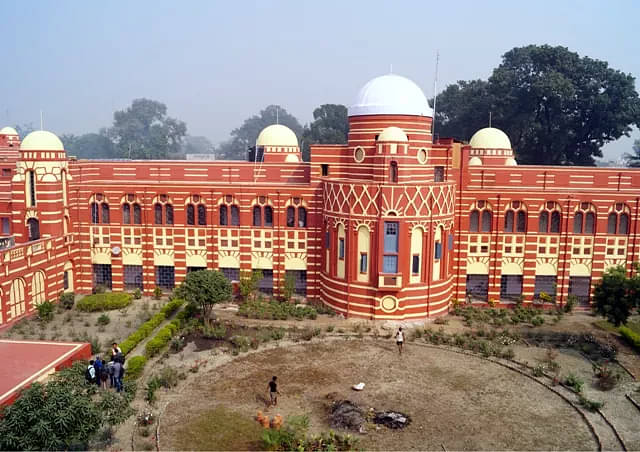
Langat Singh College
About
OfficialLangat Singh College is a other institution in Muzaffarpur, established in 1899. Langat Singh College, established in 1886, is one of Bihar's oldest and most respected undergraduate institutions, located in Muzaffarpur city. Named after the renowned Bihari scholar and social reformer Langat Singh, the college has a rich 138-year legacy of academic excellence and social responsibility. Originally founded as an arts college, it has expanded significantly to offer comprehensive undergraduate and postgraduate programs across Science, Commerce, Arts, and professional disciplines. The college operates from a compact 18-acre urban campus in the heart of Muzaffarpur, one of Bihar's major cities. Academic programs span multiple faculties including B.A., B.Sc., B.Com, B.Ed, and postgraduate Master's degrees in 15+ disciplines. The Science stream is particularly strong, with well-equipped laboratories for Physics, Chemistry, Biology, and Environmental Sciences. Arts stream benefits from strong departmental libraries and faculty expertise in Hindi, English, History, and Political Science. The Commerce program attracts students seeking accounting and business foundations. Research strengths lie primarily in environmental sciences, social sciences, and educational research. Faculty members actively engage in academic publications, though the college lacks a dedicated research park or major funded research centers. Some faculty hold UGC-recognized research credentials and supervise doctoral scholars, but research output remains modest compared to central universities. Placement performance has improved notably in recent years, with 2023-24 seeing approximately 65-70% placement rates for science and commerce graduates. Recruiters include regional banks (ICICI, Axis), IT companies (TCS, Wipro), educational institutions, and manufacturing units. Arts graduates primarily enter teaching, civil service preparation, and administrative roles. Salary ranges for placed graduates are modest: average ₹280,000-380,000 annually for commerce/science, with highest packages reaching ₹650,000-750,000 for exceptional candidates in IT roles. Notable alumni include Dr. Renu Singh (space scientist, ISRO), Justice Rajendra Singh (Bihar High Court judge), and numerous IAS/PCS officers. The college takes pride in its contribution to civil service preparation, with 8-12 students annually qualifying UPSC/State PSC exams. Campus life is lively despite limited physical space. The college hosts an annual tech fest (TechVenture) in October, cultural fest (Rangmanch) in March, and sports events throughout the year. Student clubs cover technical computing, entrepreneurship, performing arts, and social service. However, hostel capacity is extremely limited—only 250 seats for 2800 students, making off-campus accommodation essential for 90% of residential students. Infrastructure challenges are significant. The library, though historic, has outdated collections and limited seating. Wi-Fi coverage is partial (hostel and admin blocks only). Classroom infrastructure varies—older buildings lack air-conditioning and suffer maintenance issues, though renovation projects have modernized some facilities. The health center provides basic medical support but lacks specialized facilities. Campus grounds are cramped, limiting sports infrastructure to two small grounds. Who should apply: Students seeking affordable, quality undergraduate education in a historic institution with strong academics and faculty mentorship are ideal candidates. The college suits aspirants preparing for competitive exams (UPSC, GATE, CAT) due to strong faculty in core subjects. Those from Bihar seeking to study near home or students willing to adjust to modest physical infrastructure will find genuine academic value. However, students seeking world-class facilities, extensive hostels, or cutting-edge research environments should look elsewhere. The college is NOT recommended for those requiring comprehensive hostel accommodation or modern campus amenities. The college's greatest strength is its faculty quality and personal attention to students, balanced by its limitation as a space-constrained urban institution in a tier-3 city. Cost-effectiveness and academic rigor remain its defining characteristics.