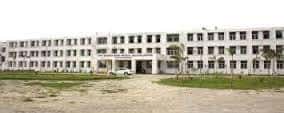
Lord Buddha Koshi Medical College
About
OfficialLord Buddha Koshi Medical College is a other institution in Saharsa. Lord Buddha Koshi Medical College (LBKMC) was established in 2008 as a private medical institution in Saharsa district of Bihar, one of India's most underdeveloped regions. The college was founded with the mission to provide quality medical education to aspirants from rural and semi-urban backgrounds, many of whom would otherwise struggle to access such opportunities due to geographical and economic constraints. Named after Lord Buddha, who spent considerable time in the Eastern India region, the institution embodies a philosophy of socially responsible medicine and community healthcare. The college operates under the oversight of the Medical Council of India (now National Medical Council) and is affiliated with the Government of India's Department of Health and Family Welfare. LBKMC offers a 5.5-year MBBS program with an annual intake of 100 students, making it one of the newer medical colleges in Bihar established to address the severe shortage of medical professionals in the state. The campus is strategically located in Saharsa, a district historically neglected in medical education infrastructure, which serves as both a unique feature and a significant challenge. Academic Programs: The college primarily focuses on undergraduate medical education through its MBBS program, which includes rigorous theoretical learning combined with practical clinical exposure. The curriculum follows the MCI regulations and emphasizes community medicine, recognizing the vital need for healthcare professionals in rural India. Beyond MBBS, LBKMC offers postgraduate programs in key specializations including General Medicine, Pediatrics, Obstetrics & Gynecology, General Surgery, Orthopedics, Psychiatry, and Pathology, with limited seats (2-4 per specialization). Research Strengths: Despite being a relatively young institution, LBKMC has established research departments focusing on tropical diseases, vector-borne illness surveillance (particularly relevant to Bihar), and community health interventions. Faculty members engage in publications covering epidemiological studies relevant to Eastern India. However, research output remains modest compared to established government medical colleges, with limited access to advanced research infrastructure. The college prioritizes applied research addressing local health challenges—malaria, dengue, TB, and malnutrition—over fundamental science research. Campus Infrastructure: The 12.5-acre campus houses basic medical teaching facilities including multiple lecture halls, anatomy dissection labs (with adequate cadaver supply), physiology and biochemistry practicals, a 300-bed teaching hospital (partially functional with 150-200 operational beds), diagnostic radiology suite, pathology laboratory, and microbiology units. Clinical wards include medicine, surgery, pediatrics, obstetrics & gynecology, and psychiatry. However, facilities remain below standards of premier medical colleges—imaging equipment is dated, operational theater air-conditioning is inconsistent, and internet connectivity within labs is unreliable. The hospital serves primarily the Saharsa district population, limiting exposure to rare cases. Placement and Career Outcomes: LBKMC graduates face a mixed employment landscape. Approximately 70-75% secure positions within 12-18 months of graduation, but primarily in non-aspirational roles—district health programs, Army Medical Corps (AMC), state health services, and rural health schemes. Very few graduates enter prestigious national postgraduate programs (AIIMS, JIPMER, CMC Vellore). In the 2023-24 cycle, median starting salary for government positions was ₹60,000-70,000 per month through state employment schemes. Private healthcare recruitment is minimal—major private hospital chains rarely visit for recruitment due to college's reputation and location. The college actively facilitates AMC recruitment, where approximately 15-20% of graduates join annually. Students and Admissions: LBKMC primarily admits students who score 400-480 on NEET, placing them in the lower-middle quintile of medical aspirants nationally. The student demographic is predominantly rural (65%), belonging to farming and small business backgrounds, with significant OBC/SC/ST representation (55%). A notable 35% of students are female, slightly above national averages. Merit is the primary criterion; management seats (40% of intake) are available at higher fees. Students are motivated, often driven by genuine service inclinations for rural healthcare, though some lack foundational scientific knowledge and struggle with English-medium instruction initially. Campus Life and Social Environment: The college maintains a cooperative campus atmosphere with lower competitiveness compared to premier institutions. Ragging is officially prohibited and largely absent, though informal hierarchy exists among batches. Hostel accommodation is available but basic—6-8 students per room, bucket water system in many wings, frequent electricity cuts. Wi-Fi connectivity is limited to common areas. The surrounding Saharsa city offers minimal entertainment—a small cinema, limited restaurants, and no malls. Most students spend recreational time within campus. Annual college fests (Medical Fest in March, Sports Day in February) attract 1,500-2,000 attendees from neighboring districts. Mental health support is weak; there is no dedicated counselor, and students struggling with depression or anxiety often resort to external support. Location Challenges: Saharsa is a Tier-3 city, approximately 180 km from Patna (6-hour drive) and 350 km from Kolkata. The absence of commercial airport within 300 km makes travel cumbersome. The city experiences severe monsoon flooding (June-September), occasionally restricting campus access. Summer temperatures exceed 42°C with limited cooling in hostels. These geographic constraints significantly impact students' mental well-being and family visit frequency. Many students report feeling isolated during first year. Postgraduate and Career Trajectory: Approximately 40% of LBKMC graduates pursue postgraduate education, primarily through government entrance exams (NEET PG, DM/MCh exams). Success rate in these competitive exams remains below 10%—substantially lower than graduates from Delhi, Mumbai, or Bangalore medical colleges. Most PG aspirants eventually secure admissions in Tier-2 government colleges or pursue MS/DM through distance or repeating attempts. Private PG pathways (NRI quota, self-financed seats) are rarely pursued. By 10-year post-graduation, LBKMC alumni are predominantly engaged in government service (70%), private practice in small towns (15%), or academic roles in other medical colleges (10%). Very few establish practices in metropolitan cities or become hospital administrators. Notable Strengths: The college's strongest asset is genuine institutional commitment to rural medicine and social accountability. Faculty morale for teaching is relatively high. The teaching hospital provides genuine community service (500-1,000 OPD patients daily), and students gain practical exposure early. Administrative staff is accessible and supportive of student welfare. Who Should Apply: LBKMC is ideal for NEET scorers (400-500 range) genuinely committed to rural/district-level medical practice, with psychological resilience for geographic isolation. It suits students from rural/semi-urban backgrounds who view medical education as a path to improved family circumstances and community service. Students seeking metropolitan lifestyle, research-heavy education, or fast-track corporate healthcare careers should avoid this institution. Parents should realistically assess their child's adaptability to a resource-constrained, isolated environment before enrollment. The college is NOT suitable for anxiety-prone students, those dependent on advanced academic support, or those with high international mobility expectations.