Lloyd Institute of Engineering and Technology
About
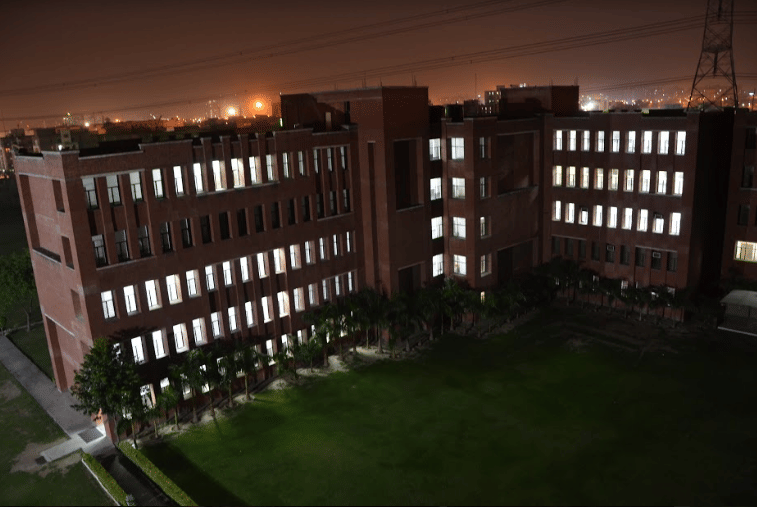
OfficialLloyd Institute of Engineering and Technology is a other institution in Greater Noida, established in 2002. Lloyd Institute of Engineering and Technology (LIET) was established in 2009 in Greater Noida, Uttar Pradesh, as a private engineering college affiliated with Dr. A.P.J. Abdul Kalam Technical University (AKTU). The institute was founded by the Lloyd Group with a vision to provide quality engineering education at an accessible cost point, positioning itself in the middle segment of private engineering colleges in North India. The campus is strategically located in Knowledge Park-II, Greater Noida, approximately 25 km from Delhi's city center, making it accessible for students from NCR and surrounding regions. Academic Infrastructure: LIET offers 13 undergraduate engineering programs across diverse disciplines including Computer Science & Engineering, Electronics & Communication Engineering, Mechanical Engineering, Civil Engineering, Electrical Engineering, Information Technology, Biomedical Engineering, Artificial Intelligence & Machine Learning, Data Science, and others. The institute also offers integrated 5-year B.Tech + M.Tech programs and standalone postgraduate programs. The total undergraduate intake is approximately 2,400 students across all branches, with Computer Science-related branches having the highest demand and cutoffs. The academic structure follows AKTU guidelines with a typical semester-based system. First-year students study common engineering fundamentals before specializing in second year. Faculty strength stands at approximately 280 members, with roughly 35-40% holding PhDs from reputed institutions. Faculty qualifications vary significantly by department, with CSE having stronger credentials (many from IITs and NITs) compared to core branches. Research-active faculty members are concentrated in departments like CSE, ECE, and Mechanical Engineering. Research and Innovation: LIET has established research labs in areas including IoT, Wireless Sensor Networks, Machine Learning, VLSI Design, and Renewable Energy. The institute has filed 12+ patents and published research papers in conferences and journals, though the research output remains modest compared to tier-1 institutions. Industry collaborations exist with companies like Tech Mahindra, Infosys, and Cognizant for sponsored research and student internships. The innovation lab and incubation center support student entrepreneurship ventures, though actual startup success rates remain limited. Placement Performance: LIET achieved a 78% placement rate in 2023-24 (academic year basis), with significant variation across branches. Computer Science and IT branches achieved 92-95% placements with median salaries of 7.5-8.5 LPA. Electronics & Communication averaged 74% placement at 6-6.5 LPA. Mechanical and Civil Engineering achieved 60-65% placements with median salaries of 5-5.5 LPA. Many students in non-CSE branches remain unplaced after final year, necessitating further education (M.Tech, MBA) or career transitions. Top recruiters include TCS, Wipro, HCL Technologies, Infosys, Tech Mahindra, Cognizant, Accenture, IBM, Amazon (for internships), Flipkart (for internships), Goldman Sachs, Morgan Stanley, Deloitte, KPMG, EY, and PwC. Core engineering companies like Siemens, ABB, Bharat Electronics, and NTPC recruit from mechanical and electrical branches, but in limited numbers. Consulting and finance recruitment is sporadic and typically limited to top 10-15% of the batch. Campus Life and Infrastructure: The 25-acre campus features modern infrastructure including state-of-the-art computer labs (5+ labs with 500+ workstations), electronics labs, mechanical workshop, civil engineering testing lab, physics and chemistry labs, and a central library with 45,000+ books and subscriptions to major engineering databases. WiFi coverage extends across the entire campus with decent bandwidth, though peak-hour congestion is common. The institute has a 600+ capacity auditorium, multiple seminar halls, and conference facilities. Hostel facilities accommodate approximately 1,100 students (roughly 35% of total strength). Separate hostels exist for boys (4 hostels, 800+ capacity) and girls (2 hostels, 300+ capacity). Hostel rooms are typically 2-3 sharing with basic amenities including attached bathrooms, running water, and basic furniture. Monthly hostel fees range from 8,000-12,000 INR depending on room type and hostel. Mess facilities operate under strict hygiene protocols with both North Indian and South Indian food options. Monthly mess charges are approximately 4,500-5,500 INR. Hostel quality has improved significantly over the past 3-4 years with recent renovations, though maintenance issues occasionally arise. Wi-Fi connectivity in hostels is functional but often congested during evenings. Campus Activities: LIET hosts 6+ technical clubs (Robotics Club, AI/ML Club, Web Development Club, Cyber Security Club), 8+ cultural societies (Dance, Music, Drama, Art), and sports clubs covering cricket, badminton, football, volleyball, and athletics. The annual technical fest "Riviera" attracts 2,000+ participants from nearby institutions and features coding competitions, hardware projects, and paper presentations. The cultural fest "Utsahan" is held semi-annually with cultural performances, competitions, and events. Sports excellence is modest with occasional district-level participations but limited national-level achievements. Diverse Student Body: The student population is primarily from Delhi-NCR region (55%), followed by UP (25%), Haryana (12%), and other states (8%). Gender ratio is approximately 75% male to 25% female. Approximately 35% of students are first-generation learners. Religious and regional diversity is moderate with a predominantly Hindu student body (70%), followed by Sikh (12%), Muslim (10%), Christian (5%), and others (3%). Admissions and Cutoffs: LIET is not part of JEE Main's centralized counseling (CSAB/JOSAA). Admissions are conducted through independent merit lists based on JEE Main percentiles, following AKTU guidelines. For 2024-25, Computer Science Engineering cutoff was approximately JEE Main percentile 95+, Electronics & Communication at 85-90 percentile, and Mechanical/Civil at 70-80 percentile. Merit scholarship awards approximately 15-20% of seats. Management quota seats (10-15% of total intake) admit students through separate merit lists at higher fees. Who Should Apply: LIET is suitable for students seeking engineering education at reasonable private college fees without the competitive intensity of tier-1 institutions. Ideal candidates are those targeting CSE/IT branches who score well in JEE Main (90+ percentile), want campus placements in IT services companies, and don't qualify for NIT/IIIT/top-tier private colleges. Students pursuing mechanical/civil engineering should have realistic expectations about placement outcomes and consider the college as a stepping stone to higher studies (M.Tech) rather than direct employment. The college is NOT recommended for students seeking research opportunities, limited teaching faculty, or those with very tight budgets, as private college fees remain substantial despite competitive positioning. Placement Strategy Reality: Career outcomes heavily favor CSE students with strong communication skills and internship experience. Non-CSE students are advised to pursue internships, develop technical projects, and consider M.Tech programs at NITs/IITs for better career prospects. The campus recruiting process favors top 10-15% of each branch, meaning average performers may face significant employment challenges. Many placement statistics are inflated through mass recruitment into IT service companies at entry-level salaries with poor work-life balance. Unique Value Proposition: LIET offers reasonable fees (4.5-5.5 LPA for 4-year B.Tech, roughly 50-60% less than top private colleges), decent campus infrastructure in suburban location, and adequate placement outcomes for CSE students. The college provides value for middle-class families seeking engineering education without NIT-level competitiveness. However, reputation remains limited to NCR region, and employer brand recognition is significantly lower than established tier-2 private or tier-1 government colleges.