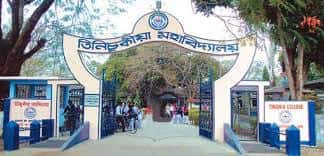
Ledo College
About
OfficialLedo College is a other institution in Tinsukia, established in 1997. Ledo College, established in 1964, is one of Assam's premier undergraduate institutions located in Tinsukia, a town in Upper Assam known for its tea gardens and coal mining industry. The college was founded with the vision of providing quality higher education to students from northeastern India, particularly addressing the educational needs of rural and semi-urban populations in the region. Over six decades, it has evolved into a multi-disciplinary institution offering undergraduate programs across sciences, commerce, arts, and vocational streams. The college is affiliated with Dibrugarh University and maintains academic standards consistent with UGC guidelines. Its curriculum balances traditional liberal arts education with contemporary skill development, reflecting both its heritage and forward-looking approach. The institution has a dedicated focus on making quality education accessible, with a significant portion of its student body coming from economically disadvantaged backgrounds. Academic Programs: Ledo College offers 45+ undergraduate programs spanning science (Physics, Chemistry, Biology, Mathematics, Computer Science, Environmental Science), commerce (B.Com, B.Com with specializations), arts (History, Geography, Political Science, Philosophy, Sanskrit, English, Assamese), and vocational programs (nursing auxiliary, information technology basics). The college has recently introduced skill-based courses aligned with NEP 2020, including digital marketing, sustainable agriculture, and renewable energy management. While the college does not offer engineering or postgraduate research programs, it serves as a strong feeder institution for students aspiring to pursue higher studies at premier universities and professional institutes. Research and Faculty: The college encourages faculty research within the constraints of an undergraduate-focused institution. Approximately 68% of faculty members hold PhDs or are pursuing doctoral degrees. Key research areas include plant taxonomy and ethnobotany (leveraging Assam's biodiversity), tea science and agronomy (reflecting local economic importance), water resource management, and tribal studies. The college has established weak but growing partnerships with Dibrugarh University for collaborative research and has research committees focused on environmental conservation specific to Upper Assam's ecology. Campus Infrastructure: The 25-acre campus is well-maintained with separate science, commerce, and arts blocks. The library holds approximately 28,000 volumes with limited digital access (a notable weakness). Computer labs are functional but aging, with approximately 120 systems across three labs. The science block has equipped physics, chemistry, and biology laboratories, though some equipment is dated. Hostel facilities exist for both male and female students with basic but adequate amenities. Internet connectivity is WiFi-based and covers most campus areas, though speeds are modest (3-5 Mbps typical). The campus lacks a swimming pool, modern gymnasium, and dedicated research laboratories—infrastructure gaps acknowledged by both administration and students. Placement and Career Outcomes: Placement outcomes at Ledo College reflect the reality of an undergraduate college in a tier-3 city without strong corporate recruitment presence. Approximately 42% of graduates secure campus placements, primarily through education sector recruitment (teaching positions in schools and coaching centers), government exams preparation, and occasional placements in small-to-medium enterprises. Average starting salary for placed graduates ranges from 180,000-250,000 INR annually. A significant portion of graduates (approximately 35-40%) pursue further education at central universities, IIMs (through CAT), or professional degree programs (engineering, law, MBA through entrance exams). The college maintains active placement and career guidance cells but faces structural disadvantages: tier-3 location, lack of brand recognition beyond northeastern India, and limited industry partnerships compared to metro-based institutions. Campus Life and Student Experience: Student life at Ledo College is characterized by a close-knit, somewhat introverted community. The college hosts annual technical fests (CodeFest), cultural festivals (Arunodaya), and sports days with respectable enthusiasm. Over 25 student clubs operate across technical, cultural, and sports domains. The hostel environment is fairly secure and community-oriented, with resident wardens and regular interactions. Internet and modern amenities are limited compared to private colleges. Student feedback consistently highlights strong faculty-student relationships, particularly in specialized honors courses, and a peaceful, distraction-free academic environment—valued by serious students but potentially limiting for those seeking vibrant metropolitan campus culture. Ragging is rare; safety for women students is considered above average for the region, though campus security could be more professional. Unique Identity: Ledo College occupies a specific niche—it is the primary choice for meritorious students from lower-income families across Upper Assam and neighboring states who cannot access premier institutions or afford private colleges. It serves as a cultural bridge, strongly connected to Assamese identity, regional language, and northeast Indian perspectives. The college's strength lies in providing affordable, respectable undergraduate education with strong ethics and academic discipline, not in placements or infrastructure. Who Should Apply: Ledo College is ideal for: (1) students from tier-2/tier-3 towns and rural areas in northeastern India seeking quality undergraduate education at affordable cost; (2) merit-scholarship holders who prioritize academic rigor over campus amenities; (3) students planning to pursue competitive exams (UPSC, banking, teaching) after graduation; (4) those comfortable with limited placements and planning postgraduate education; (5) students valuing a close-community, discipline-focused environment. It is NOT suitable for: students prioritizing campus infrastructure, corporate placements, cosmopolitan campus life, or those requiring constant high-speed internet and modern facilities. The college requires realistic expectations—it offers good academics and values at a fraction of private college fees, in exchange for tier-3 location challenges and limited modern infrastructure.