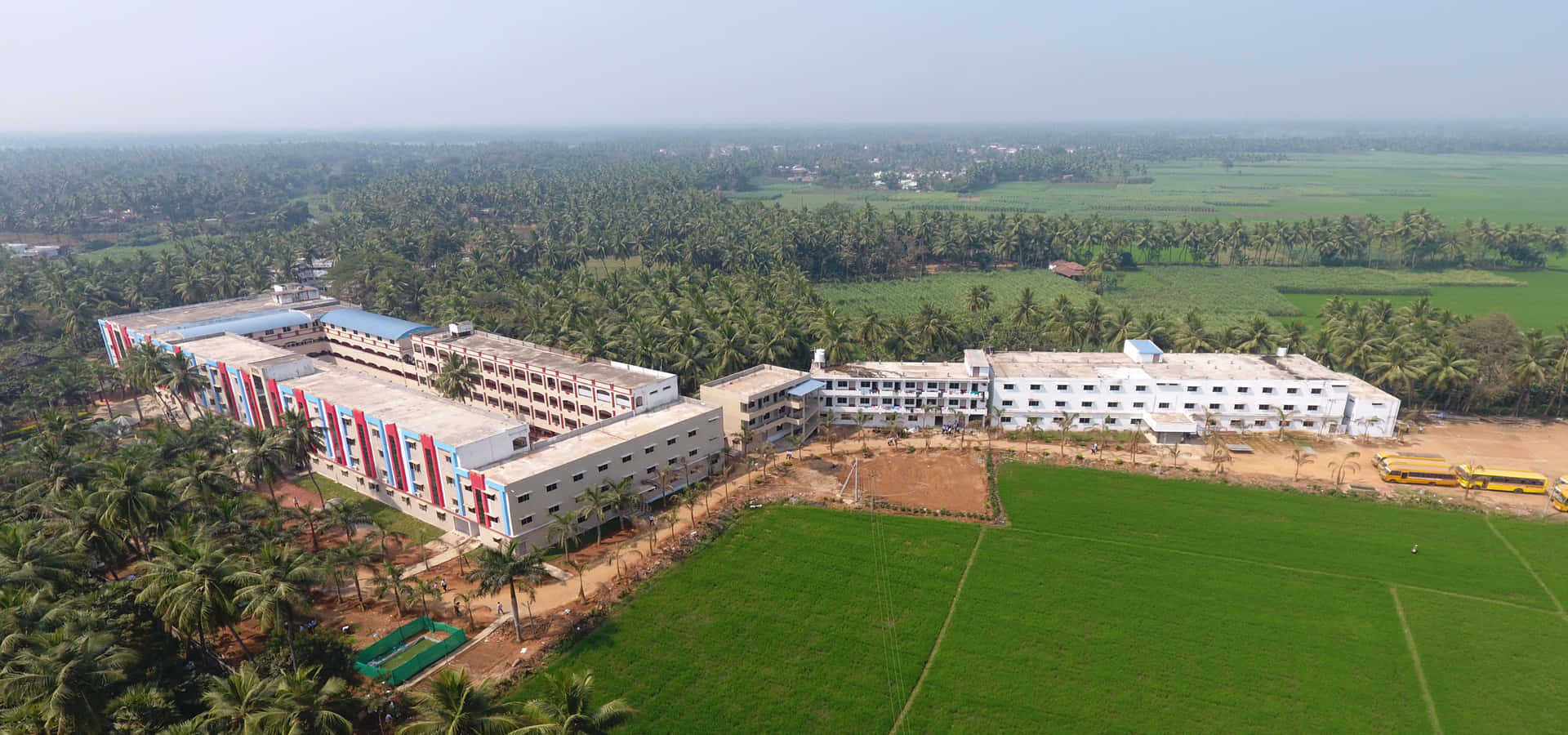
Kakinada Institute of Technology And Science
About
OfficialKakinada Institute of Technology And Science is a other institution in East Godavari. Kakinada Institute of Technology and Science (KITS) is a private engineering and technology institution located in Kakinada, East Godavari District, Andhra Pradesh. Established in 2008, KITS has grown into one of the prominent engineering colleges in coastal Andhra Pradesh, serving students from across India and neighboring states. The institution operates under the affiliation of Jawaharlal Nehru Technological University (JNTU), Kakinada, and is approved by AICTE, making it a recognized player in India's technical education landscape. The college was founded with the vision of providing quality engineering education accessible to middle and lower-middle-class families, combined with industry-relevant skill development. Over the past 15+ years, KITS has evolved from a single engineering college into a multi-disciplinary institution offering undergraduate and postgraduate programs across engineering, management, and applied sciences. The founding ethos emphasized practical learning over theoretical memorization, though execution varies across programs. KITS offers a diverse portfolio of undergraduate engineering programs spanning Civil, Mechanical, Electrical & Electronics, Computer Science & Engineering, Information Technology, Electronics & Communication Engineering, and Chemical Engineering. Additionally, the college offers BCA and BSc programs in mathematics and physics. Postgraduate programs include MTech in various specializations and MBA focusing on general management and entrepreneurship. The college has established a School of Management offering MBA programs with some emphasis on startup mentorship. Academic infrastructure includes dedicated laboratories for each engineering discipline, with particular strength in computer science and IT labs equipped with modern systems. The college has invested in departments like AI & Machine Learning, Data Science, and IoT—areas aligned with industry demands. However, some core engineering labs (particularly in civil and mechanical) operate with equipment that requires periodic upgrades. The library houses approximately 30,000+ volumes with digital access to journals and e-books, though the physical space is often crowded during examination seasons. Research activities at KITS are emerging but modest in scale. The institution encourages faculty publications and has established a few interdisciplinary research centers focusing on renewable energy, water resource management, and industrial automation. Several faculty members hold PhDs from reputable universities, though the percentage remains below 40% of the total faculty strength. Industry partnerships are primarily with IT companies and some manufacturing units in Andhra Pradesh, providing internship opportunities and live projects for students. Placement performance has improved significantly over the past 5 years. The 2023-24 academic year saw overall placement rates of approximately 78% for BTech programs, with CSE and IT branches achieving 92-95% placements. However, civil and mechanical engineering placement rates hover around 65-70%, reflecting the broader challenge in core engineering sector hiring. Median salary across batches stands at 4.5-5.2 LPA, with top performers securing 12-15 LPA packages. The placement cell has established recruitment partnerships with companies like TCS, Infosys, Wipro, HCL, Amazon, and emerging IT firms. However, off-campus placements and consultancy roles comprise a significant portion, with fewer core engineering or manufacturing sector placements than expected for a technical institution. The student body is diverse, with approximately 60% from Andhra Pradesh and Telangana, 25% from neighboring states, and 15% from across India. This regional mix creates a unique campus culture, though linguistic diversity (Telugu, Hindi, English) sometimes creates communication pockets. International student enrollment is minimal. KITS distinguishes itself through its focus on skill development beyond curriculum. The institution has invested in entrepreneurship incubation, with an on-campus startup hub that has supported 8-10 student ventures with mentorship and funding. Technical clubs are active in competitive programming, robotics, and web development, with moderate success in national competitions. Annual technical festival "TechnoXperience" attracts participants from other colleges, though the scale is modest compared to tier-1 institutions. The campus has undergone significant infrastructure expansion in recent years. New academic blocks, a modern library extension, and improved hostel facilities have enhanced the physical environment. However, water scarcity during summer months is a documented challenge in Kakinada, affecting hostel operations periodically. Power supply is generally stable with backup generators in critical areas. Campus life at KITS is moderately vibrant. While the institution enforces a zero-tolerance ragging policy with periodic audits, a few isolated incidents have been reported over the years. Women student safety is prioritized with separate hostel blocks, restricted entry timings (though criticized as paternalistic by some), and regular security audits. The cultural diversity has led to active cultural clubs representing various regional traditions. Who should apply: KITS is ideal for students from middle-class backgrounds seeking affordable quality engineering education in coastal Andhra Pradesh, with realistic expectations about placement outcomes and infrastructure. It suits students interested in IT/CSE with strong coding fundamentals. Students pursuing core engineering (civil, mechanical) should apply with moderate expectations about immediate placement prospects, though the college provides skills suitable for core sector careers or higher studies. The institution is suitable for those seeking a balanced college experience with both academics and student activities, though not for students expecting ivy-league-equivalent infrastructure or placement demographics. Students should be prepared for a regional college experience with limited international exposure but genuine opportunities for skill development and entrepreneurship.