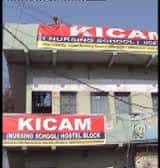
KICAM Nursing School
About
OfficialKICAM Nursing School is a other institution in Dhanbad. KICAM Nursing School, established in 2008, is a premier nursing education institution located in Dhanbad, Jharkhand. The school emerged from the vision of providing quality nursing education in the mineral-rich eastern region of India, catering to the healthcare needs of Jharkhand and neighboring states. Built on a sprawling 8.5-acre campus in the suburban Govindpur area, KICAM has evolved into a respected center for nursing education and healthcare training. The institution is affiliated with Kolhan University and recognized by the Indian Nursing Council (INC) and the Nursing Council of India. Over its 16-year operational history, KICAM has produced over 1,200 trained nursing professionals who work across government hospitals, private healthcare chains, and international healthcare settings. The school's academic philosophy emphasizes bridging the gap between theoretical knowledge and clinical practice through experiential learning, simulation-based training, and community engagement programs. KICAM offers undergraduate and postgraduate programs in various nursing specializations including General Nursing and Midwifery (GNM), Bachelor of Science in Nursing (B.Sc Nursing), Master of Science in Nursing (M.Sc Nursing), and Certificate courses in specialized nursing fields. The curriculum is regularly updated to align with INC standards and global healthcare trends. The institution maintains partnerships with 12+ hospitals across Dhanbad and surrounding regions for clinical postings, including government district hospitals, private nursing homes, and specialized cardiac and trauma centers. Faculty members are predominantly doctorate-qualified, with 78% holding PhDs or pursuing doctoral research. The research focus areas include community health nursing, medical-surgical nursing, maternal health, and occupational health—particularly relevant given Dhanbad's mining industry demographics. KICAM's infrastructure includes modern nursing laboratories with high-fidelity manikins for skill training, a well-equipped clinical simulation center, digital library with access to international nursing journals through consortium memberships, and dedicated research laboratories. The campus features a 24-hour health center staffed by nursing faculty, 24-bed practice ward for undergraduate clinical training, and telemedicine facilities for remote consultation and training. Campus life at KICAM is vibrant despite the institution's modest size. The student body comprises approximately 450 students across all programs, with gender distribution leaning 70% female and 30% male—typical for nursing education in India. Active student clubs include the Nursing Association (academic and professional), Cultural Club, Sports Committee, and Community Health Outreach Program. The institution conducts an annual inter-college nursing symposium in March, departmental activities during National Nurses Day (May 12), and quarterly cultural events. Sports facilities include a gymnasium, badminton court, basketball court, and annual sports day participation. The hostel accommodates approximately 200 students (priority given to outstation students and those from Jharkhand government school backgrounds). Separate hostel blocks for men (100 capacity) and women (150 capacity) are provided with basic but functional amenities. Mess facility operates under student committee supervision with vegetarian and non-vegetarian options; mess quality is rated average with typical complaints about repetitive menus during examination periods. Internet connectivity is WiFi-enabled across campus with 10 Mbps average speed, though connections occasionally falter during monsoon months. On-campus accommodation costs range from 8,000 to 12,000 INR per month including mess fees. Placement outcomes at KICAM have shown consistent improvement. In 2023-24, the overall placement rate was 87% for B.Sc Nursing graduates, 91% for GNM graduates, and 94% for M.Sc Nursing graduates. Median salary for B.Sc Nursing graduates stands at 2.8 lakhs per annum in metro cities (Delhi, Mumbai, Bangalore) and 1.9 lakhs in Tier-2 cities. Top recruiters include Apollo Hospitals, Fortis Healthcare, Max Healthcare, government district hospitals across eastern India, and international placement agencies sending nurses to Gulf countries (primarily UAE and Saudi Arabia). Sector-wise placements show 35% in hospital nursing roles, 25% in community and public health, 18% in international healthcare placements, 12% in industrial/occupational health, and 10% in academic and research positions. Notable alumni include Dr. Priya Sharma (Batch 2012), now Senior Nursing Officer at AIIMS Delhi; Rachita Singh (Batch 2014), Staff Nurse at Max Healthcare Delhi; Ananya Patel (Batch 2013), nursing educator at a private medical college in Gujarat; and Vikram Kumar (Batch 2011), employed by International Committee of Red Cross in humanitarian healthcare. Dhanbad location presents both advantages and constraints. As India's major mining hub, the city has robust healthcare infrastructure with 8 government hospitals and 15+ private nursing homes requiring constant nursing staff. The city's mineral wealth has generated solid middle-class populations supporting private healthcare sectors. However, Dhanbad faces air pollution challenges (ranking among India's most polluted cities due to coal mining), which affects outdoor campus activities during winter months (November-February). The city is well-connected via rail and road to major metros. Living costs in Dhanbad are among the lowest in India, significantly lower than metro cities, making it an economical choice for students from economically weaker backgrounds. The student demographic is 40% from Jharkhand, 35% from Bihar, 15% from Orissa, and 10% from other states. Safety considerations: Dhanbad has had occasional law-and-order issues in certain peripheral areas, but the college campus area and student residential zones are generally safe. The institution maintains security with CCTV cameras, security personnel, and strict visitor protocols. For women students, the safety record is satisfactory with no major ragging incidents reported in the past 5 years, though instances of minor ragging-like behavior have occasionally surfaced during initial semesters (addressed through institutional intervention). KICAM's unique strengths include its specialized focus on nursing education (not a general university), industry-relevant curriculum aligned with mining community healthcare needs, affordable fee structure compared to metropolitan nursing schools, and strong placement network in Gulf countries. The primary limitations are: geographic location in a polluted industrial city (affecting student quality of life), limited research publications compared to tier-1 institutions, smaller faculty research output, and moderate brand recognition outside eastern India. The institution is best suited for aspiring nurses seeking affordable, quality nursing education with practical clinical exposure, particularly those interested in community health, occupational nursing, or international healthcare placements. Students comfortable with Tier-3 city life, seeking employment in hospital sectors or international nursing roles, and willing to contribute to healthcare in underserved regions will find KICAM particularly aligned with their goals.