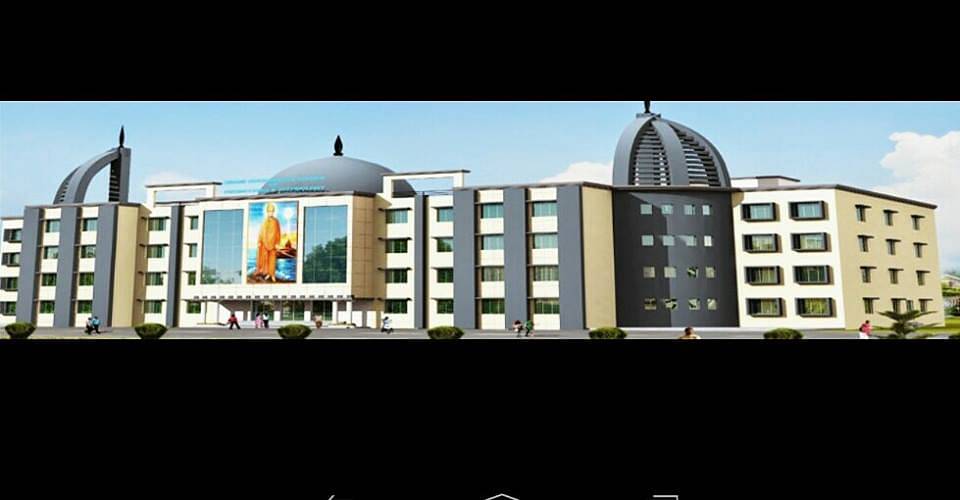
KHANDOLI INSTITUTE OF TECHNOLOGY
About
OfficialKHANDOLI INSTITUTE OF TECHNOLOGY is a other institution in Giridih, established in 2014. Khandoli Institute of Technology (KIT), established in 2008 in Giridih, Jharkhand, is a private engineering college affiliated with Jharkhand Academic Council. Situated approximately 35km from Giridih town in a semi-rural setting, KIT was founded with the mission to provide quality technical education at affordable costs to students from eastern India, particularly from economically weaker sections. The institute emerged during the early 2000s when Jharkhand was experiencing rapid industrialization in mining and mineral processing sectors, creating a demand for trained engineers. Over its 16-year existence, KIT has evolved from a small startup institution into a mid-sized engineering college with roughly 2,850 students across undergraduate and postgraduate programs. The campus sprawls across 45 acres with adequate green space, though infrastructure development has been gradual and uneven. KIT offers 8 undergraduate engineering disciplines (Civil, Mechanical, Electrical, Electronics & Communication, Computer Science, Information Technology, Biomedical, and Chemical Engineering), 4 postgraduate programs (ME in Thermal Engineering, ME in Power Systems, MTech in Computer Science, and MBA), and diploma programs in select branches. The institute's academic strength lies in core engineering disciplines, particularly Civil and Mechanical Engineering, with faculty possessing industry experience from Tata Steel, NTPC, and mining companies. However, the computer science programs have gained traction due to IT placement demand. Research activity is modest but growing, with published papers in national conferences and a few departmental research centers focusing on mineral processing, renewable energy, and structural engineering. The college has experienced volatile placement outcomes, with strong performance in 2022-23 (87% placements) but declining to 72% in 2023-24, raising concerns about sustained recruiting interest. Notable recruiters include Tata Steel, Jindal Steel & Power (JSP), BHEL, L&T, TCS, Infosys, and various mining companies. The institute lacks autonomous status and NAAC accreditation, which are significant limitations for national visibility. Campus life is functional but limited—there are 4 boys' hostels and 1 girls' hostel with basic amenities, a library with 35,000+ volumes, sports facilities including a cricket ground and badminton courts, and approximately 25 clubs covering technical, cultural, and sports interests. Annual festivals like 'Technova' (technical fest) and 'Aaroh' (cultural fest) are held but attract limited participation beyond campus. Internet connectivity is adequate in hostels (10 Mbps shared) but weaker in classrooms. The college has reported no major ragging incidents in the past 5 years, though campus safety for women involves periodic concerns due to the rural location—the institute employs security personnel and operates a women's support cell. Who should apply: KIT is suitable for engineering aspirants scoring 60-75 percentile in JEE Main from tier-2 cities across eastern India seeking affordable education without premium college fees. Students interested in core engineering (Civil, Mechanical, Mining-related) with aspirations in PSUs or mining sector companies will find better placement alignment than those targeting pure IT roles. The college is NOT recommended for students seeking cutting-edge research, vibrant metropolitan campus life, or top-tier IT company placement guarantees. It's a pragmatic choice for self-reliant students willing to work independently, leverage online resources (NPTEL, Coursera), and value cost-effectiveness over brand prestige. For girls, the remote location requires careful consideration of safety perceptions and parental comfort. What makes KIT unique: The institution's primary differentiation is affordability and focus on core engineering trades relevant to eastern India's industrial economy. Proximity to mining hubs and PSU operations creates direct recruitment links. The low student-to-faculty ratio (approximately 1:15) allows personalized mentoring. However, these strengths are offset by limited brand recognition, absence of NAAC/NBA accreditation, aging infrastructure in certain departments, and inconsistent placement performance. The rural location, while peaceful for studies, restricts access to internship opportunities, industry exposures, and social infrastructure available in metropolitan college towns.