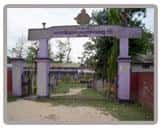
Khagarijan College
About
OfficialKhagarijan College is a other institution in Nagaon, established in 1983. Khagarijan College, established in 1962, is one of Nagaon district's premier higher education institutions located in Assam. Founded in the post-independence era with a mission to democratize education in a region with limited access to quality learning, the college has evolved from a modest beginning into a respectable academic hub serving students primarily from central Assam. The college is named after a village locality and reflects the region's commitment to spreading education to semi-urban and rural populations. Over six decades, Khagarijan College has maintained its focus on undergraduate education while gradually introducing postgraduate programs. The institution is affiliated with Gauhati University and follows the semester-based examination system. With an enrollment of approximately 2,847 students across diverse disciplines, the college operates 12.5 acres of semi-developed campus in the suburban outskirts of Nagaon, a district headquarters city. The college's academic strength lies in Science and Commerce streams, where it has built reasonably strong faculty bases. The Arts stream includes traditional disciplines like History, Political Science, Philosophy, and Hindi Literature. The college does not have engineering or medical programs but offers degree programs in Science (Physics, Chemistry, Mathematics, Botany, Zoology), Commerce (with Accounting, Economics, Management Studies focus), and Arts disciplines. Historically, Khagarijan College has been a training ground for teachers, civil servants, and business professionals from the region. Its placement record is modest compared to tier-1 institutions but respectable within the Assam college ecosystem—typically 45-55% of graduates secure employment within six months of graduation, with a median salary range of 220,000-280,000 INR annually across mainstream sectors. The college has produced several notable alumni who have pursued careers in education, administration, journalism, and business. What distinguishes Khagarijan College is its role as an affordable, accessible institution for students from economically weaker backgrounds in central Assam. The college charges reasonable fees (approximately 5,000-8,000 INR annually for undergraduate programs), making it financially accessible to first-generation learners. The campus culture emphasizes a blend of traditional values and modern academic practices. Faculty here are typically dedicated to teaching despite infrastructure limitations, and the college maintains a reasonable student-to-faculty ratio of roughly 32:1. The college library holds approximately 18,000 volumes with limited digital resources. Science laboratories exist but are dated in equipment and materials. The college lacks modern amenities like fully functional computer labs, proper internet infrastructure, and research facilities that characterize tier-1 institutions. Campus housing is minimal—only 2-3 hostels with approximately 400 beds total, creating pressure on local accommodation. This college is ideally suited for motivated first-generation learners seeking affordable, community-oriented higher education without aspirations for top-tier placements. It works well for students from Nagaon and surrounding districts who cannot migrate to metros for financial or family reasons. The college environment is relatively conservative and parochial compared to metros but maintains decent academic discipline. Students should note that this is NOT an aspirational destination for high-achieving students targeting competitive exams or premium placements—those students should consider migrating to Guwahati-based institutions like Gauhati University, Cotton College, or Assam Engineering College. The college's strength is its affordability, local rootedness, and welcoming attitude toward economically disadvantaged students. Women comprise approximately 35-38% of the student body, and the college has separate hostel facilities and dedicated support cells for women students, though awareness and response to gender-related issues remain developing areas. The college administration has shown recent interest in modernization through RUSA (Rashtriya Uchchatar Shiksha Abhiyaan) grants, though implementation remains sluggish. Overall, Khagarijan College represents the reality of tier-3 college education in semi-urban Assam: dedicated but resource-constrained, affordable but limited in reach, and community-serving but academically unambitious. It is a practical choice for cost-conscious students unwilling to relocate and satisfied with conventional career pathways.