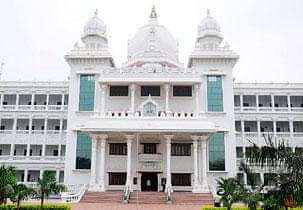
KCT Business School
About
OfficialKCT Business School is a other institution in Coimbatore, established in 2005. KCT Business School (KCTBS) is a post-graduate management institution established in 2009 as part of Kumaraguru College of Technology, a Tier-1 educational institution in Coimbatore, Tamil Nadu. The school operates under the umbrella of Kumaraguru College's 25+ year legacy of engineering excellence and has evolved into a dedicated hub for business education. Located in the heart of South India's industrial corridor, KCTBS leverages proximity to manufacturing hubs, IT companies, and textile industries that define Coimbatore's economic landscape. The institution offers specialized MBA programs with concentrations in Finance, Human Resources, Marketing, Operations, International Business, and Supply Chain Management. All programs are AICTE-approved and structured to blend theoretical rigor with industry-centric skill development. The curriculum emphasizes case studies, live projects with real companies, and mandatory internships in the second semester. The faculty comprises experienced academicians and visiting industry practitioners who maintain active research agendas and industry engagement. Academic Strengths: The school differentiates itself through its integrated ecosystem—students benefit from KCT's engineering network, shared research facilities, and established industry relationships spanning automotive, textiles, software, and manufacturing sectors. The institution runs specialized business labs focusing on financial modeling, supply chain optimization, and market research. Faculty research outputs focus on emerging areas like Industry 4.0, textile innovation, and sustainable manufacturing—directly aligned with Coimbatore's industrial needs. The library provides access to premium databases (Bloomberg Terminal, CMIE Prowess, various academic journals) though usage remains relatively underexploited by students. Placement Performance: The 2023-24 batch achieved 95% placement rate with median salary around ₹13.5 lakhs annually. Top recruiters include Deloitte, Infosys, TCS, Amazon, Flipkart, Unilever, Nestlé, Ford, TVS, and various finance firms. However, placement quality varies significantly by specialization—Finance roles command higher salaries (₹16-20 lakhs), while HR roles average ₹11-13 lakhs. Consulting roles cluster around ₹15 lakhs. Manufacturing and core engineering roles offered by automotive companies average ₹12-14 lakhs. The unplaced 5% typically comprises students with very high salary expectations or those who opted out. Campus Life: The school functions as a specialized vertical within KCT's larger 45-acre campus. Dedicated MBA block houses classrooms, seminar halls, and a business resource center. Infrastructure is functional but dated—most facilities are shared with the engineering campus. Hostel availability is extremely limited for MBA students; institutional housing accommodates approximately 40 female students only. This forces 85% of the student body into private accommodations. The student body is diverse: 55% from Tamil Nadu, 25% from other Indian states, 20% international (primarily from African nations and Southeast Asia). This diversity enriches classroom discussions but creates isolated pockets in hostel communities. Key Unique Aspects: (1) Industry Immersion: Strong ties with Coimbatore's 2,000+ manufacturing units and textile companies—students get real exposure to Indian industrial practices beyond theory. (2) Alumni Network: Growing base of 2,000+ alumni working across India, UK, USA, and Middle East provides mentoring and placement opportunities. (3) Affordability: MBA fees (₹13-16 lakhs total) are 30-40% lower than equivalent tier-1 private institutions, making it accessible to merit-driven students without elite backgrounds. (4) Supply Chain Focus: Coimbatore's position as a logistics hub makes KCTBS one of India's better schools for supply chain and operations specialization. (5) Faculty Stability: Low turnover (6% annually) indicates faculty satisfaction and continuity in advising and mentoring. Known Limitations: The location in a tier-2 city means fewer campus recruits from pure software or elite consulting firms compared to metro-based peers. Batch sizes (approximately 200 per cohort) are smaller, limiting alumni network reach in top-tier firms. Library resources, while comprehensive on paper, lack contemporary digital tools and analytics platforms. Alumni salary skew toward mid-senior roles (5-10 years experience) shows newer batches don't command premium startup valuations. Some students report teaching quality inconsistency in electives where practitioners deliver sessions without pedagogical training. Ideal Candidates: Working professionals seeking specialized MBA with minimal disruption (evening batches available); engineers from KCT or similar institutions targeting management roles; students passionate about manufacturing, supply chain, or textile sector careers; candidates from moderate economic backgrounds seeking quality education at accessible costs; those willing to build careers in tier-2 cities rather than relocate to metros. Not Ideal For: Students exclusively targeting elite consulting firms (McKinsey, BCG, Bain focus their campus recruitment on IIM-A/B/C, ISB); aspirants of pure finance roles in investment banking (fewer connections to Mumbai/Delhi banking ecosystem); those demanding cutting-edge innovation labs or startup incubation comparable to metro business schools; students requiring substantial on-campus housing (limited availability forces private accommodation challenges).