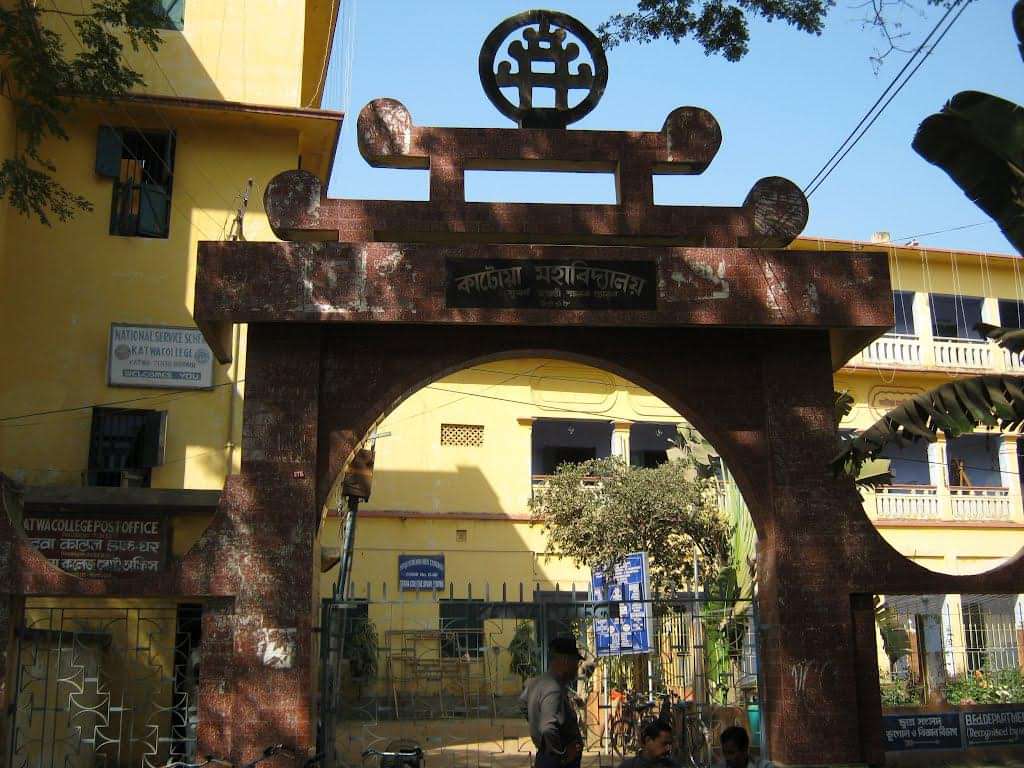
Katwa College
About
OfficialKatwa College is a other institution in Burdwan, established in 1948. Katwa College, established in 1962, is a mid-tier undergraduate and postgraduate institution located in the rural township of Katwa in Burdwan District, West Bengal. The college serves approximately 2,850 students across 45+ academic programs spanning Science, Commerce, and Arts disciplines. Founded with the objective of providing quality higher education to students from semi-urban and rural backgrounds, Katwa College has developed a reputation as a teaching-centric institution with reasonable placement outcomes and consistent academic rigor. The college is affiliated with the University of Burdwan and operates under UGC regulations. The institutional history reflects deep roots in the local community—it was established to address the acute shortage of quality higher education in the region during the early 1960s post-independence expansion period. Today, it functions as a significant educational hub for students across West Bengal and neighboring states. The college offers undergraduate programs in Sciences (Physics, Chemistry, Botany, Zoology, Mathematics, Computer Science), Commerce (B.Com with specializations in Accounting, Finance, Management), and Arts (History, Political Science, Bengali, English, Philosophy, Economics). Postgraduate offerings include M.Sc. in Physics, Chemistry, Botany, M.Com, and MA in English and History. The college has gradually introduced skill-based courses and vocational training programs in recent years, aligning with NEP 2020 recommendations. Research strengths are modest but growing, primarily concentrated in Physics (theoretical mechanics and quantum studies), Chemistry (organic synthesis), and Botany (ethnobotany and plant genetics). The institution maintains partnerships with several regional industries and research bodies but lacks the extensive national/international research networks typical of premier institutions. Campus life reflects a mixed urban-rural character—approximately 40% of students are hostelers, creating a residential community feel, while day scholars face relatively long commutes from nearby towns. The college operates two hostels (one for male students with 280 beds, one for female students with 180 beds), though infrastructure in these hostels is basic compared to metropolitan institution standards. Mess facilities provide vegetarian and non-vegetarian meal options at approximately ₹2,200-2,800 per month. The college maintains active student clubs covering technical, cultural, and sports domains—annual events include the college fest (March), cultural programs (February), and inter-college sports competitions. Sports facilities include a cricket ground, volleyball court, badminton hall, and table tennis room, though equipment quality and maintenance are inconsistent. The library houses approximately 35,000 books with limited digital journal access (subscription covers only major national journals). WiFi coverage is partial—strong in the main academic blocks and administrative buildings but weak/absent in older hostel facilities and the perimeter areas of campus. Placement outcomes have improved significantly in the past 5 years, with 2023-24 placement rates at 67-72% across Science and Commerce streams (considerably lower in Arts at 28-35%). Median salaries hover around ₹2.8-3.5L for Science graduates and ₹2.2-2.8L for Commerce graduates—substantially below premium institutions but competitive for tier-3 colleges in eastern India. Recruitment is dominated by medium-sized tech companies, banking sector (particularly regional banks and insurance), and manufacturing firms; tier-1 tech companies rarely visit. The college has struggled with internship culture—most students lack meaningful summer internship experience prior to final placements. Notable alumni include several academicians, education administrators, and mid-level corporate professionals, but no high-profile business leaders or national-level achievers. The institution is NAAC accredited (Grade B, last accredited 2019) and holds UGC recognition. NBA accreditation is absent due to limited engineering programs. Katwa College is ideally suited for students from lower-middle-class and middle-class backgrounds seeking affordable, accessible higher education with reasonable placement prospects. Students expecting premier institution experiences (cutting-edge research, world-class infrastructure, tier-1 company recruitment) will be disappointed. The college excels in providing foundational academic preparation, strong faculty mentorship, and a close-knit learning community. Students with strong self-discipline and motivation can leverage institutional resources effectively; those requiring constant institutional hand-holding may struggle. The institution's rural location is simultaneously an advantage (lower costs, tight community) and disadvantage (limited city amenities, fewer corporate headquarters for recruitment). Success at Katwa College depends significantly on individual initiative—the institution provides the framework, but students must drive their own supplementary learning, skill development, and professional networking.