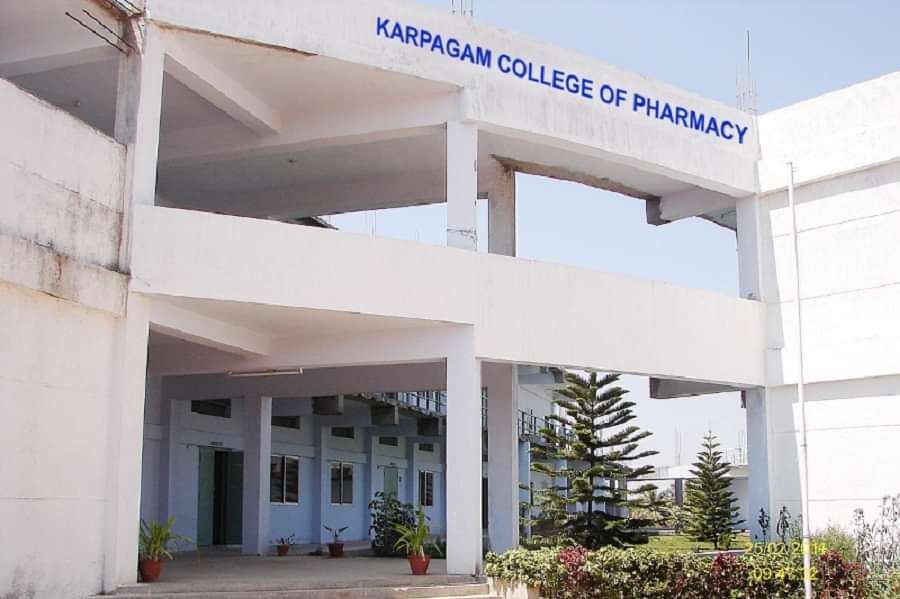
Karpagam College of Pharmacy
About
OfficialKarpagam College of Pharmacy is a other institution in Coimbatore, established in 2006. Karpagam College of Pharmacy, established in 1990, is one of the oldest and most established pharmaceutical education institutions in Tamil Nadu. Located in Eachanari, a suburban pocket of Coimbatore, the college has evolved into a comprehensive pharmaceutical sciences hub with consistent national recognition. The institution is approved by the All India Council for Technical Education (AICTE), recognized by the Pharmacy Council of India (PCI), and affiliated with Tamil Nadu Dr. Rajendra Prasad Central Agricultural University. Karpagam's founding was driven by the vision to create globally competitive pharmaceutical professionals equipped with both theoretical knowledge and practical industry exposure. The college operates under the umbrella of Karpagam Academy of Higher Education, which provides access to a broader ecosystem of academic and professional resources. The pharmacy discipline here is particularly strong, with dedicated departments in Pharmaceutics, Pharmaceutical Chemistry, Pharmacology, and Pharmacognosy. The college offers undergraduate B.Pharm (4-year), postgraduate M.Pharm programs in Pharmaceutics, Pharmacology, Pharmaceutical Chemistry, and Pharmacognosy, as well as PhD programs. Beyond pharmacy, Karpagam also operates degree programs in nursing, allied health sciences, and paramedical fields, creating an integrated healthcare education environment. The institution's pharmaceutical research strengths lie in formulation development, herbal drug research, nanotechnology applications in drug delivery, and pharmaceutical microbiology. Several faculty members have published in peer-reviewed international journals and obtained grants for research projects. The college maintains collaborations with pharmaceutical industries for internship placements, research projects, and faculty development. Campus infrastructure includes dedicated analytical laboratories equipped with HPLC, GC, spectrophotometers, and dissolution testing equipment. The library houses over 8,000 pharmaceutical texts and journals with digital access to major databases. The institution is particularly noted for its strong emphasis on experiential learning through clinical pharmacy rotations at affiliated hospitals and community pharmacy internships. Placement outcomes for pharmacy graduates consistently exceed 90%, with recruitment from major pharmaceutical companies, hospitals, and research institutions. Notable recruiters include companies like Cipla, Glenmark, Lupin, Abbott, Roche, and healthcare organizations like Apollo Hospitals and Fortis. However, the college faces challenges typical of non-IIT/non-NIT institutions: limited research funding compared to top-tier central universities, teaching loads that sometimes constrain faculty research productivity, and dependency on industry partnerships rather than government grants. Off-campus students often report commute difficulties during peak monsoon months due to traffic congestion in the Eachanari area. The hostel capacity is limited (accommodating approximately 600 students), so many students opt for private PGs in surrounding areas. The college is particularly suitable for students genuinely interested in pharmaceutical sciences and healthcare entrepreneurship, rather than those viewing pharmacy as a fallback career choice. Students with interests in regulatory affairs, drug formulation, clinical research, or pharmaceutical manufacturing find strong mentorship here. The conservative academic culture emphasizes attendance and practical competency, which aligns well with industry expectations. Students from tier-2 and tier-3 towns often appreciate the real-world industry readiness the curriculum provides. Notably, the college attracts significant female enrollment (approximately 55% women students), reflecting pharmacy's demographic trends and Coimbatore's relative safety for working women. The teaching methodology balances lectures with significant practical components—students spend considerable time in laboratories, which is both a strength (skill development) and a potential weakness for those preferring theoretical learning. Alumni network is reasonably strong within pharmaceutical industry circles, though less prominent in academic or research spheres compared to major government universities. The institution's focus on employability over research output makes it less suitable for students aspiring for academic careers without additional qualifications from premier institutes.