Kandra Radha Kanta Kundu Mahavidyalaya
About
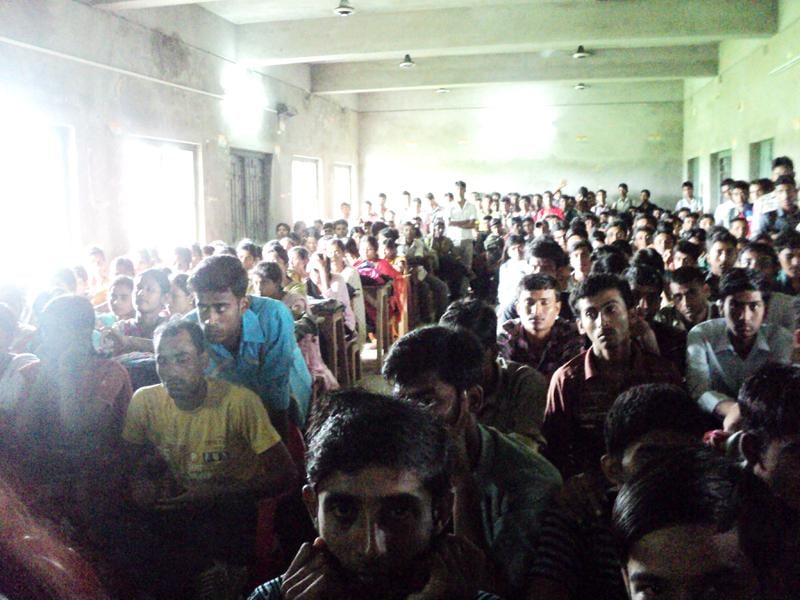
OfficialKandra Radha Kanta Kundu Mahavidyalaya is a other institution in Barddhman, established in 2001. Kandra Radha Kanta Kundu Mahavidyalaya, established in 1969, is a government-aided college located in Kandra village, approximately 25 km from Barddhman city in West Bengal. Named after Radha Kanta Kundu, a prominent philanthropist, the institution has evolved into a significant educational hub serving students from rural and semi-urban backgrounds across the Barddhman district and adjoining regions. The college's founding was driven by the vision to democratize higher education and provide quality academic opportunities to students who would otherwise lack access to premier institutions. Over five decades, it has developed a reputation for academic rigor, particularly in sciences and liberal arts, while maintaining affordability and accessibility as core institutional values. The college operates under the affiliation of Burdwan University (formerly University of Burdwan) and follows the West Bengal Higher Secondary Education Council curriculum for undergraduate programs. The institutional ethos emphasizes holistic development, combining classroom learning with practical application and community engagement. The campus, situated in a semi-rural setting, provides a relatively quiet academic environment with natural surroundings, though this also means limited urban amenities and entertainment options within walking distance. Administratively, the college is governed by a Principal and a collegiate council comprising faculty members, administrative staff, and nominated members from the academic community. The institution has gradually modernized its infrastructure over the past decade, though facilities remain modest compared to urban colleges in Kolkata. The college's academic strength lies primarily in science disciplines (Physics, Chemistry, Biology), where faculty expertise and laboratory facilities support both teaching and research activities. The humanities and commerce streams also function adequately, offering diverse career pathways. Research activities are limited but present, with some faculty members engaged in publication and collaborative projects with universities. The college has maintained reasonable placement records in recent years, particularly for science graduates entering pharmaceutical companies, engineering sectors, and public sector undertakings. Notable weak points include outdated library resources in certain disciplines, limited sports infrastructure, and occasional connectivity issues with the university administration. However, the college's strength lies in its personalized attention to students, low student-to-faculty ratios in many classes, and the genuine commitment of faculty members to student development. The institution attracts primarily local students and those from neighboring districts, reflecting its positioning as a regional college rather than a destination institution. The student body is socioeconomically diverse, with a significant proportion of first-generation learners and students from economically weaker backgrounds. This diversity enriches campus culture but also means that student engagement levels vary considerably. The college has produced several successful alumni in government services, academia, and corporate sectors, though alumni networking remains underdeveloped. Campus life is characterized by traditional cultural festivals, departmental seminars, and occasional sporting events, with student clubs and societies gradually gaining momentum. Women constitute approximately 48% of the student population, and the college has made deliberate efforts to create a safe, inclusive environment through dedicated facilities and support mechanisms. The institutional culture emphasizes ethical values, discipline, and community service, reflecting its foundational principles. The college is ideal for students seeking quality education at affordable cost, those comfortable with rural-setting academics, and those prioritizing genuine learning over campus infrastructure. It may be less suitable for students seeking vibrant urban campus life, extensive networking opportunities, or cutting-edge research facilities. Admission to the college is relatively straightforward, based on merit and availability of seats, making it accessible to students with varying academic backgrounds. The institution continues to evolve, with recent initiatives aimed at digital learning, faculty development, and infrastructure enhancement, though the pace of change remains gradual.