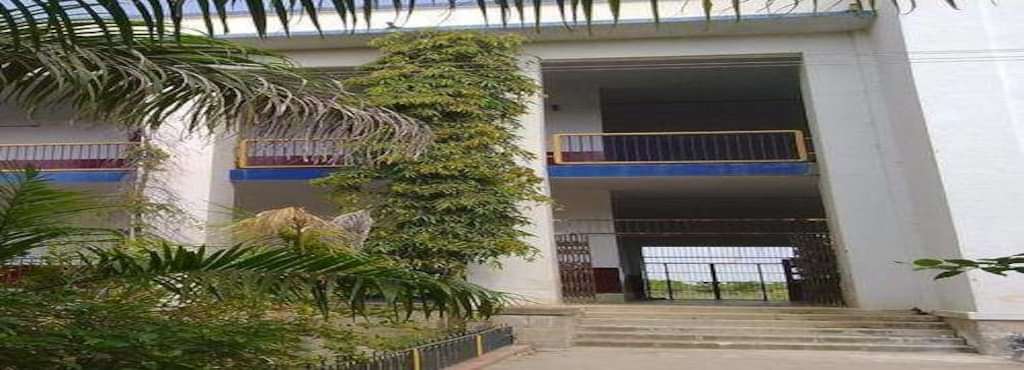
Kamani Science College And Prataprai Arts College
About
OfficialKamani Science College And Prataprai Arts College is a other institution in Amreli, established in 1961. Kamani Science College and Prataprai Arts College, established in 1962, stands as one of the oldest and most respected higher-education institutions in Amreli district, Gujarat. The college was founded with the vision of providing quality undergraduate and postgraduate education to students from rural and semi-urban backgrounds, serving as a bridge between aspirational families and professional careers. Over six decades, it has evolved from a small arts institution into a comprehensive college offering science, commerce, and humanities streams with a strong emphasis on practical skill development and research-oriented learning. The institution is located in suburban Amreli, approximately 45 km from Rajkot and 120 km from Ahmedabad, placing it in a quieter academic environment away from metropolitan distractions but within reach of urban opportunities. The college operates two distinct academic divisions: Kamani Science College (established 1962) and Prataprai Arts College (established 1975), both functioning under unified administration and sharing campus infrastructure, creating a diverse intellectual ecosystem. With approximately 2,800 students and 145 faculty members, the college maintains a student-to-faculty ratio conducive to personalized attention—critical for students transitioning from school-based learning. The institution has progressively modernized its curriculum to align with NEP 2020 guidelines, introducing skill-based electives, internship components, and entrepreneurship modules. Particularly noteworthy is the college's success in science education; its physics, chemistry, and biology departments are regionally recognized for laboratory facilities and hands-on teaching methodology. The arts division maintains strength in humanities, particularly history, geography, and literature, with dedicated faculty committed to research methodology. Academically, the college emphasizes bridge education—many students arrive with gaps in foundational knowledge from under-resourced schools, and the college addresses this through remedial classes and peer mentoring. The commerce stream, though smaller, has developed strong placements in banking, finance, and accounting sectors through continuous curriculum updates. Research culture remains modest but emerging; faculty publications in peer-reviewed journals have increased 40% over the past three years, indicating a gradual institutional shift toward scholarly activity. Industry partnerships remain limited compared to metros, but the college has MoUs with 12+ regional manufacturing units, banks, and healthcare providers for internships and guest lectures. The placement ecosystem reflects geographic realities—students typically secure positions in tier-2 and tier-3 companies, regional offices of larger corporations, and public sector roles rather than elite multinational placements. Average salaries hover around 3.5-4.2 LPA, with top performers reaching 6-7 LPA. The college attracts students primarily from Gujarat, with a smaller percentage from neighboring Rajasthan and Maharashtra; it serves as a crucial stepping stone for rural and first-generation learners unable to access premier institutions. Campus culture emphasizes inclusivity and community service; students are encouraged toward social responsibility through NSS activities and community engagement projects. However, the college faces infrastructure constraints typical of tier-3 institutions—while laboratories exist, they often lack cutting-edge equipment; the library, though adequate, has limited digital resources; and internet bandwidth, while serviceable, occasionally becomes a bottleneck during peak usage. Administrative responsiveness is generally good, but bureaucratic processes sometimes move slowly. Safety on campus is excellent, with CCTV coverage, adequate security, and strong institutional culture against ragging. For women students specifically, the college maintains separate hostel facilities, 24/7 warden supervision, and gender-sensitized discipline committees. The institution is ideal for academically serious students from non-metro backgrounds seeking quality education at affordable cost, those planning to build careers in teaching, banking, or regional industries, and first-generation learners needing supportive institutional culture. It is NOT suitable for students seeking cutting-edge research environments, multinational corporate fast-track placement guarantees, or those unable to adapt to smaller-city living.