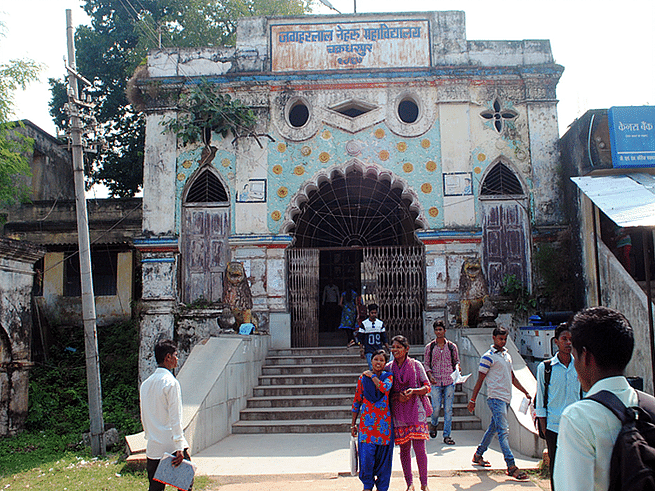
Jawahar Lal Nehru College
About
OfficialJawahar Lal Nehru College is a other institution in West Singhbhum, established in 1967. Jawahar Lal Nehru College (JLNC), established in 1972 in West Singhbhum district of Jharkhand, is one of the region's premier undergraduate and postgraduate institutions. Located approximately 18 km from Jamshedpur city center, the college was founded with a mission to provide quality higher education to students from industrial, mineral-rich eastern India. Named after India's first Prime Minister, the institution reflects values of scientific temperament, secularism, and nation-building through education. The college operates under the affiliation of Kolhan University and is recognized by the University Grants Commission (UGC). With a sprawling 42-acre suburban campus, JLNC serves a diverse student body of approximately 3,200 undergraduates and postgraduates across multiple disciplinary streams. The institution's journey spans over five decades during which it has evolved from a purely arts-focused college to a multidisciplinary institution offering programs in Sciences, Commerce, and limited professional streams. The college's location in West Singhbhum—historically known as the steel capital region of India—provides unique advantages for students interested in industrial management, metallurgy, manufacturing, and core engineering placements. JLNC is particularly known for its strong humanities and sciences programs, with particular emphasis on social sciences research relevant to eastern India's development challenges. The college has gradually expanded its science offerings, introducing integrated programs and postgraduate specializations in areas like Environmental Science, Physics, and Chemistry. However, it remains primarily a tier-2 regional college without the brand recognition or comprehensive infrastructure of top IITs, NITs, or central universities. The student body comprises primarily Jharkhand domicile students (approximately 65%), with remaining enrollment from Odisha, Bihar, and West Bengal. The college attracts students from middle-income families who view JLNC as an affordable gateway to quality education without the pressure of highly competitive national entrances. Academically, the institution emphasizes holistic development through a mixed curriculum combining theory and practical training. Research activities are limited compared to research-intensive central universities but show gradual improvement with faculty pursuing doctoral work in various fields. The college has established collaborations with regional industrial bodies, particularly mining and steel companies operating in the Singhbhum belt, which aids placement efforts. Notable placement sectors include steel and mining companies (JSW Steel, Tata Steel, Vedanta), government organizations, and teaching institutions. Student sentiment regarding JLNC is moderately positive for academics and campus life, though expectations should be realistic regarding national-level placements and research output. The college's strength lies in being an accessible, affordable institution with decent infrastructure and faculty committed to teaching. Weaknesses include limited research funding, geographic remoteness from major metros reducing recruitment from top IT/finance companies, inconsistent maintenance of facilities, and limited international exposure. The institution is best suited for students prioritizing affordability, a wholesome campus experience, and regional/state-level career opportunities, rather than those targeting top global or India's leading companies. For students from Jharkhand, Odisha, and neighboring regions seeking undergraduate education without relocation to metros, JLNC offers reasonable value. The college has produced graduates working in government services, education, regional industries, and small-to-medium enterprises. However, students aspiring for IIT-like placement statistics or research opportunities should manage expectations and consider additional upskilling beyond curriculum.