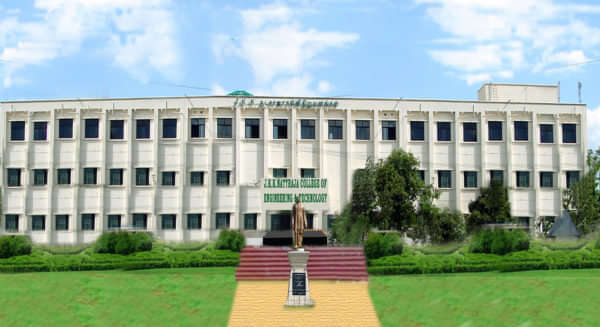
J.K.K.Nattraja College of Engineering and Technology
About
OfficialJ.K.K.Nattraja College of Engineering and Technology is a other institution in Namakkal, established in 2008. J.K.K. Nattraja College of Engineering and Technology (JKKNATEC) was established in 2008 by the J.K.K. Nattraja Education Trust with the vision of providing quality engineering education at affordable costs to students from diverse socioeconomic backgrounds. Located in Namakkal, a tier-3 city in Tamil Nadu, the institution has grown from a modest beginning to become a recognized engineering college with decent placement records and industry connections. The college is approved by the AICTE and affiliated to Anna University, Chennai, operating under the autonomous body framework. With approximately 2,850 students spread across 13 engineering disciplines and around 185 faculty members, JKKNATEC maintains a student-to-faculty ratio of 15:1, which is reasonable for a mid-tier engineering college. The campus spans 45 acres on the outskirts of Namakkal, providing a semi-rural environment that students either appreciate for its peaceful setting or find isolating compared to metro colleges. The founding philosophy emphasized accessibility—tuition fees are kept deliberately lower than comparable private engineering colleges in Tamil Nadu, making it attractive to students from middle-class families. JKKNATEC is NAAC accredited with a B+ grade (valid until 2027) and has NBA accreditation for select engineering programs including Civil, Mechanical, and Electrical Engineering. The college runs thirteen engineering programs at the undergraduate level covering Civil, Mechanical, Electrical & Electronics, Electronics & Communication, Computer Science & Engineering, Information Technology, Automobile Engineering, Chemical Engineering, Biomedical Engineering, Food Technology, Aeronautical Engineering, and Production Engineering. Additionally, it offers MBA (2-year full-time) and M.Tech programs in select specializations. The academic environment is characterized by a rigid curriculum aligned strictly with Anna University syllabi, which means limited academic flexibility but ensures standardized competency. Research output is modest—the college publishes approximately 80-100 papers annually in peer-reviewed journals, with key research areas including structural engineering, embedded systems, power systems, and renewable energy. Faculty engagement in industry projects is limited; most research is conducted by motivated faculty members rather than as institutional priority. The placement ecosystem has shown improvement over the past 3-4 years. In 2023-24, the overall placement rate stood at approximately 78-82% across all branches, with significant variation depending on the branch. Engineering graduates, particularly from CSE and IT streams, achieved placement rates exceeding 85%, while Civil and Mechanical branches saw placement rates between 65-75%. The median salary across engineering programs is approximately INR 3.8-4.2 lakhs per annum, with technology companies offering salaries in the INR 4.5-6.5 lakh range, manufacturing firms in the INR 3-4.5 lakh range, and core engineering roles in the INR 2.8-3.8 lakh range. Top recruiters include TCS, Infosys, Wipro, HCL Technologies, Accenture, Cognizant, Bosch, L&T, Delphi, Tamil Nadu Petrochemicals, and BHEL, along with various smaller IT services and staffing companies. The placement cell is reasonably active, conducting pre-placement training, mock interviews, and soft-skills workshops, though the quality of these sessions varies. What distinguishes JKKNATEC is its affordability combined with functional infrastructure and a pragmatic approach to engineering education. The college deliberately maintains lower fees (total 4-year cost approximately INR 12-15 lakhs including hostel) compared to peer private engineering colleges charging INR 18-25 lakhs, making it accessible to students who might otherwise attend a government engineering college. The campus infrastructure is functional but not modern—labs are equipped with dated equipment, library resources are limited (approximately 45,000 books and 100+ journals), and IT infrastructure relies heavily on wireless connectivity with intermittent coverage in older buildings. The hostel facilities are basic but adequate, with triple-sharing arrangements in older blocks and double-sharing in newer blocks, a working mess that serves vegetarian and non-vegetarian food at approximately INR 4,000-4,500 per month, and basic sports facilities including a cricket ground, volleyball courts, and a small gymnasium. The campus culture is neither vibrant nor suffocating—student societies exist but lack significant institutional funding, annual technical fests (TechnoVista) and cultural programs (Kalachakra) are organized but operate on tight budgets, and student engagement depends heavily on individual initiative. Women students (approximately 28-30% of the student body) report general safety and acceptance, though some express concerns about the limited entertainment and social options in the city itself. Ragging is officially prohibited and monitoring has improved, with no major incidents reported in recent years. The college is suitable for students who prioritize affordability and functional engineering education over premium infrastructure and campus vibrancy, students from tier-2 and tier-3 towns comfortable with a semi-rural setting, and those seeking placements in mid-tier IT companies and manufacturing firms. It is less ideal for students seeking research-oriented education, exposure to cutting-edge technology, or a vibrant metropolitan campus experience. JKKNATEC represents a pragmatic middle ground in the Indian engineering education landscape—neither aspirational nor substandard, offering decent value for middle-class families willing to trade modern infrastructure for reasonable fees and acceptable placement outcomes.