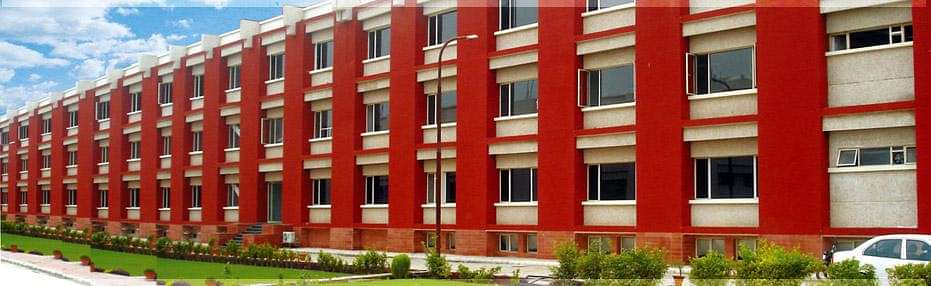
Jagran Institute of Management and Mass Communication
About
OfficialJagran Institute of Management and Mass Communication is a other institution in Kanpur, established in 2005. Jagran Institute of Management and Mass Communication (JIMMC) was established in 2010 as a private professional institution located in Kanpur, Uttar Pradesh. The institute emerged from the vision of promoting quality management and media education in Tier-2 cities, challenging the dominance of metros in professional education. Positioned strategically near IIT Kanpur and Kanpur University, JIMMC sits in a region with significant industrial and academic infrastructure. The institute operates from a compact 8.5-acre campus in the suburban areas of Kanpur, offering a blend of urban accessibility and controlled academic environment. The founding premise was to democratize access to quality management and mass communication education while maintaining affordable fee structures compared to Delhi and Mumbai-based counterparts. JIMMC offers three primary academic verticals: management programs (BBA, MBA with specializations), mass communication and journalism programs (BA, MA), and professional diploma courses. The management curriculum follows industry-aligned pedagogy with emphasis on case studies, consulting projects, and internship integration. The MBA program, particularly the 2-year full-time variant, has developed specializations in Marketing, Finance, HR, Operations, and International Business. Mass Communication programs emphasize digital media, broadcast journalism, content creation, and advertising—areas increasingly relevant in India's growing media landscape. The institute has gradually built academic credibility through industry partnerships with media houses like NDTV, Times Group entities, and various regional news organizations. Placements have been a focal point, with consistent placement rates around 75-82% in recent years, though salary bands remain modest compared to tier-1 institutions. The median placement salary for MBA graduates hovers around 6.5-8 LPA, while mass communication graduates typically secure 3.5-5 LPA roles in media, advertising, and content companies. Corporate recruiters include companies like HT Media, Aaj Tak, ICICI Bank (retail divisions), Flipkart (business operations), and consulting firms like Deloitte and Accenture (specific office-wise hiring). The institute's strength lies in its practical orientation—regular industry expert lectures, guest sessions from practicing journalists, advertising professionals, and business leaders are commonplace. The faculty comprises educators with mixed academic and corporate backgrounds, though research output remains limited. JIMMC does not emphasize research publication or PhD programs; the focus is squarely on teaching and employability. Campus infrastructure is modest but functional: a small library with curated collections, seminar halls equipped with AV systems, a computer lab, and a makeshift media production center with basic broadcasting equipment. The campus lacks grandiose facilities seen in metro-based private institutions; there is no in-campus hostel (a significant limitation for out-station students), limited sports infrastructure, and basic amenities. However, the location near Kanpur University and IIT Kanpur provides proximity to better facilities in the wider academic zone. Student demographics are diverse—roughly 40% from North India (primarily UP, Delhi, Punjab), 30% from Central India, and 30% from other regions. Gender distribution in management programs tilts toward females (55-60%), while mass communication shows higher male participation. The institute attracts aspirants who either narrowly miss admission to Delhi-based private institutions or prefer Kanpur's lower cost of living. Student sentiment is pragmatic: those who enter with realistic expectations (affordable education, decent placement support, Tier-2 city experience) tend to be satisfied; those expecting tier-1 institution experience face disappointment. The campus culture emphasizes professional development over social bonding—clubs exist but are less vibrant than in larger institutions. Ragging has been negligible; the institute maintains strict anti-ragging protocols. Safety for women students is generally reported as good, though the absence of campus hostel means women largely remain in local PGs or with families, reducing campus vulnerability issues. The institution is best suited for aspirants seeking affordable, practically-oriented management or media education in a Tier-2 setting with acceptable placement outcomes, not for those prioritizing research, elite branding, or comprehensive campus life. Students from middle-income backgrounds with work-part-time interests benefit from Kanpur's lower living costs. The cons include limited infrastructure, absence of hostel facility, modest research culture, limited alumni network compared to established institutions, and geographic isolation from major media/corporate hubs. The institution does not feature in national university rankings significantly, which may concern brand-conscious applicants. However, for cost-conscious, practical learners, JIMMC delivers reasonable value within its positioning.