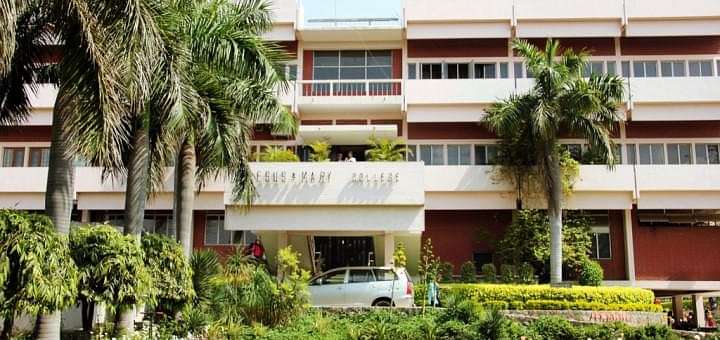
Jesus and Mary College
About
OfficialJesus and Mary College is a other institution in New Delhi, established in 1968. Jesus and Mary College, established in 1968, is one of Delhi's premier undergraduate institutions affiliated with Delhi University. Located in the exclusive Vasant Kunj area, it operates under the educational patronage of the Congregation of Jesus religious order. Originally a women's college, it has been coeducational since 2009, though female enrollment still comprises approximately 65% of the student body. The college has evolved into a comprehensive academic institution with particular strengths in humanities, sciences, commerce, and management studies. The institution maintains a reputation for rigorous academics combined with emphasis on character development, social responsibility, and intellectual discourse. With a faculty-to-student ratio of approximately 1:15, JMC offers an intimate learning environment unusual for Delhi University colleges. The campus architecture blends modern facilities with heritage elements, featuring manicured lawns, heritage buildings, and contemporary academic blocks. The college operates under the "Autonomous" status granted by Delhi University, allowing it greater flexibility in curriculum design, assessment methods, and academic innovations. This autonomy has enabled JMC to introduce specialized honors programs, skill-based electives, and industry-relevant courses ahead of many peer institutions. Academics at JMC emphasize critical thinking, research methodology, and interdisciplinary learning. The college offers 28 undergraduate honors programs and multiple postgraduate programs across sciences, arts, commerce, and management. Notable strengths include strong departments in English, Economics, History, Mathematics, Computer Science, and Psychology. The college has invested significantly in research infrastructure with dedicated research labs, data analysis centers, and a digital library housing over 200,000 print volumes and comprehensive e-journal access. Many faculty members hold grants from UGC, DST, and ICSSR, conducting research in areas ranging from molecular biology to constitutional law. The placement ecosystem at JMC is highly developed, with dedicated placement cells for each stream. For sciences and commerce graduates, placement rates hover around 85-92%, with recruiters from IT, finance, and FMCG sectors actively participating. Humanities graduates typically pursue journalism, civil services, academia, and non-profit sectors with varying placement metrics. The college's teaching pedagogy combines traditional seminars with experiential learning, internship programs, and industry interaction. The careers cell facilitates skill development in communication, quantitative reasoning, interview preparation, and professional etiquette. Student feedback consistently highlights the mentoring culture, where faculty members engage in prolonged interactions with students beyond formal classroom hours. Campus life at JMC is vibrant despite its urban location. The college hosts annual fests including "Pulse" (cultural festival), "Saksham" (management festival), and "Prithvi" (environmental festival). More than 40 student clubs span technical, cultural, sports, and social dimensions. The student body demonstrates high engagement in debate, Model United Nations, literary journalism, and social entrepreneurship. Given its location in South Delhi's affluent neighborhood, the college attracts students from diverse socioeconomic backgrounds, though representation of students from Hindi-medium backgrounds and tier-2/tier-3 cities remains lower than national averages. The women's safety record is strong with dedicated grievance redressal mechanisms, CCTV surveillance, and women's cell initiatives. Ragging incidents are virtually non-existent due to strict institutional policies and cultural emphasis on senior-junior mentoring rather than hierarchical hazing. The hostel facility, though limited (accommodating only 300+ students), is highly sought after, with waitlists extending 2-3 years. Hostel life is integral to JMC's residential culture, fostering close peer networks and leadership development. For students unable to secure hostel accommodation, the college's South Delhi location offers abundant paying guest accommodations and shared flats, though rents are premium compared to other Delhi University areas. JMC's notable alumni include senior journalists, accomplished academicians, IAS/IPS officers, senior corporate executives, and social activists. The college maintains an active alumni network that contributes to guest lectures, mentoring, and professional networking events. Employment outcomes vary significantly by stream: science graduates frequently pursue higher education or technical careers with median packages of 8-14 LPA; commerce/management students report median packages of 10-18 LPA in finance and consulting sectors; humanities graduates typically transition to journalism, civil services coaching, academia, or non-profit sectors with less standardized salary metrics. Who should apply: JMC is ideal for students seeking a liberal arts education in a structured academic environment with strong industry connections. It appeals particularly to candidates from Delhi/NCR with strong academic records (12th board marks typically >85% across top streams) who value mentor-led pedagogy and reasonably diverse campus community. The college suits students interested in science, commerce, or humanities with career aspirations in research, corporate sectors, journalism, academia, or civil services. The autonomous status and specialized honors programs make it attractive for students seeking academic depth and subject expertise. However, students seeking engineering programs, highly specialized professional qualifications, or aggressive placement packaging should explore alternative institutions. Similarly, first-generation learners or students from economically weaker sections may find the college's urban location and peer demographics challenging without substantial scholarship support. The college's culture rewards academic engagement, intellectual curiosity, and balanced personality development—making it less suitable for students seeking purely vocational training or grade-focused shortcuts.