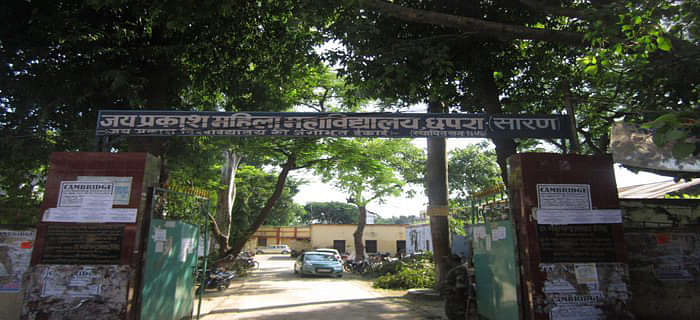
Jai Prakash Mahila College
About
OfficialJai Prakash Mahila College is a other institution in Chhapra, established in 1957. Jai Prakash Mahila College, established in 1946, is one of the pioneering women's colleges in Bihar and remains a significant institution for female higher education in the Chhapra region. Located in the historic city of Chhapra in Saran district, the college was founded with the vision of empowering women through quality education during a period when women's access to higher education was severely limited. The institution has evolved significantly over nearly eight decades, transitioning from a purely arts-focused college to a multi-disciplinary center offering undergraduate programs across sciences, commerce, and humanities. The college operates under the purview of Babasaheb Bhimrao Ambedkar Bihar University, Muzaffarpur, which provides its academic framework and accreditation oversight. The institution is UGC-recognized and has been working towards NAAC accreditation to further strengthen its academic standards. With approximately 1,200 students and a faculty strength of 75 dedicated educators, JPMC maintains a relatively favorable student-to-faculty ratio for a regional college in Bihar. Academic Programs and Offerings: The college offers Bachelor of Arts (BA) honors and general degrees in diverse disciplines including History, English, Hindi, Political Science, Geography, Economics, Psychology, and Sociology. The Bachelor of Science (BSc) program includes specializations in Physics, Chemistry, Botany, and Zoology. Additionally, BSc in Mathematics and BSc in Home Science are offered. The college has introduced Bachelor of Commerce (BCom) to cater to commerce-inclined students. Most programs are three-year full-time undergraduate degrees following the semester system. While postgraduate programs are limited, the institution offers Master of Arts in a few select disciplines. The academic curriculum is regularly updated to include skill-based courses, computer literacy, and digital competency training. Research and Academic Strengths: While JPMC is not a research-intensive institution, faculty members engage in scholarly activities within their disciplines. The college emphasizes teaching excellence and student-centric pedagogy. The institution has established basic research facilities in sciences, though these are not comparable to premier institutions. The library houses approximately 35,000 books covering standard college curricula and reference materials. Internet connectivity and digital resources have been progressively enhanced, though bandwidth and access speeds remain below what students from metros might expect. Campus Infrastructure and Facilities: The college operates from a modest urban campus in central Chhapra. While the physical infrastructure has been maintained, the campus lacks some modern amenities found in well-funded institutions. The main building dates from the colonial era and has historical significance. Laboratory facilities for science students exist but are basic and require frequent maintenance. Computer labs are available with internet connectivity, though the number of systems per student ratio is lower than industry standards. The library facilities are adequate for undergraduate curriculum support but lack extensive digital resources or e-journal subscriptions. A multipurpose hall serves for college events, seminars, and lectures. Student Life and Campus Culture: JPMC fosters a close-knit community typical of smaller regional colleges. The institutional culture emphasizes discipline, academic rigor, and women's empowerment. Students participate in academic clubs, cultural societies, and sports activities. The college conducts an annual cultural fest called 'Shrishti' which showcases student talents in music, dance, drama, and debate. Sports activities include cricket, badminton, volleyball, and athletics. The college has a formal anti-ragging policy and a women's grievance cell. However, student engagement in extracurricular activities is lower than in urban metro institutions, partly due to the small size and conservative social environment of Chhapra. Placements and Career Outcomes: Placement performance at JPMC is modest compared to premier institutions but reasonable given the regional context. Approximately 35-45% of graduating students secure campus placements, primarily in education, banking, retail, and government service sectors. Average salaries for placed students range from ₹180,000 to ₹240,000 annually, predominantly in entry-level positions. Major recruiters include banks (ICICI Bank, Axis Bank), insurance companies (LIC, HDFC Life), and educational institutions. A significant portion of graduates pursue civil service examinations, teacher training, or higher education. The college has established a dedicated placement cell with training programs in personality development, resume writing, and interview skills. However, the absence of strong tech industry connections limits placements in high-paying IT or data analytics roles. Admissions and Eligibility: Admission to undergraduate programs is primarily merit-based, determined by 12th board examination scores. The college follows the Bihar board admissions process and maintains relatively accessible cutoff scores, making it an entry point for students from middle-income backgrounds. The admission process is straightforward, requiring completion of application forms, document verification, and counseling. Postgraduate admissions are based on graduate scores and entrance examinations where applicable. International student admissions are rare but theoretically possible through bilateral arrangements. City Context and Student Life in Chhapra: Chhapra is a Tier-3 city with approximately 250,000 people, historically significant as the seat of the Saran district administration. The city is known for its literary and political heritage but lacks the cosmopolitan infrastructure of larger metros. Living costs are substantially lower than in metros, with monthly budgets of ₹12,000-₹15,000 sufficient for a modest lifestyle. The climate is continental with hot summers (reaching 43°C) and cold winters (dropping to 8°C). The monsoon season (July-September) brings heavy rainfall. The city has limited nightlife, entertainment, and dining options compared to metros. Public transportation relies on auto-rickshaws and local buses. Chhapra is well-connected by rail to major cities like Delhi, Patna, and Kolkata, making it relatively accessible. The city has average healthcare facilities with district hospital and private clinics available. Internet connectivity and mobile coverage are adequate but less stable than metro areas. Who Should Apply: JPMC is ideal for academically inclined women from Bihar and surrounding regions seeking affordable, quality undergraduate education with emphasis on academic discipline and traditional learning. The college suits students from conservative social backgrounds who value institutional structure and mentorship. It is particularly suitable for students aspiring towards civil services, teaching careers, or higher education pursuits. Students seeking extensive modern infrastructure, specialized placements in IT/finance, or vibrant cosmopolitan campus life should consider institutions in tier-1 cities. JPMC serves as an excellent stepping stone for higher education and is cost-effective for economically disadvantaged backgrounds. The college is recommended for students valuing faculty mentorship, close student-teacher interaction, and grounding in foundational concepts over cutting-edge specialization. What Makes It Unique: As one of Bihar's oldest women's colleges, JPMC carries institutional heritage and a mission of women empowerment. The college maintains strong traditions, community connections, and alumni networks within Bihar. The faculty members often develop deep relationships with students, providing personalized guidance. The institutional focus on holistic development beyond academics distinguishes it from purely commercial coaching centers. Location in Chhapra provides a calm, distraction-free environment for focused studies, contrasting with metro institutions. The college's approach to discipline and structure appeals to parents seeking a traditional educational environment.