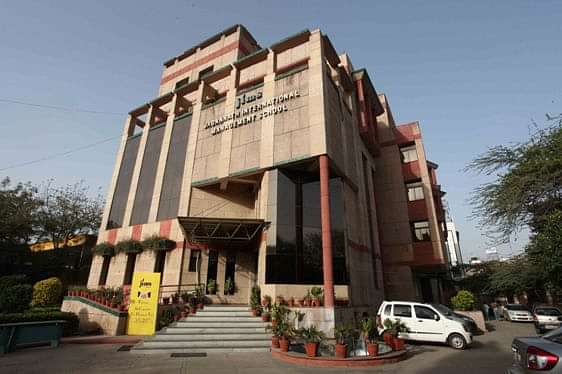
Jagannath International Management School Kalkaji
About
OfficialJagannath International Management School Kalkaji is a other institution in New Delhi, established in 1997. Jagannath International Management School (JIMS), established in 1993, is one of Delhi's oldest and most established private business schools. Located in Kalkaji, an upscale South Delhi locality, JIMS has built a reputation for management and business education over three decades. The institution operates under the guidance of the Jagannath Education Society and has evolved from a single-campus institute to a multi-campus establishment with presence across Delhi NCR. Founding History: JIMS was conceived with the vision of providing quality management education accessible to aspirants from diverse socioeconomic backgrounds. Founded during the nascent phase of India's economic liberalization, the school capitalized on growing demand for professionally trained managers. The Kalkaji campus, being the flagship, houses the majority of the institution's administrative functions and premium academic facilities. Academic Programs: The school primarily focuses on Management education across undergraduate and postgraduate levels. Key offerings include: BBA (Bachelor of Business Administration), MBA with specializations in Finance, Marketing, Human Resources, and Operations, Executive MBA for working professionals, and PGDM programs. The curriculum is designed with AICTE approval and follows case-method teaching alongside traditional lectures. JIMS also offers programs in psychology, commerce, and allied disciplines to maintain academic diversity. Teaching Methodology: The institution emphasizes a blend of theoretical knowledge and practical application. Guest lectures from industry practitioners are frequent, and the curriculum incorporates real-world business simulations. However, student feedback suggests that the depth of specialized technical content (particularly in quantitative methods and advanced statistics) could be stronger compared to tier-1 institutes. Research Strengths: While JIMS is primarily a teaching institution, it has emerging research groups in organizational behavior, consumer behavior, and business strategy. Faculty publication record is modest compared to IIMs but shows gradual improvement. The school encourages student research projects and case competitions but does not position itself as a research-intensive establishment. Campus Infrastructure: The Kalkaji campus is compact but well-maintained. It features dedicated classrooms with AV facilities, a library with approximately 15,000 titles, computer labs with latest software, a small cafeteria, and administrative offices. The campus feels more like a professional business park than a sprawling university campus. Class sizes average 40-50 students for BBA and 30-40 for MBA, enabling reasonable faculty-student interaction. Campus Life and Student Community: JIMS maintains an active student body engaged in various clubs including Entrepreneurship Cell, Marketing Club, Finance Club, and Cultural Society. Annual events include business conclave ("Moot Mart"), cultural festival, and sports day. The student community is predominantly from Delhi NCR with 25-30% from other Indian states. International students form about 5-8% of enrollment, primarily from African and Southeast Asian countries. Placement Performance: JIMS has maintained consistent placement records with 85-90% placement rates for MBA students and 70-75% for BBA students. The median salary for MBA graduates ranges from ₹10-14 lakhs (2023-24), with top 20% earning ₹20+ lakhs. BBA placements yield median salaries of ₹4.5-6.5 lakhs. Key recruiters include TCS, Infosys, HCL, HDFC Bank, Axis Bank, Amazon, and various consulting firms. However, it's important to note that JIMS placements lag significantly behind IIMs and top-tier private B-schools; recruitment is concentrated in banking, IT services, and mid-size consulting rather than premium strategy consulting or investment banking. Sector-wise Placements: Technology and IT services account for approximately 35-40% of placements, followed by Finance and Banking (30-35%), Consulting (15-20%), and Others including FMCG, E-commerce, and Retail (10-15%). Core engineering roles are absent since JIMS doesn't offer engineering programs. Notable Alumni: JIMS has produced successful alumni in diverse fields. Somnath Das (Founder, logistics startup), Anuj Sharma (Senior Manager, TCS), and Deepa Mehta (VP, HDFC Bank) represent the alumni network. However, unlike IIMs, the school has not produced widely-recognized entrepreneurs or C-suite executives at Fortune 500 companies. Academic Rigor: The academic program maintains reasonable standards but differs from premier institutions in depth and specialization options. The faculty mix includes academics with Indian and international qualifications (approximately 60% with doctoral degrees), though research credentials are not the primary hiring criterion. Guest lectures from practitioners add practical value. However, students note that theoretical foundations in subjects like econometrics or advanced finance could be more rigorous. Location Advantages: Being in South Delhi's Kalkaji locality, JIMS enjoys proximity to major commercial hubs (South Delhi, Gurgaon via metro), shopping areas, and residential zones. The location attracts students valuing urban accessibility over sprawling campus culture. Admissions Process: JIMS accepts students based on merit in entrance examinations (for MBA: CAT/GMAT/MAT/CMAT; for BBA: merit-based or entrance test), academic track record, and selection in group discussions and personal interviews. The process is relatively straightforward and faster than top-tier institutions, typically completing within 4-6 weeks of application. Value Proposition: JIMS positions itself as a quality management school at reasonable fee points. Annual fees for MBA (₹13-15 lakhs) and BBA (₹7-9 lakhs) are significantly lower than premium private universities while remaining higher than government institutions (NITs/Delhi University). The value proposition works best for students seeking: quality management education in Delhi, good placement outcomes in banking/IT/consulting, access to urban Delhi location, and reasonable fee structure without the ultra-premium positioning of top-10 B-schools. Who Should Apply: JIMS suits students with clear interest in management/business careers, ability to thrive in urban classroom settings, and preference for South Delhi location. It works well for working professionals pursuing Executive MBA given the evening/weekend schedule options. Students seeking research-intensive environments, specialized engineering management, or ultra-premium placement outcomes (IIM-level) should consider alternatives. Challenges and Honest Assessment: The institution faces competition from newer, well-funded private universities (Ashoka, FLAME, Christ) in the aspirational student segment. Alumni network, while active, doesn't match IIM/XLRI strength. Internship opportunities, particularly international placements, are limited. The compact campus offers less diversity of non-academic experiences compared to tier-1 universities. Faculty research output and academic publications are below peers like Delhi Business School or FORE School. Unique Strengths: Long-standing brand in Delhi NCR, consistent placement record, experienced faculty in applied management domains, reasonable fee structure, and efficient campus administration. The school has maintained stability and relevance over 30+ years without major reputation dips. Conclusion: JIMS represents a pragmatic choice for Delhi-based or India-based students seeking solid management education with good employment prospects at moderate cost. It's neither the aspirational premium choice nor positioned for those seeking research/innovation focus, but rather serves the mainstream segment seeking professional business education in India's capital.