Institute of Technology & Science
About
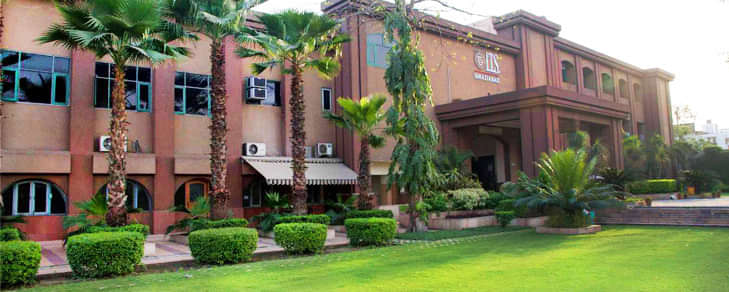
OfficialInstitute of Technology & Science is a other institution in Ghaziabad, established in 1995. Institute of Technology & Science (ITS), established in 2009, is a private engineering and technology institution located in Greater Noida, Uttar Pradesh, positioned in the NCR region's Knowledge Park. Over 15 years of operation, ITS has grown to become one of the largest private engineering colleges in North India with a student body exceeding 8,500 across undergraduate, postgraduate, and research programs. The institute emerged during India's expansion of private higher education capacity and has carved a niche in engineering education by maintaining relatively consistent placement records and investing in modern infrastructure. The campus spans 45 acres in Greater Noida's Knowledge Park-II, a technology-focused commercial zone developed specifically to attract educational and IT industry establishments. This location proximity to NCR's corporate centers has proven strategically advantageous for ITS, enabling direct industry partnerships and regular campus recruitment drives. ITS primarily focuses on Engineering disciplines (Civil, Mechanical, Electrical, Electronics, CSE, IT) at the undergraduate level with BE and BTech programs of 4-year duration. The institute also offers Master's programs in engineering specializations, MBA programs through its management school, and shorter diploma courses. The engineering programs maintain AICTE accreditation and many departments have pursued NBA accreditation in phases. The institution is known for maintaining structured placements with dedicated placement cells, though like many private institutions, placement statistics require verification and tend to vary significantly by branch and academic year. Research at ITS remains modest compared to premier institutions, though the college has established some research centers in collaboration with industry partners, particularly in renewable energy, IoT, and manufacturing engineering. The institute invests in modern laboratories, computing facilities, and maker spaces to provide practical exposure to engineering concepts. Faculty comprises a mix of industry-experienced professionals and academics, with growing participation in research and innovation activities. ITS maintains separate hostels for men and women with capacity to accommodate approximately 40-50% of the student body on-campus. The hostel infrastructure includes furnished rooms, mess facilities, and recreational areas, though quality varies by block and occupancy level. Off-campus accommodation in Greater Noida is readily available and affordable due to the city's IT corridor development. Campus life includes technical clubs (coding, robotics, electronics), cultural societies, sports programs, and annual festivals like 'Impulse' (technical fest). However, ITS is a large institution and campus life can feel less intimate than smaller colleges. The college has expanded rapidly, which has sometimes led to infrastructure lagging enrollment growth, particularly in hostel quality and library resources during peak usage periods. Ragging has been reported occasionally despite institutional policies, particularly in the first few months of admission—prospective students should be aware this is a concern requiring active vigilance. For women students specifically, the institution has implemented dedicated safety measures including women's hostel security, separate mess facilities, and campus patrol, though some concerns about local area safety in Greater Noida persist during late evening hours. ITS attracts students seeking affordable engineering education in the NCR region with decent placement potential, those from middle-class backgrounds looking for structured programs, students interested in technical entrepreneurship (the campus has an innovation lab), and those preferring college atmosphere over purely academic rigor. The institution is less suitable for students seeking world-class research facilities, extremely selective peer groups, or elite campus brands like IITs/NITs. Notable strengths include strong industry connections, decent placement track record for core sectors, affordable fee structure compared to peer private colleges, and proximity to Delhi/NCR job market. Significant weaknesses include moderate faculty research output, infrastructure bottlenecks due to rapid growth, variable placement outcomes across branches, and limited brand recognition outside North India.