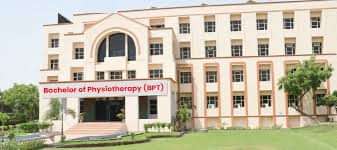
ITS College of Health & Wellness Sciences, Greater Noida
About
OfficialITS College of Health & Wellness Sciences, Greater Noida is a other institution in Greater Noida, established in 2022. ITS College of Health & Wellness Sciences, established in 2009, is a relatively younger private institution located in Greater Noida's Knowledge Park-II area. Founded by the ITS Educational Trust, the college operates as part of a broader educational ecosystem and focuses specifically on health sciences, wellness, and allied medical programs. Unlike the highly selective tier-1 medical colleges (AIIMS, CMC Vellore), ITS functions as a mid-tier private health sciences college targeting students who scored reasonably well in NEET but did not secure admission to government medical colleges or NIT-equivalent institutions. The college offers undergraduate and postgraduate programs across Bachelor of Science (Nursing), Bachelor of Pharmacy, BPT (Physiotherapy), BSc (Medical Laboratory Technology), BSc (Radiology & Imaging Technology), and various postgraduate degrees in these disciplines. It also runs diploma programs and is expanding into wellness-focused specializations like yoga therapy and health management. Academically, the institution is recognized by the Indian Nursing Council (INC), Pharmacy Council of India (PCI), and the Rehabilitation Council of India (RCI) for its respective programs. NAAC accreditation is pending, and the college maintains affiliations with relevant statutory bodies. However, academic rigor and research output remain modest compared to government medical colleges or elite private institutions. Teaching methodology relies heavily on traditional lectures supplemented with practicals in well-equipped labs and hospital-based training through affiliated hospitals in Delhi-NCR. The campus spans 8.5 acres in suburban Greater Noida, approximately 25-30 km from central Delhi. It features modern infrastructure including nursing labs, pharmacy labs, physiotherapy clinics, radiology centers, and library facilities. The location offers decent connectivity to Delhi via the Eastern Peripheral Expressway and proximity to the Noida City Centre metro station (about 8 km away), making it reasonably accessible though not as convenient as central Delhi institutions. Placement outcomes are moderate. The college reports 60-75% placement rates across disciplines, with average salaries in the 3-4.5 LPA range for nursing graduates and 4-6 LPA for pharmacy graduates. Healthcare institutions, pharmaceutical companies, and corporate hospitals constitute primary employers. Some students pursue higher education (MD, MS, PhD) in premier government institutions or abroad. Unlike IITs or top management schools, ITS does not attract top-tier multinational corporations. Campus life is functional but not particularly vibrant. The college has basic clubs for technical, cultural, and sports activities but lacks the scale and energy of larger universities. Student housing is available through institutional hostels (separate for men and women) at approximately 3,500-5,000 INR per month including mess. Off-campus accommodation in Greater Noida is affordable, ranging from 3,000-8,000 INR for shared flats or PG accommodations. The institution attracts students primarily from Delhi-NCR region, with some enrollment from pan-India. Social diversity exists but is not as pronounced as in IITs or AIIMS. A significant portion comes from middle-class families aspiring to healthcare careers but unable to secure government college seats. The college culture emphasizes professional ethics, patient care, and health awareness. Notable strengths include affordable fee structure (compared to other private medical colleges), location in Greater Noida (relatively cheaper than central Delhi), experienced faculty in clinical fields, and genuine focus on skill-based learning. Limitations include modest research output, limited national recognition compared to government colleges, restricted international collaborations, and lack of historical prestige that attracts top-tier recruiters. The college is best suited for students who have cleared NEET with reasonable scores (400-550 range), come from middle-class backgrounds seeking healthcare careers, prefer a structured professional environment, and are comfortable with Delhi-NCR as their base. It serves as a pragmatic alternative to government colleges for those seeking health sciences education without the extreme cutoff requirements of AIIMS or state medical colleges. Realistic expectations about placement quality, research opportunities, and alumni networks are essential for prospective students.