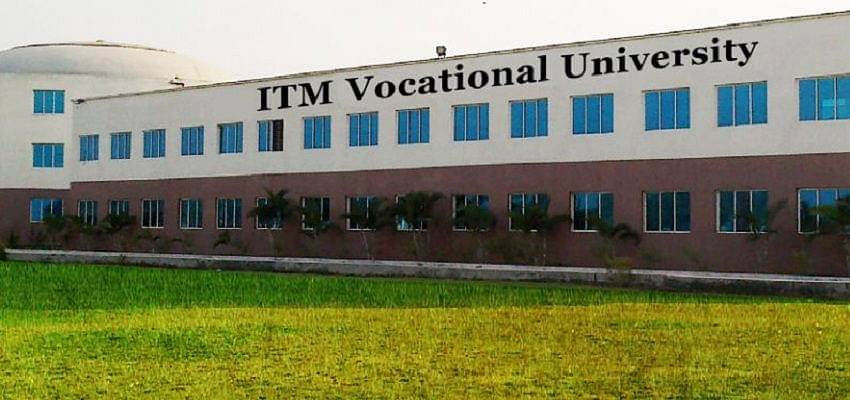
ITM Vocational University
About
OfficialITM Vocational University is a other institution in Vadodara, established in 2014. ITM Vocational University (ITMVU) was established in 2017 in Vadodara, Gujarat, under the Ministry of Skill Development & Entrepreneurship's scheme to promote vocational education aligned with National Qualification Framework (NQF) standards. Unlike traditional universities, ITMVU deliberately positions itself as a vocational and skills-focused institution, offering degree programs with heavy emphasis on hands-on training, apprenticeship models, and industry integration from day one. The university operates under a unique hybrid model—blending classroom academics with mandatory industry placements, lab-intensive coursework, and certification in nationally recognized vocational qualifications. This differentiation is crucial: students here are not primarily preparing for competitive exams or theoretical mastery, but for immediate job readiness in specific sectors. The institution has partnerships with over 150 industry bodies including Bajaj Auto, Bosch, Reliance, NTPC, BPCL, and various SMEs across manufacturing, IT services, and logistics. ITMVU's founding philosophy reflects India's push toward skill-based employment; approximately 70% of coursework involves practical, workshop-based learning rather than lectures. The university operates multiple skill development centers including automotive, healthcare, IT services, hospitality, and advanced manufacturing. Faculty comprises a mix of academics (40%) and industry practitioners (60%), creating a mentorship-heavy environment. Campus infrastructure emphasizes workshops, fabrication labs, simulation centers, and training facilities over traditional libraries—a deliberate choice reflecting vocational pedagogy. The placement ecosystem is tightly integrated with industry; recruiters visit during semesters rather than waiting for placement drives, and many companies offer pre-placement offers (PPOs) after internship periods. Notable placements go to Maruti Suzuki, Siemens, L&T, Capgemini, and various automotive tier-1 suppliers. ITMVU's fee structure is significantly lower than private engineering colleges (₹3-5L per annum vs ₹8-12L), making it accessible to tier-2 and tier-3 town students. However, brand recognition outside Gujarat is limited, and degree equivalence can be a hurdle for further studies in traditional universities. The student demographic skews toward first-generation learners, working-class families, and students targeting immediate employment rather than higher studies. Alumni mostly transition into frontline technical roles—technicians, junior engineers, operations executives—rather than management tracks. Campus life is more work-focused than celebration-centric; student activity revolves around projects, competitions, and industry visits rather than fests. Ragging is virtually non-existent due to the professional orientation and age profile of students (many join at 18-20 after 12th grade but with working backgrounds). Safety for women is robust; the university has dedicated hostel infrastructure, transport, and mentoring systems. However, the vocational focus means lesser emphasis on sports, cultural activities, and student clubs typical of conventional universities. ITMVU is ideal for students who have clear industry sector interests, want to avoid lengthy competitive exam preparation, seek affordable quality technical education, value hands-on learning, and are career-driven. It is NOT suitable for students interested in pure research, academic higher studies (MSc, PhD), or those wanting a traditional campus experience with robust cultural and sports ecosystems. The institution deliberately targets working-class and lower-middle-class students; approximately 35% receive scholarship support. Placement outcomes heavily depend on sector choice and individual performance; automotive and IT services placements are strong (85-90%), while niche sectors like renewable energy show lower placement rates (60-65%). The university operates with transparent fee structures and minimal hidden costs, a deliberate contrast to many private institutions. Student satisfaction centers on practical learning, industry exposure, and employment outcomes rather than campus ambiance or academic prestige.