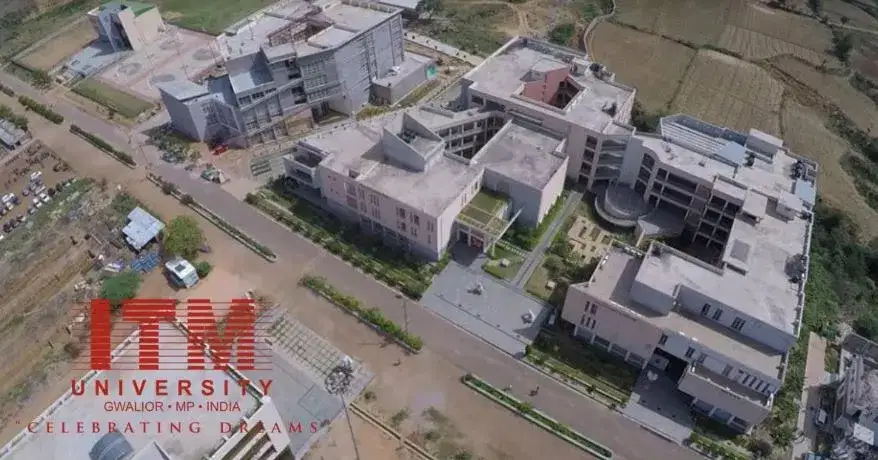
ITM University
About
OfficialITM University is a other institution in Gwalior, established in 1997. ITM University, Gwalior, was established in 2007 as a private institution under the aegis of the ITM Group, which has been a significant player in higher education across India for over two decades. Located on the Gwalior-Indore highway in Madhya Pradesh, the university has developed into a multi-disciplinary institution offering undergraduate and postgraduate programs across engineering, management, sciences, arts, and design. The institution is UGC-recognized and has progressively worked toward building academic credibility through consistent accreditation efforts and infrastructure development. Academic Profile: ITM University Gwalior operates 30+ academic programs across 6 schools including Engineering, Management, Applied Sciences, Architecture & Design, Law, and Arts & Humanities. The engineering programs (B.Tech in 8 specializations) follow the AICTE-approved curriculum with a focus on foundational concepts and industry-aligned project work. The B.School offers management programs including a 2-year MBA and executive programs. The institution has strengthened its placement and internship cell, though placement outcomes remain below tier-1 private universities. Research infrastructure has been incrementally developed with dedicated labs for civil, mechanical, electrical, and computer science disciplines. Placement & Career Outcomes: The university reports a placement percentage of approximately 68-72% for engineering graduates (2023-24), with median salaries in the 5.5-6.5 LPA range for core engineering roles and 7-9 LPA for IT and consulting positions. Top recruiters include Tech Mahindra, Cognizant, TCS, Infosys, Capgemini, and various mid-tier IT firms. Management graduates typically report placements at 75-80% with salaries in the 6-8 LPA range. The placement infrastructure has improved with dedicated career counseling, aptitude training, and industry mentorship programs, but competition for premium placements remains challenging compared to established private universities. Campus Infrastructure: The 125-acre suburban campus includes modern academic blocks with air-conditioned classrooms, well-equipped laboratories for engineering disciplines, a central library with 80,000+ volumes and digital resources, computer centers with updated hardware, and recreational facilities. Hostel accommodation is available with separate blocks for boys and girls, featuring basic amenities. The campus provides Wi-Fi connectivity across most areas, though bandwidth and speed vary. The sports complex includes a gymnasium, badminton courts, basketball court, and open grounds. The campus has undergone periodic renovations, but infrastructure quality remains inconsistent across different blocks—newer engineering labs are well-equipped, while some older facilities show wear. Location & City Context: Gwalior, historically significant as a cultural and administrative hub in Madhya Pradesh, is a tier-3 city with limited cosmopolitan amenities compared to metro areas. The university's suburban location (approximately 20 km from Gwalior city center) positions it away from the main urban hustle, offering a quieter academic environment but limiting student access to entertainment, dining, and cultural venues. The nearest airport (Indore, ~200 km) and railway station (Gwalior Junction, ~25 km) require pre-planned travel. Within Gwalior, auto-rickshaws and local buses are the primary transport modes; cab apps like Ola have partial coverage. The city experiences hot and dry summers (April-June, 40-45°C), mild winters (December-February, 8-15°C), and monsoons (July-September). Student Life & Campus Culture: The university hosts annual cultural festival (Yuva Utsav) and technical festival (Innovision) with good student participation. Multiple clubs covering technical domains, entrepreneurship, sports, and cultural interests are active, though activity levels depend on student initiative. The residential culture is relatively organized with strict entry-exit norms and curfew timings (especially for female students). Hostel mess food is basic but adequate; quality varies by block. The suburban location means students heavily depend on campus facilities for entertainment and social activities, with limited off-campus exploration due to distance and transport constraints. Ragging is officially prohibited with strict institutional policies, and no major incidents have been reported in recent years. Faculty & Research: The faculty strength stands at approximately 520 members across all disciplines. While many faculty members hold relevant industry experience or M.Tech/MBA degrees, the percentage with PhDs is approximately 35-40%, which is lower than expected for a research-oriented institution. Faculty research publication output is modest, with selective presence in national and international conferences. Industry partnerships exist with companies for guest lectures, internships, and applied projects, but dedicated research centers and funded research projects remain limited compared to established institutions. Who Should Apply: ITM University Gwalior is suitable for students seeking a structured undergraduate engineering or management program at a private institution with reasonable fees (relative to metro-based private universities), who are self-motivated enough to succeed without the brand halo of a tier-1 institution, and who are comfortable with a suburban campus environment. Strong candidates are those from tier-2 cities or rural backgrounds who seek a residential college experience with decent infrastructure and solid basic education. The institution is NOT ideal for students seeking top-tier placement guarantees, research-heavy programs, or a vibrant cosmopolitan college social scene. Students should be prepared to supplement their education with online courses, internships with startups, and self-directed learning to build competitive advantage in the job market. The value proposition is adequate for engineering and management students willing to actively engage in skill development, but less compelling compared to similarly-priced private universities in metropolitan areas like Pune, Bangalore, or Hyderabad.