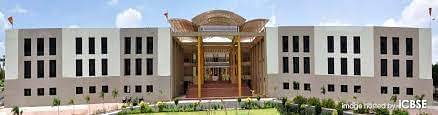
Indian School of Business Management & Administration, Ahmedabad
About
OfficialIndian School of Business Management & Administration, Ahmedabad is a other institution in Ahmedabad, established in 1992. The Indian School of Business Management & Administration (ISBMA), established in 1994, is a private management institution located in Ahmedabad, Gujarat. It was founded with the vision to create professionally competent and ethically committed business leaders capable of driving sustainable value creation. Over nearly three decades, ISBMA has positioned itself as a premier institution for management education in western India, though it operates in the shadow of the renowned Indian Institute of Management (IIM) Ahmedabad, which is located in the same city. ISBMA offers undergraduate and postgraduate programs primarily in business management, with a focus on experiential learning, industry engagement, and practical skill development. The institution specializes in management education but has expanded to include programs in commerce, hospitality management, and entrepreneurship. The undergraduate Bachelor of Business Administration (BBA) program is the flagship offering, attracting students from across India and from NRI backgrounds. The postgraduate Master of Business Administration (MBA) program serves working professionals and fresh graduates seeking advanced management credentials. Academic Programs and Specializations: ISBMA's curriculum is designed with a strong focus on industry relevance and practical application. The BBA program spans three years and emphasizes analytical thinking, strategic management, financial analysis, marketing strategy, human resource management, and operations management. Students undergo experiential learning through case studies, business simulations, live projects with real companies, and internships. The MBA program (2 years, full-time and 3 years, part-time) offers specializations in Finance, Marketing, Human Resources, Operations, and General Management. The institution also offers advanced diploma programs in business management and specialized certificates in digital marketing, supply chain management, and financial planning. Executive education and corporate training programs form another revenue stream and allow faculty to maintain industry connections. Research and Academic Strengths: While ISBMA is primarily a teaching institution rather than a research powerhouse, the faculty is actively engaged in applied research, particularly in areas of sustainable business practices, Indian entrepreneurship, retail management, and digital transformation in small and medium enterprises (SMEs). The institution has published numerous papers in national and international journals, though publication volumes are modest compared to premier IIMs. Research strength is concentrated in case study development and field-based studies focusing on Indian business scenarios. The institution maintains partnerships with organizations like the Confederation of Indian Industry (CII), industry chambers, and various SMEs for research and consulting projects. Faculty members collaborate with institutions like IIMA and international universities on joint research initiatives, though these are limited in scope. Campus Infrastructure and Facilities: The 8.5-acre suburban campus is well-designed with modern classroom infrastructure featuring smart boards and AV systems. The library houses approximately 25,000 books, digital databases, and subscriptions to major business journals and case study repositories. The campus includes a computer lab with current software tools (SAP, Bloomberg terminals, statistical packages), a business simulation center, and a dedicated placement cell. The auditorium seats 350+ and hosts seminars, guest lectures, and events. Cafeteria facilities are adequate though not extensive. The campus has full WiFi coverage, though internet speed can be inconsistent during peak hours. Hostel facilities exist for about 400 students, primarily accommodating out-of-state students. The campus setting is suburban, approximately 10 km from central Ahmedabad, providing a relatively peaceful environment though somewhat isolated from the city's entertainment and commercial hubs. Placement Performance and Industry Engagement: ISBMA has maintained a placement rate of approximately 85-90% in recent years, with average starting salaries ranging from 5.5-7.5 lakhs per annum for BBA graduates and 9-13 lakhs for MBA graduates. Top recruiters include Deloitte, KPMG, Infosys, TCS, HUL, ITC, Aditya Birla Group, ICICI Bank, HDFC Bank, and various consulting firms. The finance and consulting sectors are the primary placement channels. However, there is significant variation in placement outcomes based on academic performance, CGPA, and specialization choice. Finance specialization in MBA has stronger placement outcomes than general management. The placement cell maintains active engagement with over 150 companies annually, though the caliber of recruiters is below that of IIM Ahmedabad. Salary ceiling for top performers reaches 18-20 lakhs CTC, but median salaries are considerably lower. Alumni network, while growing, is not as extensive as premier institutions, limiting informal recruitment pathways. Campus Life and Student Experience: Student life at ISBMA is moderately vibrant with approximately 25+ clubs and societies including case competition club, entrepreneurship club, finance club, marketing club, cultural clubs, and sports teams. Annual fests include 'Synergy' (business fest) in February, 'Spectrum' (cultural fest) in October, and various sports tournaments. Hostel life is reasonably comfortable with separate accommodations for women and men, common rooms, recreational facilities, and internet connectivity. The mess provides adequate vegetarian and non-vegetarian options, though quality is average. Off-campus accommodation options are readily available in nearby areas like Bodakdev, Thaltej, and Satellite, with room rents ranging from 6,000-15,000 per month. Student safety is generally good, with 24-hour campus security and surveillance systems. Gender diversity is present though skewed toward male students (approximately 60-40 ratio). Ragging incidents are rare due to strict institutional policies and orientation programs emphasizing professional conduct. Notable Strengths: ISBMA's primary strength lies in its accessible management education positioned between tier-3 private institutions and premium tier-1 institutions like IIMs. The faculty-student ratio is favorable (1:14), enabling personalized attention. Industry internships are mandatory and well-structured, providing practical exposure. The alumni network, while not extensive, includes successful entrepreneurs and mid-level managers across industries. The institution's location in Ahmedabad provides access to the thriving entrepreneurial ecosystem, textile industry insights, and proximity to manufacturing hubs. The focus on Indian business cases and local entrepreneurship studies provides contextual relevance. Limitations and Challenges: ISBMA faces several constraints. Ranking in national and international university rankings is modest (outside NIRF top 100 in management category), which impacts institutional prestige and employer perception. The research output is limited compared to aspirational standards, with few PhD-qualified faculty. Placement salary ceiling is significantly below IIM Ahmedabad and other premier institutions. The brand recognition outside Gujarat is limited, affecting admission quality and geographic diversity. Hostel capacity accommodates only about one-third of the student body, requiring off-campus living for most students. Faculty recruitment challenges persist, with difficulty in attracting top-tier PhDs from premier institutions. The institution's financial constraints limit scholarships and financial aid availability. Alumni network weakness limits informal recruitment pipelines and mentorship opportunities. Campus Culture and Ethos: The institutional culture emphasizes ethics, professionalism, and industry alignment. The environment is relatively formal compared to startup-culture-focused institutions, reflecting the traditional management education approach. Diversity is moderately present but could be improved. The competitive atmosphere is healthy but not intensely cut-throat, reducing psychological stress. The faculty generally demonstrates teaching commitment, though research productivity varies. Gender inclusivity policies are in place, with separate facilities and anti-harassment mechanisms. Who Should Apply: ISBMA is ideally suited for students seeking quality management education at a reasonable cost without the competitive pressure of entrance exams required by IIMs. It is particularly suitable for: (1) Commerce stream students from Gujarat and western India seeking BBA/MBA; (2) Working professionals with 2-5 years of experience pursuing part-time MBA; (3) Students with moderate-to-good academic records but not top JEE/NEET performers; (4) Aspiring entrepreneurs seeking business foundational knowledge and networking; (5) Students from middle-income families who seek value-for-money professional education. It is less suitable for those seeking: (1) Top-tier management credentials for international recruitment; (2) Research-focused careers in academia or specialized research institutions; (3) Highly specialized technical management (like IT management from BITS, IITD or similar); (4) International exposure and globally recognized qualifications; (5) Extremely competitive peer environments or ambitious salary maximization focus. Career Trajectory: ISBMA graduates typically enter middle-management or specialist roles in finance, marketing, HR, and consulting. Career progression is steady but not exponential. Alumni commonly achieve senior management positions (director/VP level) within 12-15 years, though breakthrough success stories to C-suite are less frequent than from IIM peers. Self-employment and entrepreneurship rates among alumni are approximately 15-20%, contributing to the startup ecosystem. The institution's network value for early-career advantage is moderate; long-term success depends heavily on individual performance and further education/certifications.