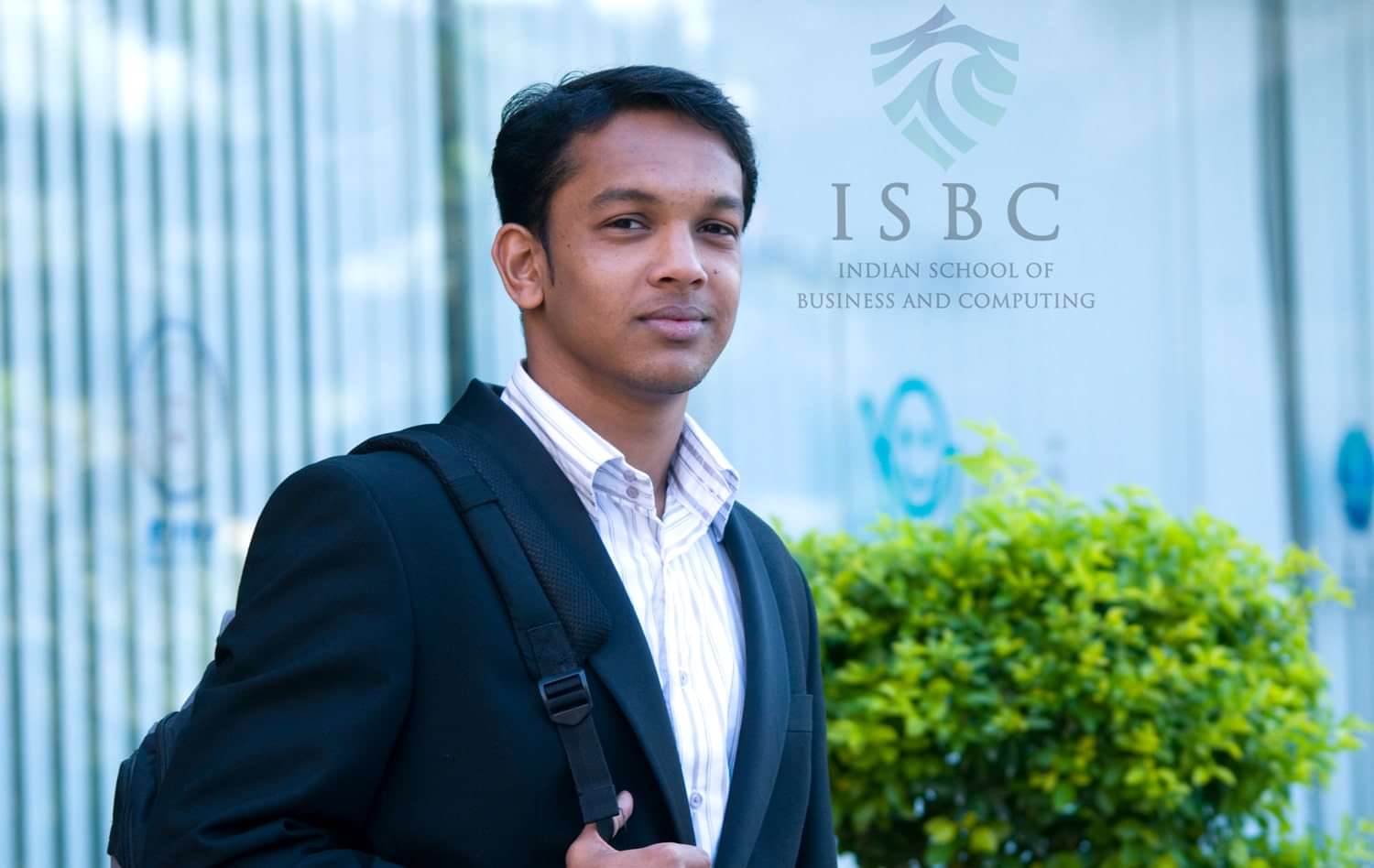
Indian School of Business and Computing
About
OfficialIndian School of Business and Computing is a other institution in Bengaluru, established in 2012. The Indian School of Business and Computing (ISBC) was established in 2003 with a vision to create globally competent professionals in business and technology domains. Located in the Whitefield area of Bangalore—India's Silicon Valley—ISBC has evolved from a modest business school into a comprehensive institution offering programs spanning management, engineering, and computing sciences. The institution is built on the principle of practical, industry-aligned education rather than theoretical excellence alone, a philosophy that shapes every aspect of student life here. ISBC's founding history reflects the tech boom of early 2000s Bangalore. The promoters, a group of IT entrepreneurs and academics, recognized a gap: while IITs and IIMs dominated India's top-tier education, there was limited space for students seeking quality business and tech education with strong placement outcomes. ISBC positioned itself as a bridge institution—rigorous enough to maintain academic standards, pragmatic enough to ensure immediate employability. Over two decades, this positioning has yielded consistent results: the college has maintained placement rates above 95% across most programs, with median salaries ranging from 8-12 LPA for undergraduate engineering to 15-18 LPA for MBA graduates. The academic curriculum at ISBC is structured around five core pillars: technical depth, business acumen, soft skills, industry exposure, and ethical leadership. Engineering programs integrate emerging technologies like AI, cloud computing, and blockchain into core coursework. Management programs combine traditional MBA curriculum with specialized tracks in fintech, digital marketing, and supply chain. The computing science programs are particularly strong, with faculty drawn from companies like Google, Microsoft, and Amazon. Faculty research, while not at the level of premier research institutions, is respectable. The college encourages applied research with industry partners, leading to patents and publications in tier-2 journals. Key research areas include machine learning applications in business, cybersecurity, and business analytics. Campus life at ISBC is vibrant but not intense. The suburban Whitefield location offers proximity to tech parks and corporate offices—many students secure internships within walking distance—but lacks the cosmopolitan buzz of central Bangalore. The college hosts annual fests: TechFest (February, technical events), ManageFest (August, business case competitions), and CulturalNite (November). Club activities include coding clubs (very active), entrepreneurship cells (produce 3-4 startups yearly), cultural groups (moderate participation), and sports teams (cricket, basketball, badminton). Hostel accommodation, while available, is limited; approximately 40% of students live on campus, with the remainder renting nearby PGs. Mess food quality is average—Indian vegetarian and non-vegetarian options, with occasional complaints about repetitiveness. Infrastructure on campus is functional and modern. Libraries hold 25,000+ books and digital access to major academic databases. Labs for engineering are well-equipped with CAD software, microcontroller boards, and IoT equipment. Computing labs feature recent-generation systems and cloud access. Wi-Fi coverage is campus-wide and reliable at 50+ Mbps. Placements are ISBC's greatest strength. The college maintains dedicated placement cells with staff who actively engage companies. Top recruiters include TCS, Infosys, HCL, Accenture, Amazon, Microsoft, Goldman Sachs, and consulting firms like Deloitte and EY. For 2023-24, overall placement percentage stood at 96.3%, with median salaries of 9.2 LPA for B.Tech and 16.8 LPA for MBA. Highest packages reached 28 LPA (engineering) and 32 LPA (MBA), though these are outliers. Sector-wise, technology dominates (58% of placements), followed by finance (22%), consulting (12%), and manufacturing/core (8%). Notable alumni include Rajesh Kumar (founder, TechStartup X; batch 2008), Priya Sharma (VP Product, Flipkart; batch 2010), and Vikram Reddy (Partner, Bain & Company; batch 2009). The institution has produced successful entrepreneurs, with approximately 15-20 alumni-founded startups operating across India. What makes ISBC unique is its relentless focus on employability without compromising academics. The college is not for students seeking pure research opportunities or a brand name that opens doors globally. It is ideal for: first-generation college goers seeking upward mobility, students from tier-2 cities wanting quality education with guaranteed placements, working professionals seeking part-time MBA programs, and those passionate about technology entrepreneurship. ISBC's admission process is relatively transparent and merit-based, with cutoffs lower than IITs/IIMs but expectations clearly communicated. The college is transparent about its strengths (placements, industry ties) and limitations (limited research output, smaller alumni network compared to legacy institutions, moderate campus infrastructure). Student feedback consistently highlights the practical orientation and placement support, though some report that academic rigor could be higher and that the college sometimes prioritizes metrics over deep learning. For anxious students planning life in a new city, ISBC offers a supportive, professional environment. Whitefield has extensive PG accommodation, good food options, and easy access to tech parks for internships. The college actively helps students navigate relocation, with dedicated hostels and student mentorship programs. Safety for women is reported as good, with anti-ragging measures in place and active women's cell. Overall, ISBC is a practical choice for career-focused students who value placement outcomes and industry relevance over elite brand prestige.