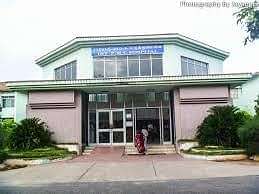
IRT Perundurai Medical College & Research Centre
About
OfficialIRT Perundurai Medical College & Research Centre is a other institution in Perundurai, established in 1992. IRT Perundurai Medical College & Research Centre is a private medical institution established in 2008 in the industrial town of Perundurai, Tamil Nadu. Built by the IRT Group, a conglomerate with deep roots in industrial and educational ventures, the college has evolved into a significant medical education hub in the Kongu region. The institution operates under Tamil Nadu private medical college regulations and is recognized by the Medical Council of India (now National Medical Commission). The college sits on a sprawling 42-acre campus featuring dedicated academic blocks, research facilities, and modern clinical infrastructure spread across multiple buildings. The founding philosophy centered on creating a medical institution that would address the healthcare education gap in the Kongu Nadu region while maintaining international standards in curriculum delivery and research. The college has progressively upgraded its faculty qualifications, research output, and clinical case loads to align with contemporary medical education standards. IRT Perundurai offers the Bachelor of Medicine, Bachelor of Surgery (MBBS) program as its flagship offering, with an intake of 150 students annually. The institution has also introduced postgraduate programs in several specialties including General Medicine, Surgery, Obstetrics & Gynaecology, Pediatrics, Psychiatry, Orthopedics, Radiology, and Anaesthesiology. The college maintains affiliated hospital facilities within the campus with over 500 beds dedicated to teaching and clinical training. These hospitals serve both as training grounds for students and as tertiary care centers for the surrounding region, treating approximately 800 outpatients daily and maintaining average inpatient occupancy rates above 75%. The research infrastructure includes dedicated laboratory spaces for biochemistry, microbiology, pharmacology, and physiology research. Faculty members are actively engaged in clinical research, with emphasis on common Indian diseases, public health interventions, and community medicine projects. The college has published research papers in national and international journals, though publication volume remains modest compared to premier institutions. Research areas of strength include infectious disease epidemiology, maternal and child health, occupational health (given the industrial backdrop of Perundurai), and nutritional sciences. Teaching methodology has transitioned from traditional lectures to integrated problem-based learning and clinical skill training, with progressive implementation of AETCOM (Attitude, Ethics, Communication) modules mandated by the National Medical Commission. The curriculum follows the National Board of Examinations (NBE) pattern with emphasis on competency-based medical education. Student performance in FMGE (Foreign Medical Graduate Examination) has shown gradual improvement, with recent batches achieving 35-45% first-attempt pass rates. The placement record for postgraduates is strong, with majority securing positions in government medical colleges, private specialty hospitals, or corporate healthcare chains within Tamil Nadu and neighboring states. The college has established connections with medical institutions in India's tier-1 metros, facilitating postgraduate training opportunities. Campus life centers around the residential infrastructure accommodating approximately 70% of students. The hostel facilities are segregated by gender, with separate accommodation blocks for male and female students. The dining facilities operate mess services with Tamil Nadu cuisine emphasis and provisions for dietary preferences. Student life involves active participation in cultural events during annual fests, sports competitions at inter-college levels, and active participation in national medical conferences. The college maintains active student societies including medical clubs, research interest groups, and cultural organizations. Safety on campus is prioritized with gated campus access, security personnel, and CCTV surveillance. Women safety is given emphasis with dedicated female security staff, separate hostel blocks with controlled access, and awareness programs. The college has not reported significant ragging incidents in recent years, maintaining strict anti-ragging committees and policies. Perundurai itself is a tier-3 town in Tamil Nadu's Erode district, known for textile manufacturing and industrial units. The town is approximately 40 km west of Erode city and about 200 km southwest of Tamil Nadu's capital Chennai. The location offers both advantages and challenges: proximity to industrial establishments provides clinical exposure to occupational health issues, while the rural setting means limited urban entertainment and lifestyle amenities. Transportation connectivity has improved with regular bus services to Erode and Chennai, though the college shuttle service is essential for campus-town commute. The climate is tropical with intense summers (March-May reaching 35-38°C), manageable winters (December-January: 22-28°C), and moderate rainfall during northeast monsoons (October-November). Student expenses reflect the tier-3 town setting with moderate cost of living compared to metros or tier-1 cities. Most students live on campus, reducing accommodation burden. The institution has produced graduates who are now practicing as physicians, surgeons, and specialists across India and abroad. Alumni network strength is building with increasing participation in fundraising and student mentorship programs. The college faces certain challenges: rural setting limits access to metropolitan lifestyle and internship opportunities, faculty recruitment for specialized departments remains competitive, research infrastructure, while adequate, cannot match premier institutions, and the college's relatively young history (compared to 50+ year old government medical colleges) affects brand perception in competitive markets. However, for students seeking MBBS education with modern facilities, residential campus life, and opportunity to work in a teaching hospital setting without the cutthroat competitiveness of metro-based private colleges, IRT Perundurai offers value. The institution is particularly suitable for candidates from Tamil Nadu and neighboring states, those prioritizing clinical exposure and hands-on training over research-heavy curriculum, and students seeking postgraduate opportunities within India's healthcare sector. The college appeals to self-sponsored students from middle-class backgrounds seeking quality medical education without the premium fees of Delhi/Mumbai-based private colleges.