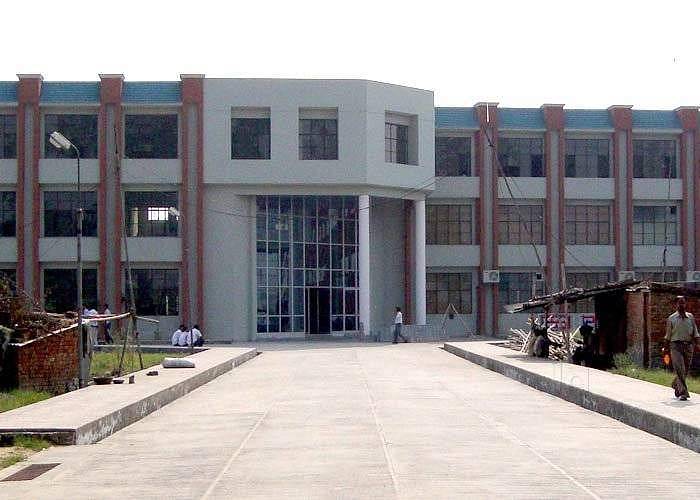
I.P.College
About
OfficialI.P.College is a other institution in Bulandshahr, established in 1970. I.P. College, Bulandshahr is a private undergraduate and postgraduate institution established in 2008, located in the outskirts of Bulandshahr, Uttar Pradesh. The college was founded with the vision of providing quality engineering and management education in North India, with a focus on practical skill development and industry alignment. Over 16 years of operation, it has grown to become a recognized engineering and management college in the region, serving approximately 2,800 students across multiple disciplines. The institution is affiliated with Dr. A.P.J. Abdul Kalam Technical University (AKTU) and is recognized by the All India Council for Technical Education (AICTE). I.P. College offers undergraduate and postgraduate programs primarily in Engineering (Civil, Mechanical, Electrical, Electronics & Communication, Computer Science) and Management streams. The college has positioned itself as a bridge between academic learning and industry requirements, with significant emphasis on practical training, internship placements, and industrial partnerships. The campus is situated in a suburban setting approximately 45 kilometers from Delhi NCR, providing students access to both a peaceful learning environment and proximity to major employment hubs. The institution has developed partnerships with over 200 companies for recruitment and training purposes, and maintains dedicated placement cells and industry interaction programs. I.P. College's academic strengths lie in its consistent focus on skill-based education, industry-ready curriculum, and hands-on learning through laboratories and projects. The college has invested in modern infrastructure including well-equipped engineering labs, computer centers, and management simulation centers. Faculty members are primarily from industry backgrounds and academic institutions, with ongoing exposure to current industry trends. The college conducts regular seminars, workshops, and guest lectures by industry professionals to ensure curriculum relevance. Research activities at I.P. College are emerging, with faculty members engaged in applied research projects related to manufacturing, automation, and software development. The college encourages student participation in competitions, innovation challenges, and technical symposiums. Campus life at I.P. College reflects a mix of academic rigor and student engagement. The college hosts annual technical fests like 'TechXpo' and cultural events, though at a smaller scale compared to larger institutions. Student clubs cover technical domains (robotics, coding), sports, and cultural activities. The institution maintains separate hostel facilities for men and women with basic amenities, though hostel capacity is limited and many students prefer off-campus accommodation. The campus features a cafeteria, sports ground, library with digital resources, and Wi-Fi connectivity across the campus. Placement outcomes have been the institution's key strength, with consistent placement percentages in the 75-85% range across batches. Average package placements have ranged from 4.5 to 6.5 LPA, with highest packages reaching 12-15 LPA in select cases. Major recruiters include IT companies like HCL, Infosys, Tech Mahindra, alongside core engineering and manufacturing companies. Management graduates have secured placements in retail, BFSI, and consulting sectors with comparable package ranges. Notable alumni include professionals working in senior positions at multinational companies, startups, and public sector undertakings, though the institution is still building its alumni network. The college is particularly suitable for students seeking quality engineering and management education in North India with good placement prospects, without the intense competitive pressure of top-tier institutions. It appeals to students from Uttar Pradesh, Delhi NCR, and neighboring states seeking affordable, industry-aligned education. The institution's focus on placements makes it attractive to those prioritizing job security over academic research. However, prospective students should be aware that I.P. College lacks the prestige and research infrastructure of tier-1 institutions, has limited scholarship opportunities, and operates in a less developed city infrastructure compared to metro areas. The quality of faculty, while improving, is still heterogeneous, and the college's brand recognition outside North India is limited. Students seeking world-class research facilities, international collaborations, or aspirations toward higher studies in top universities may find limitations here. The institution works best for pragmatic students focused on securing decent-paying jobs in IT or manufacturing sectors post-graduation.