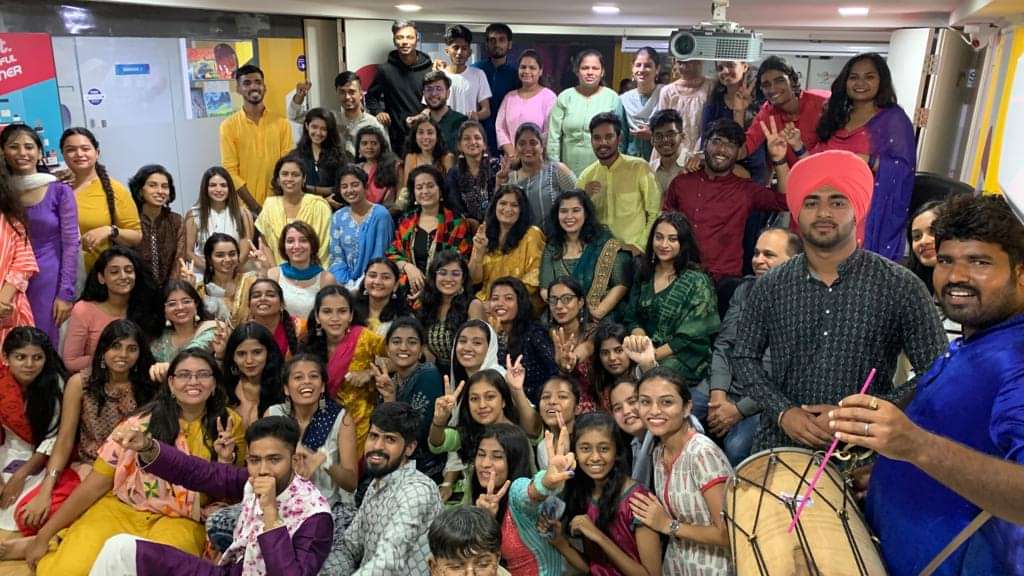
International School of design Pune
About
OfficialInternational School of design Pune is a other institution in Pune, established in 2011. International School of Design (ISOD) is an independent institution established in 2008 in Pune, Maharashtra, positioned as India's premiere design education hub. Located in the cultural heart of Pune on Senapati Bapat Road, ISOD operates a rigorous, practice-oriented design curriculum focused on developing critical thinking, creative problem-solving, and design literacy among its students. The institution was founded with the vision of creating globally-competitive design professionals capable of addressing real-world challenges through interdisciplinary design thinking. Unlike traditional design schools that focus heavily on aesthetics, ISOD emphasizes the intersection of design, technology, business, and social impact. The institution has grown from its initial batch of 60 students to currently enrolling approximately 850 students across undergraduate and postgraduate programs. ISOD offers design education across multiple specializations including Communication Design, Interaction Design, Product Design, Experience Design, Fashion Design, and Critical Design Studies. The curriculum follows a project-based learning methodology where approximately 65% of coursework involves live projects with industry partners, startups, and social enterprises. Faculty members are a mix of seasoned design practitioners (many with 10-15 years of industry experience), academicians with PhDs, and visiting international faculty from design schools like Parsons School of Design, Royal College of Art, and Design Academy Eindhoven. The institution maintains strong industry partnerships with companies like Google, Microsoft, Philips, Godrej, HUL, Flipkart, Amazon, and numerous design consultancies, enabling students to gain real-world exposure. ISOD's research arms focus on design for social impact, sustainable design, human-centered design, and emerging technologies like AI and immersive technologies in design. The institution has received recognition for its design research publications in international conferences and journals. Campus infrastructure is deliberately minimalist—the 8.5-acre urban campus features dedicated design studios (not traditional classrooms), collaborative workspaces, a fabrication lab with 3D printing and laser cutting capabilities, a photography studio, and a digital media lab. The library holds over 15,000 design-focused physical and digital resources. ISOD actively participates in international design competitions (Red Dot, iF Design Award, D&AD) with student work winning recognition annually. Placement outcomes for design graduates are strong, with approximately 92% placement rates within 6 months of graduation. However, unlike tech-focused institutions, placement involves a mix of direct employment, freelance work, design startups, and further studies (approximately 20-25% pursue further education at top global design schools). Notable alumni include founders of successful design startups, designers at leading tech companies, independent design consultants, and academics at international design schools. The institution's campus culture emphasizes intellectual rigor, experimentation, creative risk-taking, and social responsibility. Student fees are substantially higher than public design institutions but significantly lower than international design schools. ISOD attracts design-passionate students from across India and increasingly from South Asian countries. The institution's strength lies in its design-first ecosystem rather than broad multidisciplinary offerings. It is particularly suited for students with strong visual-spatial abilities, curiosity about human behavior, interest in solving real problems through design, and appetite for subjective evaluation and iterative feedback rather than purely objective assessment. ISOD is NOT suitable for students seeking engineering-heavy technical education, those uncomfortable with critique-based learning, or students prioritizing highest salary packages. The Pune location provides advantages of a vibrant creative community, lower cost of living than metros, proximity to tech companies' innovation centers, and proximity to Deccan plateau's cultural heritage. Major cons include: limited campus size leading to congestion during peak hours, no on-campus hostel facilities (students arrange independent accommodation), expensive tuition relative to government design colleges, subjective grading can be demotivating for some students, and limited international student exchange despite claims. Admissions are portfolio-based, requiring creative thinking test and interview—JEE scores are NOT required. ISOD operates on the philosophy that design education should challenge conventional thinking and prepare students for a rapidly evolving creative economy.