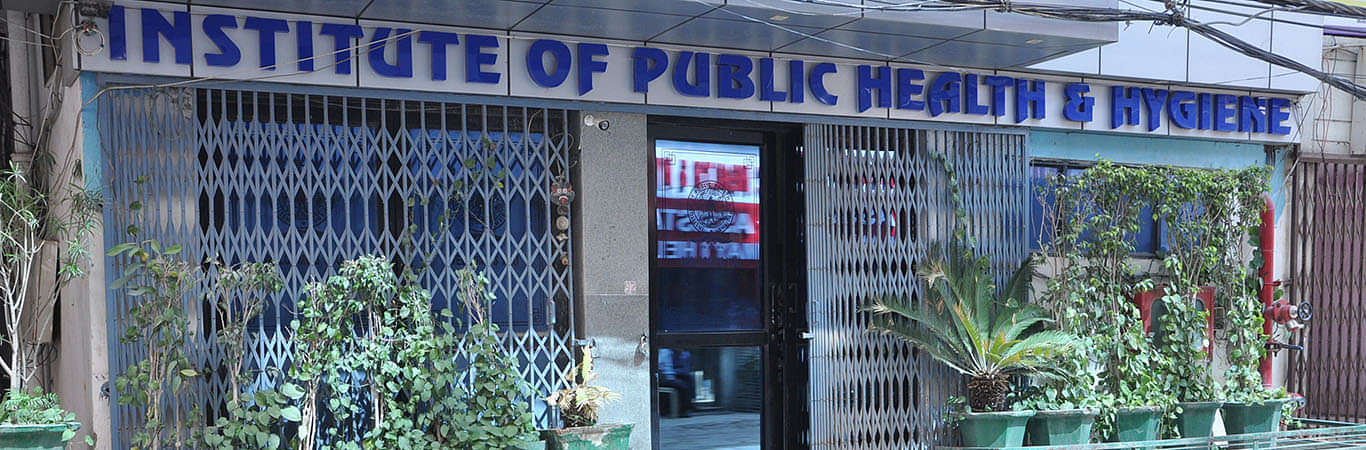
Institute of Public Health & Hygiene
About
OfficialInstitute of Public Health & Hygiene is a other institution in Delhi, established in 1976. The Institute of Public Health & Hygiene (IPHHDELHI) was established in 1952 as one of India's pioneering institutions dedicated to public health education, training, and research. Located in the heart of South Delhi's R.K. Puram sector, the institute operates under the aegis of the Delhi Government's Health & Family Welfare Department. Over seven decades, IPHHDELHI has carved a distinct niche in India's public health ecosystem by producing epidemiologists, biostatisticians, health administrators, and public health specialists who have shaped disease surveillance systems, maternal-child health programs, and national health policies. The institute's founding philosophy centers on addressing India's public health challenges through evidence-based research, community engagement, and training of public health professionals equipped to work in underserved populations. IPHHDELHI's academic programs span undergraduate diploma courses in public health and nursing, postgraduate Master's degrees in Public Health (MPH), Epidemiology, and Health Administration, and doctoral (PhD) research programs. The MPH program, structured across four semesters with a strong practicum component, covers epidemiology, biostatistics, health policy, disease surveillance, maternal-child health, nutrition, and infectious disease control. The Epidemiology specialization attracts students seeking careers in disease outbreak investigations, surveillance systems, and research. Faculty strength includes public health physicians, epidemiologists, biostatisticians, and social scientists—many with international qualifications (MD, MPH, PhD from institutions like Johns Hopkins, LSHTM, and Yale). Research strengths lie in infectious disease epidemiology, vector-borne disease control (dengue, malaria), tuberculosis surveillance, COVID-19 pandemic response, maternal mortality reduction, nutrition programs, and health policy analysis. The institute has received grants from WHO, ICMR, and international health foundations for research on communicable and non-communicable disease surveillance. Campus life, while modest by IIT standards, emphasizes problem-solving through field visits, community health projects, and case study discussions. Students conduct field placements in NGOs, government health departments, and international organizations, gaining practical exposure. The institute maintains collaborations with Delhi's government hospitals, AIIMS Delhi, and international institutions like London School of Hygiene & Tropical Medicine. Placement records show strong absorption into government health cadres (Ministry of Health, state health departments, ICMR), NGOs (CARE, PATH, Médecins Sans Frontières), and international organizations (WHO offices, UNICEF, Bill & Melinda Gates Foundation). Alumni hold leadership positions in India's disease surveillance apparatus, maternal health programs, and public health policy. However, the institute faces constraints typical of government institutions: crowded classrooms, aging infrastructure in parts of campus, limited modern laboratory facilities compared to private institutions, and bureaucratic processes for curriculum updates. The hostel accommodates only ~30% of students, forcing many to seek private accommodation. Internet connectivity, while improving, remains inconsistent in older buildings. Despite these challenges, IPHHDELHI remains India's most respected public health institution for students committed to government health service careers, epidemiological research, or international health organizations. The institute suits students passionate about infectious disease control, public health policy, health equity, and serving India's vulnerable populations—rather than those seeking high corporate salaries or private hospital careers. Notably, the institute's graduates have led India's COVID-19 surveillance response, designed national tuberculosis elimination strategies, and shaped maternal health guidelines. For students interested in pursuing UPSC examinations for health administrative services, IPHHDELHI provides unmatched preparation through government health system exposure.