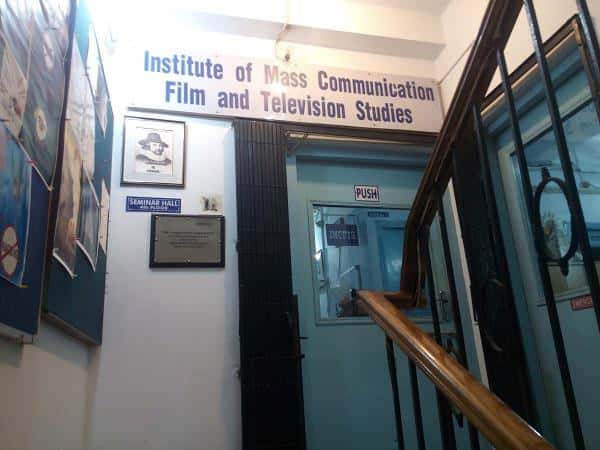
Institute of Mass Communication Film and Television Studies
About
OfficialInstitute of Mass Communication Film and Television Studies is a other institution in Kolkata, established in 2002. The Institute of Mass Communication, Film and Television Studies (IMC), Kolkata, was established in 1975 as one of India's pioneering institutions dedicated exclusively to media education and broadcasting. Located in the heart of Kolkata's thriving cultural and intellectual ecosystem, IMC has evolved from a small training center into a respected institution recognized for its contributions to Indian cinema, television, and mass media. The institute operates under the aegis of the Ministry of Information and Broadcasting, Government of India, making it one of the few government-funded media institutions in the country. IMC Kolkata's founding was driven by the vision of creating a center of excellence for training media professionals at a time when professional journalism and broadcasting education was nascent in India. Over nearly five decades, the institute has cultivated a strong reputation for rigorous curriculum design, practical training emphasis, and industry connections that reflect the evolving media landscape. The campus, though compact, is strategically situated in Salt Lake City, Kolkata's premier IT and education hub, providing students proximity to media offices, production houses, and broadcasting centers. Academic Structure and Programs: IMC offers a diverse portfolio of undergraduate and postgraduate programs designed to prepare students for careers in various media sectors. The institute provides BA Honours in Journalism, MA in Broadcast Journalism, MA in Print Media Management, MA in Television Production, MA in Film Studies, and specialized diploma programs in cinematography, sound engineering, and video editing. The undergraduate program follows a three-year structure with core courses in media history, journalism ethics, mass communication theory, Indian media landscape, and critical studies. Postgraduate programs are intensive two-year offerings that combine theoretical foundations with extensive practical exposure through live projects, internships, and industry collaborations. The pedagogical approach at IMC emphasizes learning by doing. Students operate the institute's own FM radio station (IMC FM 90.5), produce television content for broadcast, manage a student newspaper, and create documentary and fiction films. This hands-on methodology ensures that graduates enter the job market with portfolio pieces and practical experience rather than mere theoretical knowledge. The curriculum is regularly updated to reflect industry trends—recent additions include digital journalism, content creation for social media, OTT platform production, and data journalism workshops. Faculty and Research: IMC maintains a committed faculty of approximately 28 members, many of whom are practicing professionals or have significant industry experience. The faculty includes award-winning documentary filmmakers, established journalists, television producers, and media scholars. While the institute is not research-intensive in the traditional academic sense, faculty members undertake applied research in media impact studies, audience analysis, broadcast policy, and cinema studies. The institute has partnerships with national broadcasters (Doordarshan, All India Radio), regional media houses, and international film festivals for student training and exposure. Placement and Career Outcomes: Historically, IMC has maintained strong placement records with graduates securing positions in major media organizations including The Times of India, The Hindu, India Today, NDTV, ABP News, Zee News, Sony TV, Colors TV, and international broadcasters like BBC, Reuters, and AFP. Many graduates have transitioned into independent production, freelance journalism, and digital media ventures. The placement percentage typically hovers around 85-90%, with some students pursuing further studies or opting for self-employment in content creation. Median starting salaries for journalists range between 18,000-25,000 per month, while television producers and film production professionals command 20,000-30,000, depending on the organization and role. Campus Life and Culture: Despite its modest size, IMC fosters a vibrant creative community. The campus houses state-of-the-art production facilities including television studios, FM radio station, film editing suites, and digital media labs. Students are encouraged to undertake independent projects, participate in national film festivals, and contribute to the institute's publications and broadcast channels. The student body is intellectually engaged, with regular seminars, guest lectures from renowned journalists and filmmakers, and film screenings that create a stimulating intellectual environment. The absence of a traditional hostel facility (most students reside in nearby paying guest accommodations) means campus life is somewhat dispersed, though student groups and associations remain active. Strengths and Unique Positioning: IMC's primary strength lies in its specialized focus on media education in an era when mass communication education has become commodified across generic universities. The institute's government backing ensures relatively affordable education, and its proximity to Kolkata's vibrant media and cultural scene provides unparalleled exposure. The alumni network includes prominent journalists, filmmakers, and media entrepreneurs who actively mentor current students. The hands-on production facilities are well-maintained and industry-standard, allowing students to create professional-quality content. The institute's location in Kolkata—India's intellectual and cultural capital with rich film heritage—provides a distinctive learning environment that emphasizes critical thinking, artistic sensibility, and social awareness often lacking in purely commercial media training centers. Limitations and Honest Assessment: The institute faces several genuine constraints. It is not a residential campus, which affects student community cohesion compared to larger universities. The institute's relatively small size (450 students) means limited diversity of peer interaction and fewer networking opportunities compared to larger media schools. Funding constraints, despite government backing, mean some technical infrastructure lags behind private competitors. The institution has limited international partnerships or student exchange programs. Admissions are highly competitive with entrance examinations that filter for writing ability and media awareness, making entry difficult for students without strong English proficiency or cultural capital. The media industry's current consolidation and precarious freelance economy means not all graduates secure full-time employment immediately. Who Should Apply: IMC is ideal for students genuinely passionate about journalism, documentary filmmaking, broadcast media, or cinema studies—not those seeking media education as a fallback option. Candidates should demonstrate strong communication skills, cultural awareness, intellectual curiosity, and comfort with Kolkata as a city. The institute suits individuals inclined toward critical, socially conscious media rather than purely entertainment-focused content. Students from non-traditional backgrounds (regional language medium, non-metro origins) should note that the competitive entrance examination and professional culture assume English fluency and prior media exposure. The institute is less suitable for those seeking guaranteed corporate placement outcomes; it is better suited for those prioritizing creative development and intellectual rigor over immediate salary maximization.