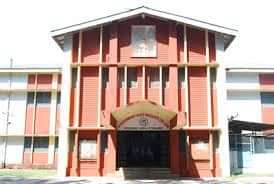
Indira Priyadarshini Law College
About
OfficialIndira Priyadarshini Law College is a other institution in Ongole, established in 1991. Indira Priyadarshini Law College (IPLC) was established in 2003 in Ongole, Andhra Pradesh, with the vision of imparting quality legal education and fostering professional competence in law graduates. Located in a semi-urban setting approximately 130 km north of Visakhapatnam, the college has grown into one of the notable law colleges in the Nellore-Ongole region, serving students from coastal Andhra Pradesh and neighboring states. The college is affiliated with Jawaharlal Nehru Technological University (JNTU), Kakinada, and follows a curriculum aligned with Bar Council of India (BCI) standards for legal education. The institution operates with a philosophy of combining traditional legal pedagogy with contemporary legal practice orientation, recognizing that law graduates in India today must be equipped not only with blackletter knowledge but also with practical advocacy skills, legal research capabilities, and ethical grounding. The college's academic program spans five-year integrated law degrees, three-year graduate law programs, and specialized postgraduate degrees focusing on constitutional law, criminal law, and corporate law. Faculty comprise law graduates from institutions like Delhi University, National Law University, and Rajasthan University, with many possessing doctoral qualifications and active engagement in legal research. The college maintains a reasonably well-equipped law library with over 5,000 volumes covering Indian and English jurisprudence, legal encyclopedias, and law reports. Campus infrastructure includes dedicated classrooms with modern audiovisual facilities, a law research center, moot courtroom for practical training, seminar halls, and computer labs with internet connectivity for legal research databases. The college places significant emphasis on experiential learning through moot court competitions, legal aid clinics, and internship programs with district courts, law firms, and corporate legal departments. Placement outcomes have improved progressively, with approximately 60-65% of graduates securing positions in law firms, corporate legal departments, NGOs, and government sectors within six months of graduation. Notable areas of legal practice among alumni include criminal advocacy, corporate law, intellectual property rights, human rights law, and administrative law. What distinguishes IPLC is its focus on regional legal issues pertaining to Andhra Pradesh, including land law, water rights, agricultural disputes, and coastal zone regulations, making it particularly relevant for students intending to practice in the region. The college actively engages with the Ongole bar association and district courts for student mentorship and internship opportunities. Student life at IPLC reflects a balance between rigorous academics and cultural engagement, with annual legal festivals, debate competitions, and social outreach programs. The hostel facilities, though modest, provide basic accommodation for outstation students, with separate hostels for men and women. The college operates a reasonable mess facility with vegetarian and non-vegetarian options at approximately 3,500-4,500 INR per month. Campus safety measures are in place with security personnel and CCTV coverage in common areas. The institution actively discourages ragging through strict enforcement policies and periodic awareness programs. Ongole, as a city, offers a quieter, more affordable living environment compared to metropolitan centers, with reasonable access to essential services, railway connectivity, and proximity to agricultural and industrial sectors that provide diverse legal practice opportunities. IPLC is recommended for students seeking a solid foundational legal education in a supportive, less competitive environment compared to top-tier national law schools, particularly those aspiring to practice in Andhra Pradesh or establish roots in the region. The college is also suitable for working professionals pursuing part-time law degrees and individuals genuinely interested in public interest law and legal service to underserved communities. Students should, however, recognize that placement outcomes and salary packages lag significantly behind premier national law schools, that the college lacks some specialized facilities available at tier-1 institutions, and that the regional market for legal services may offer fewer opportunities for specialization in niche practice areas. The college's strengths lie in accessibility, affordability, and practical regional focus rather than prestige or global recognition.