Institute of Language Studies and Applied Social Sciences
About
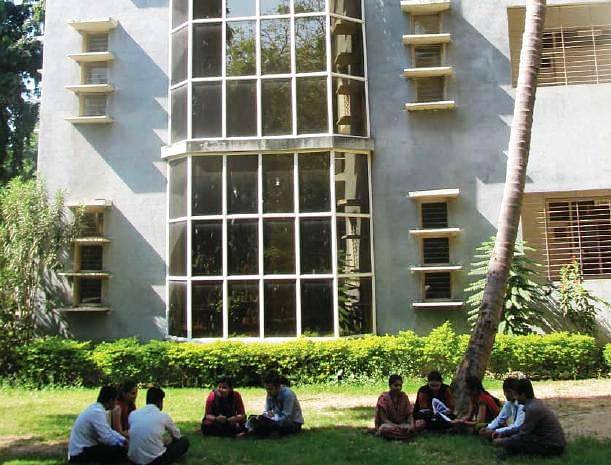
OfficialInstitute of Language Studies and Applied Social Sciences is a other institution in Anand, established in 2009. The Institute of Language Studies and Applied Social Sciences (ILSASS) in Anand, Gujarat, was established in 2003 as a pioneering institution focused on interdisciplinary education combining linguistics, social sciences, and applied research methodologies. Located in the culturally rich city of Anand—known as the dairy capital of India and home to Amul—the institute has carved a distinctive niche in higher education by emphasizing practical skill development alongside theoretical rigor. Unlike traditional engineering or commerce-focused institutions, ILSASS prioritizes humanities and social sciences education with modern pedagogical approaches. The institution is situated approximately 45 km from Vadodara and 70 km from Ahmedabad, positioning it strategically in Gujarat's education and industrial corridor. ILSASS operates with a mission to produce graduates who are not only linguistically proficient but also equipped with social research capabilities, making them valuable assets in NGO sectors, development organizations, media houses, and international bodies. The institute's founding was driven by a recognition that India's rapid globalization required professionals who could bridge language barriers and understand complex social dynamics. Over two decades, it has evolved from a modest language-focused center to a comprehensive social sciences institution offering undergraduate and postgraduate programs. The campus, though compact by metropolitan standards, is thoughtfully designed with green spaces, reflecting the institute's commitment to sustainable campus living. The academic environment at ILSASS is marked by small batch sizes—typically 25-35 students per program—enabling personalized attention and mentorship. This pedagogical model stands in stark contrast to mass-enrollment institutions and creates an intimate learning community. Faculty members are predominantly doctorate holders with research experience in their respective domains, many having collaborated with international universities. The institute maintains strong ties with social research organizations, development NGOs, and international linguistic bodies, facilitating student internship placements and collaborative research projects. Research at ILSASS spans sociolinguistics, language policy, social entrepreneurship, gender studies, and development communication. The institute has established research centers focused on applied linguistics and community development studies. Recent publications by faculty have appeared in national and international peer-reviewed journals, contributing to the academic discourse on language and social change in South Asia. The institute's commitment to applied research means undergraduate students engage in real-world projects rather than purely theoretical coursework—a feature that significantly enhances employability. Campus life at ILSASS, while quieter than larger institutions, is substantively rich. Students are encouraged to participate in community engagement projects, NGO partnerships, and social research initiatives. The institute hosts annual seminars on social issues, development communication, and linguistics, inviting scholars from leading universities. Cultural fests are smaller and more intimate than at mass-enrollment institutions, but they reflect the intellectual interests of the student body. Sports facilities are basic but adequate, with a focus on outdoor games and fitness rather than competitive sports infrastructure. The hostel accommodates approximately 60% of the student body, with separate facilities for women ensuring safety and comfort. Food quality in the mess is above average, with attention to dietary preferences including vegetarian options. Placement outcomes at ILSASS, while not matching traditional engineering institutions, show strong performance in the development, media, education, and corporate communication sectors. The 2023-24 academic year saw 82% placement rate with median packages around 4.5-5.2 lakh rupees annually. Major recruiters include international development organizations, media corporations, educational institutions, and social enterprises. Notable achievements include placements with organizations like Teach For India, The Better India, Indian Institute of Mass Communication (IICM), and various international NGOs. Alumni have ventured into journalism, content creation, social research, program management in development organizations, and academic careers. The institute's alumni network, though smaller than larger institutions, is closely knit and actively engaged in mentoring current students. What distinguishes ILSASS is its philosophical commitment to producing socially conscious graduates with linguistic and research competencies. In an educational landscape dominated by engineering and management institutions, ILSASS offers a genuine alternative for students passionate about languages, social issues, and development work. The institution is particularly suited for students who believe education should address real-world social challenges, who are fluent in or passionate about learning multiple languages, and who see careers in development, media, NGO work, or social research as meaningful pursuits. The institute explicitly attracts students uninterested in mainstream IT/Finance career trajectories and values intellectual curiosity over conventional competitive rankings. However, prospective students should note that ILSASS's smaller ecosystem, though enriching, means fewer campus placement opportunities compared to mass-recruitment institutions, necessitating proactive career networking and independent internship pursuit. The location in semi-urban Anand offers affordability and community engagement opportunities but lacks the cosmopolitan amenities of major metros. The institute is honest about its positioning: it is not a prestige-driven or high-salary-focused institution but rather a purpose-driven academic community. Students choosing ILSASS typically prioritize educational philosophy and career alignment over institutional ranking or salary maximization. The institute welcomes applications from socially motivated individuals, language enthusiasts, aspiring social entrepreneurs, researchers, and those seeking alternatives to conventional higher education pathways.