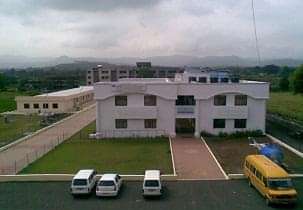
Indian Institute for Aeronautical Engineering & Information Technology
About
OfficialIndian Institute for Aeronautical Engineering & Information Technology is a other institution in Pune, established in 2001. The Indian Institute for Aeronautical Engineering & Information Technology (IIAEIT) in Pune, Maharashtra, is a private engineering institution that operates in a highly competitive educational landscape. Pune, known as the 'Oxford of the East,' hosts numerous engineering colleges and institutes, making IIAEIT one among many options available to aspiring engineers. The institute was established to address the growing demand for specialized aeronautical and information technology professionals in India, particularly as the aerospace and IT sectors expanded significantly over the past two decades. However, it is crucial to note that IIAEIT is NOT among the top-tier engineering institutions in India—it is a private college competing with several hundred other private engineering schools across Maharashtra. The institute's founding was motivated by the rise of Pune as a technology hub and the proximity to Hindustan Aeronautics Limited (HAL) and other aerospace companies in the region. IIAEIT offers undergraduate and postgraduate programs primarily focused on Aeronautical Engineering, Computer Science & Engineering, and Information Technology. The academic structure is designed to blend theoretical knowledge with practical applications, though like many private institutions, the quality of delivery varies significantly between departments. The aeronautical engineering program is the flagship offering, drawing students interested in aircraft design, propulsion systems, and aerospace manufacturing. The IT and CSE programs are more generic and face stiff competition from established institutes like COEP, Vishwakarma Institute of Information Technology (VIIT), and numerous other well-regarded private colleges in Pune. Research at IIAEIT is limited compared to IITs and established NITs. Most faculty members have industry experience rather than significant research pedigree. The institute maintains partnerships with some aerospace companies and IT firms, but these are largely for placement facilitation rather than collaborative research. Research facilities are basic, with standard laboratories for aerodynamics, structural analysis, and programming. The institute claims to focus on 'industry-ready' education, meaning an emphasis on current technologies and tools used in industry rather than fundamental research advancement. Campus life at IIAEIT is typical of private engineering colleges in Pune. The institute has hostels for boys and girls, though hostel quality is average by Indian standards. The campus features standard facilities including a library, computer labs, gymnasium, and sports grounds, but these are not exceptional. Hostel accommodation is available but often crowded, with 3-4 students per room in many cases. The hostel mess food quality is mediocre and frequently criticized by students. Pune's location offers advantages—students can access the city's vibrant tech culture, numerous coaching centers, restaurants, and entertainment options. However, the institute's suburban location means it is not immediately walkable to major hotspots. Student clubs are active, with technical clubs focused on robotics, drones, and coding, alongside cultural and sports clubs. Annual festivals like 'Technovate' (technical fest) and cultural events are organized, but they are modest in scale compared to those at top-tier colleges. The institute has not developed a particularly distinctive campus culture; it feels like a standard private engineering college focused primarily on placements. Regarding placements, IIAEIT claims respectable placement statistics, though detailed and independently verified data is scarce. Based on available information and student feedback, the placement percentage hovers around 70-85%, which is decent but not exceptional. The median salary is approximately 4-5 lakh INR annually for undergraduate engineering graduates, with some variations by branch. IT and CSE graduates typically earn slightly more than aeronautical engineering graduates, contrary to expectations. Top recruiters include IT companies like TCS, Infosys, Wipro, and HCL, along with some aerospace firms like HAL and Honeywell. However, the quality of placements (salary, role profile, growth potential) is moderate. Most placed students land jobs as software developers or IT support roles, not in specialized aeronautical positions, indicating a gap between program focus and actual outcomes. Core aeronautical engineering jobs are rare for IIAEIT graduates; most who want such roles either pursue higher education or end up in adjacent fields. Notable alumni of IIAEIT are not particularly prominent in national or international forums. The institute lacks the alumni network and legacy that established institutions possess. While some alumni have progressed reasonably in their careers, there are no household names or highly influential figures that can be attributed to the institute. This reflects both the institution's relatively recent establishment and its status as a private college without the prestige premium of top government colleges. What distinguishes IIAEIT, if anything, is its specific focus on aeronautical engineering in a city with aerospace industry presence, and the availability of spacious computer labs and some specialized aeronautical equipment. However, these advantages are marginal and not sufficient to elevate it significantly above peers. The institute should appeal primarily to students who have a genuine interest in aeronautical engineering, access to Pune's engineering college ecosystem, and realistic expectations about career outcomes. Students seeking a transformative educational experience, world-class research opportunities, or elite placement outcomes should consider IITs, NITs, or top private institutions like BITS Pilani, Manipal, or VIT instead. For those who score adequately in JEE Main to get into IIAEIT but not high enough for better-ranked colleges, the decision should weigh Pune's city advantages against the college's moderate academic reputation. The institute works best as a pragmatic choice for students from Maharashtra or nearby states seeking engineering education in a tech-savvy city without the pressure of competing for slots at top institutions. First-generation engineers and students seeking hands-on industry exposure may find value here, but high-achieving students ambitious for research or specialized aeronautical careers will likely feel constrained by IIAEIT's limitations. The cost-benefit analysis is crucial: IIAEIT charges private college fees (approximately 8-12 lakh INR per year), which is substantial. Students must assess whether the education quality and placement outcomes justify this cost relative to alternative options including government colleges in other states or online degree programs from recognized universities.