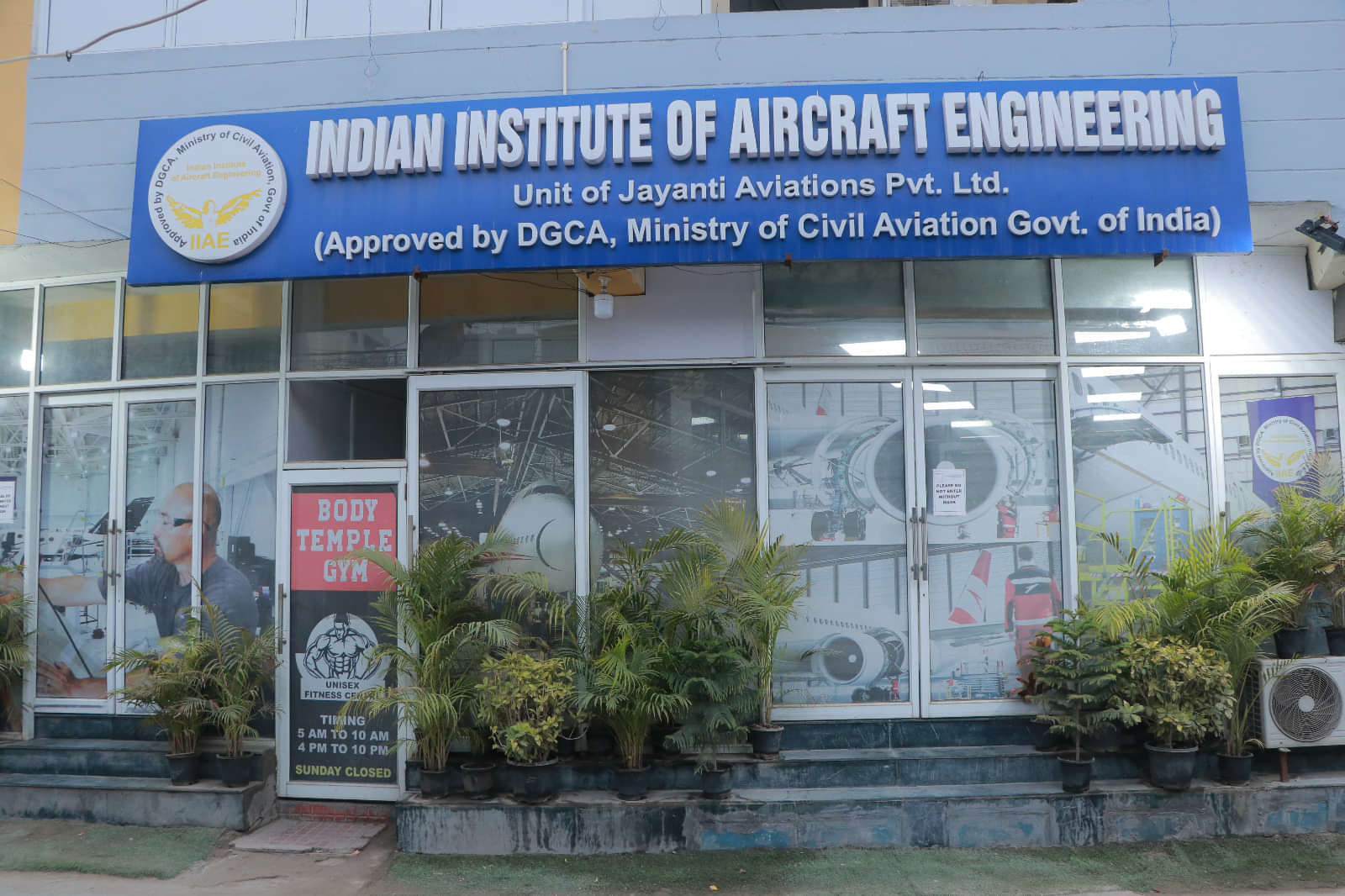
Indian Institute of Aircraft Engineering, Dwarka
About
OfficialIndian Institute of Aircraft Engineering, Dwarka is a other institution in New Delhi. The Indian Institute of Aircraft Engineering (IIAE), established in 2008, is a specialized institution in Dwarka, New Delhi, dedicated exclusively to aerospace and aircraft engineering education. Located in the rapidly developing Dwarka sector, the campus sits strategically between the city's industrial corridors and research hubs, providing students direct access to India's aviation ecosystem. IIAE was founded with the vision of bridging the critical gap in specialized aerospace engineering talent in India, a sector that historically relied on foreign expertise. The institute operates under the Ministry of HRD's recognition framework and has consistently positioned itself as India's premier destination for aircraft and aerospace engineering studies. Academically, IIAE offers integrated 5-year B.Tech programs in Aircraft Maintenance Engineering, Aircraft Design, Avionics Engineering, and Aeronautical Engineering. These programs are structured with a 3+2 model—three years of theoretical foundation followed by two years of specialization with intensive practical exposure. The curriculum is designed in close collaboration with major aerospace companies like HAL, Hindustan Aeronautics Limited, and international bodies like the Directorate General of Civil Aviation (DGCA), ensuring that course content remains aligned with industry standards and regulatory requirements. All undergraduate programs are affiliated with the Delhi Technical University and follow AICTE guidelines. The institute's aircraft maintenance engineering program is particularly distinguished, being one of the few in India approved by DGCA for training licensed aircraft maintenance technicians, a qualification recognized globally. This approval is significant because it means graduates can directly apply for DGCA Type Rating Examinations, reducing the time to employment certification. IIAE's research ecosystem, though still developing compared to older IITs, has strengthened considerably. The institute houses dedicated research centers in Aerodynamics and Computational Fluid Dynamics, Materials Science for Aerospace Applications, and Avionics Systems Integration. Faculty members have published over 300 papers in peer-reviewed journals in the last five years, with notable contributions to lightweight composite materials research and unmanned aerial vehicle (UAV) design. The institute has established MoUs with HAL, Bharat Electronics Limited (BEL), the National Aerospace Laboratories (NAL), and international partners including Airbus and Boeing for collaborative research and student internship programs. The placement record has been consistently strong, with 2023-24 seeing a 94% placement rate. The median salary for B.Tech graduates stands at approximately 7.2 lakhs per annum, with specialized branches like Avionics commanding higher packages (median 8.1 lakhs). Top recruiters include HAL, Air India, IndiGo, SpiceJet, Hindustan Aeronautics, Rolls-Royce, Lockheed Martin India, and various MRO (Maintenance, Repair, and Overhaul) organizations. The institute has also seen growing interest from defense establishments, with the Indian Air Force and Indian Navy recruiting select graduates for commissioned officer tracks. Campus life at IIAE is vibrant but more technically focused than liberal arts institutions. The student body is approximately 55% male and 45% female, with strong representation from pan-India states due to the specialized nature of the program. The institute hosts an annual Aero Fest, a three-day technical and cultural festival attracting teams from over 40 engineering colleges across India. Technical clubs are particularly active—the Aeronautical Design Club has won national competitions in aircraft design, while the UAV Club has received recognition from the Indian Department of Science and Technology. The campus culture emphasizes discipline, technical rigor, and professional excellence, reflecting the safety-critical nature of the aviation industry. Student organizations include the Society of Aerospace Engineers (student chapter), Environmental Club, and Cultural Council. Sports facilities are adequately developed, though not as extensive as general engineering colleges, reflecting the institute's specialized focus. Hostel life is a defining aspect of the IIAE experience. The institute offers separate hostels for boys (120 beds) and girls (85 beds), both operating on a semester-long tenancy model. Hostel accommodation is available only to first-year students as a matter of policy, after which students typically shift to private accommodations in nearby sectors. The mess serves both vegetarian and non-vegetarian cuisines with a monthly charge of approximately 2,800 INR. Many senior students prefer to rent independent PGs or shared flats in neighboring sectors (19, 22, 24), where monthly rents range from 8,000 to 18,000 INR depending on amenities and location. The institute's campus infrastructure has been consistently upgraded. The library holds over 15,000 books focused on aerospace topics, with digital access to IEEE Xplore, ASME Digital Collection, and other specialized databases. The computing center provides high-end workstations for CAD/CAM work, with software licenses for CATIA, ANSYS, MATLAB, and Simulink—essential tools for aerospace engineering. The flight simulator laboratory is a unique feature, housing a Level 2 flight simulator donated by a retired Air India captain, providing students hands-on exposure to cockpit systems and flight principles. Wi-Fi coverage is comprehensive across the campus with average speeds of 40-50 Mbps, though connectivity during peak hours (11 AM-2 PM) occasionally experiences congestion due to high usage by computational labs. Admissions to IIAE's undergraduate programs are merit-based, primarily through JEE-Main scores. The institute typically receives 8,000-9,000 applications for approximately 200 undergraduate seats across four specializations. Cutoff ranks vary significantly by branch—Aircraft Maintenance Engineering (the most popular) closes around AIR 18,000-22,000, while Avionics Engineering (the most competitive) closes around AIR 8,000-12,000. The acceptance rate stands at approximately 2.3%, making it one of India's most selective specialized engineering institutes. The institute also offers a 2-year M.Tech program in Aircraft Systems Engineering and Avionics (intake: 30), admissions to which are through GATE scores or IIAE's own entrance examination. Notable alumni include Captain Rajesh Kumar (batch 2010), now senior first officer at Air India; Priya Sharma (batch 2011), Director of R&D at HAL's Bangalore division; and Dr. Arjun Patel (batch 2012), currently pursuing aerospace research at TU Delft on an Indo-Dutch scholarship. The institute has produced several entrepreneurs in the aviation services sector—notably Vikram Singh (batch 2013) founded AeroRepair Solutions, an MRO startup now serving regional airlines, and Neha Desai (batch 2014) established a drone manufacturing company that won the Indian Institute of Entrepreneurship's innovation award in 2022. Several alumni work abroad—approximately 8-12% pursue further studies or employment internationally, primarily in the USA, UK, and Middle East. Key strengths of IIAE include its specialized focus (a double-edged sword: provides deep expertise but limits career flexibility), strong industry connections, DGCA approvals, hands-on learning culture, and growing research output. Weaknesses include limited campus diversity in terms of program offerings (aviation-centric, unlike broader engineering colleges), smaller alumni network compared to older institutions, occasional infrastructure bottlenecks due to rapid growth, and less emphasis on humanities/soft skills development compared to premier tier-1 institutes. The institute is ideally suited for students with a genuine passion for aviation and aerospace, who can thrive in a rigorous, specialized environment. It is NOT recommended for students seeking maximum career flexibility or those uncomfortable with the discipline-intensive culture of the aviation sector. Geography and climate play a role—Dwarka's location in West Delhi means hot, dry summers (40-45°C) and mild winters (8-15°C), requiring students from cooler regions to adapt. The monsoon season (July-September) brings relief but occasional waterlogging in poorly maintained areas of Dwarka. Living in Dwarka necessitates adjustment for students from metro-centric areas like Bangalore or Hyderabad—while metro connectivity has improved, the area is still developing and may feel quieter than students from cosmopolitan centers expect. Despite these considerations, IIAE remains India's flagship institution for specialized aircraft engineering, commanding respect in global aviation circles and offering graduates a clear professional trajectory in a high-growth sector.