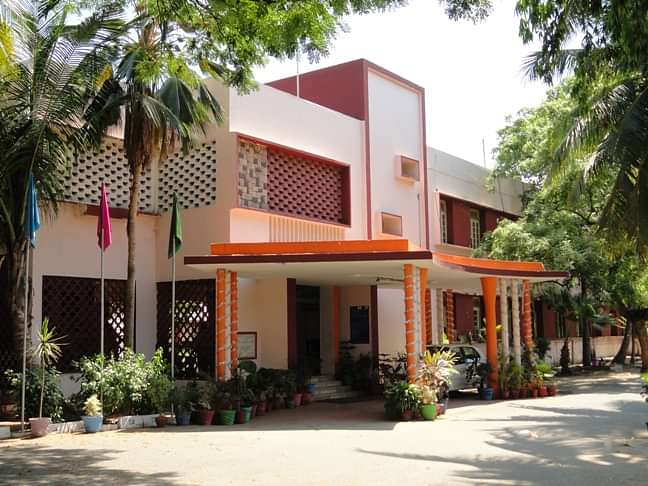
Institute of Hotel Management Catering Technology & Applied Nutrition, Chennai
About
OfficialInstitute of Hotel Management Catering Technology & Applied Nutrition, Chennai is a public institution in Chennai, established in 1963. The Institute of Hotel Management Catering Technology & Applied Nutrition (IHM Chennai) is one of India's premier hospitality education institutions, established under the Ministry of Tourism, Government of India. Founded in 1987, it has evolved into a Centre of Excellence in hotel management, food production, housekeeping, and applied nutrition across three decades. The institute operates under the umbrella of the IHM Delhi-coordinated national network of Central IHMs across India, maintaining rigorous academic standards and industry alignment. Academic Structure: IHM Chennai offers a 3-year Bachelor of Science (Hospitality & Hotel Administration) program with specialization streams including Food Production, Food & Beverage Service, Front Office Operations, and Housekeeping Management. The curriculum balances theoretical knowledge with 6 months of mandatory on-the-job training (OJT) embedded within the program structure. The institute also offers a 1-year Post Graduate Diploma in Advanced Hotel Management for graduates seeking specialization. Applied Nutrition is a unique strength area, with dedicated faculty and labs for food science, dietary planning, and institutional nutrition management. Research & Innovation: While primarily a teaching institution, IHM Chennai has emerging research initiatives in sustainable hospitality practices, food waste management, and culinary innovation. Faculty engage in applied research projects with industry partners on kitchen technology, food safety protocols, and customer experience optimization. The institute collaborates with international culinary bodies and participates in knowledge exchange programs with hospitality schools in Switzerland, France, and Singapore. Campus Infrastructure: The 12-acre suburban campus houses state-of-the-art training kitchens (8 production kitchens with different cuisines), 3 food and beverage service labs, housekeeping department with simulated hotel rooms, a 150-seat training restaurant (Aromas), mock front office reception area, and a professional bakery unit. The library holds 8,500+ volumes focused on hospitality, culinary arts, and management. Computer labs with 120+ terminals support hospitality management software training (Opera PMS, MarketMan, etc.). The campus WiFi coverage is partial—strong in academic blocks but inconsistent in hostels. Placement Performance: IHM Chennai achieves 95-98% placement rates with median starting salaries of ₹3.5-4.2 lakhs annually for B.Sc. graduates and ₹4.8-5.5 lakhs for postgraduates. Top recruiters include ITC, Taj Hotels, Oberoi Group, Marriott, Hyatt, Club Mahindra, Air India, and various cruise lines. The hospitality sector employment is highly competitive, and starting positions often involve operational roles (Chef de Partie, Junior Sous Chef, Assistant Manager) requiring significant on-ground experience. Salary growth is rapid with 3-5 years of experience, with executive chefs and general managers earning ₹12-25 lakhs+. International placement opportunities exist with Gulf hospitality brands, European hotels, and cruise ship operators. Placement Specifics: The institute has dedicated placement cells coordinating with industry partners. However, placement is NOT guaranteed—students scoring below 65% in academics face limited company visits. Hotel chains typically recruit for specific operational roles, meaning career progression depends heavily on individual performance and willingness to relocate. Approximately 8-10% of graduates pursue further studies (MBA, specialized culinary diplomas abroad) rather than direct hospitality employment. Campus Life & Student Experience: The hostel accommodates ~400 students with separate wings for men and women. Hostels are functional but cramped—double/triple sharing is standard, and privacy is limited. The hostel mess serves Indian, Continental, and Asian cuisines with rotating menus. Food quality is decent but inconsistent (Saturday-Sunday sees significant student complaints). Monthly mess charges are ₹1,800-2,200. Internet speed is approximately 5 Mbps, sufficient for streaming but not ideal for online learning. The campus hosts 2-3 annual fests: Hoteliers' Day (cultural, February), Culinary Olympics (April, internal competition), and Annual Day. Student clubs include Cultural Club, Sports Committee, Entrepreneurship Cell, and Food Science Club. Sports facilities include a small gymnasium, badminton court, and volleyball/basketball court. The campus hosts intra-hostel cricket and badminton tournaments. Student Sentiment & Reality Check: While IHM Chennai graduates are highly sought by industry, the institute has legitimate weaknesses. Academic rigor varies significantly based on faculty—some departments maintain stringent evaluation, while others are lenient. Ragging is rare but occasional incidents have been reported in the past 5 years, though management has improved preventive measures. For women students, the campus is generally safe with a dedicated women's grievance cell, but safety depends on responsible use of transport post-college hours. The curriculum is vocational and practical rather than research-focused; students seeking theoretical depth in hospitality management may find limitations. The institute struggles with outdated kitchen equipment in some areas (3-year-old ovens, aging stewpots), creating operational bottlenecks during peak training periods. Who Should Apply: Ideal candidates are passionate about culinary arts, hospitality entrepreneurship, or hospitality management with comfort in hands-on, operational roles. The program suits those who prefer practical learning over pure academics, those interested in international hospitality careers, and individuals from middle-class backgrounds seeking direct industry employment within 2-3 years. The program is NOT suitable for candidates prioritizing white-collar careers, pure research, or academic advancement through traditional degree progression. Non-vegetarians should note that the curriculum includes meat preparation training—vegetarian students can request alternatives but may face evaluation challenges. Unique Positioning: IHM Chennai's central government affiliation provides credibility and alumni network access across 21+ Central IHMs nationally. The mandatory OJT embedded in the curriculum ensures real hotel exposure by the 2nd year. The presence of Applied Nutrition as a distinct department differentiates it from private culinary schools, offering career paths in institutional feeding, hospital dietetics, and food safety consulting. However, private culinary institutes (Welcomgroup Academy, Inji Culinary Institute) now offer comparable practical training with better infrastructure, creating competition. Geographic Advantage & Disadvantages: Chennai's position as a major tourism and hospitality hub (home to ITC, Taj Fisherman's Cove, Oberoi resorts, and cruise ship ports) provides unmatched OJT placement opportunities. However, Chennai's real estate costs are rising, and many hotels concentrate on the Mahabalipuram-OMR corridor, requiring daily commutes. The institute's location in Opp. Ramakrishna Mission Vidyapith (North Chennai) is 18-25km from major hospitality establishments, requiring 60-90 minute commutes during OJT. Conclusion: IHM Chennai is India's premier hospitality education institution for students committed to hands-on hotel industry careers, offering unmatched practical exposure, credible degree recognition, and strong industry connections. However, prospective students must approach with realistic expectations: the program is vocational, starting salaries are modest (₹3.5L), career progression requires interpersonal skills and geographic mobility, and the curriculum does not prepare for non-hospitality sectors. It is an excellent choice for hospitality entrepreneurs and career hospitality professionals but not for those seeking flexible career optionality or academic research pathways.