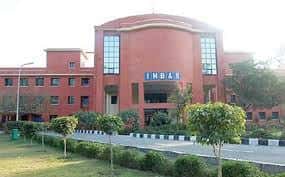
Institute of Human Behaviour and Allied Sciences
About
OfficialInstitute of Human Behaviour and Allied Sciences is a other institution in Delhi, established in 1993. The Institute of Human Behaviour and Allied Sciences (IHBAS), Delhi, is a premier government medical institute established in 1982 under the Department of Health and Family Welfare, Government of NCT of Delhi. It stands as one of India's leading centers for psychiatric and behavioral health education, research, and clinical practice. The institute was created with the primary objective of addressing the mental health crisis in India through specialized education, cutting-edge research, and compassionate patient care. IHBAS is uniquely positioned as a tertiary care center that combines academic excellence with practical clinical experience, making it an ideal choice for students passionate about psychiatry, clinical psychology, and mental health sciences. The institute occupies a sprawling 8-acre campus in Dilshad Garden, East Delhi, characterized by modern infrastructure integrated with serene gardens that create a therapeutically conducive environment for both learning and patient care. IHBAS operates under the administrative oversight of the Delhi government while maintaining academic affiliations with the University of Delhi and collaboration with other national and international institutions. The institute is staffed by over 85 faculty members, many of whom are nationally and internationally recognized experts in psychiatric medicine, psychology, neurobiology, and allied sciences. The student body comprises approximately 450 learners across undergraduate, postgraduate, and doctoral programs, creating an intimate academic community where mentorship and personalized learning are hallmarks. Academically, IHBAS offers specialized postgraduate degrees in psychiatry (M.D./DNB), clinical psychology (M.Phil/Ph.D.), psychiatric nursing (M.Sc.), rehabilitation science (M.Sc.), and allied mental health disciplines. The undergraduate curriculum emphasizes foundational medical sciences with substantial exposure to psychiatric principles even at the MBBS level through its affiliation framework. What sets IHBAS apart is its strong emphasis on research. The institute houses dedicated research centers including the Schizophrenia Research Centre, Mood Disorders Unit, Child & Adolescent Mental Health Centre, and Neurobiological Research Laboratory. Faculty members are consistently engaged in funded research projects with agencies like ICMR, DBT, and SERB. The publication record of IHBAS faculty is impressive, with regular contributions to high-impact national and international journals. Students benefit from early exposure to research methodologies, with many pursuing Ph.D. and postdoctoral fellowships at premier institutions globally. The clinical training at IHBAS is exceptionally rigorous. The institute operates 200+ inpatient beds across various specialized units including general psychiatry, child psychiatry, geriatric psychiatry, substance abuse management, and de-addiction services. Outpatient services handle over 50,000 patient consultations annually, providing students with unparalleled clinical exposure. The institute also runs community mental health programs in collaboration with Delhi government, exposing students to public health perspectives often missing in private medical education. Placements and career outcomes are strong but specialized. Graduates from postgraduate psychiatry programs secure positions in premier government medical colleges, private hospitals, and increasingly in international settings. A significant portion of Ph.D. graduates pursue careers in academic medicine or research institutions. Clinical psychology graduates find placements in psychiatric hospitals, corporate wellness programs, rehabilitation centers, and independent practice. However, it's crucial to note that IHBAS specializes exclusively in mental health and behavioral sciences—it does not offer general medical or surgical specializations. This makes it ideal only for those genuinely committed to psychiatry and mental health careers. The campus life reflects the institute's mission. Student communities are intellectually engaged and clinically-oriented rather than pursuing recreational activities. The student body tends to be highly motivated, attracted specifically to mental health education. Cultural and sports activities exist but are modest compared to general medical colleges. The hostel facilities are adequate but basic, reflecting the government institute ethos. The library houses an impressive collection of psychiatric and behavioral science journals, textbooks, and digital resources. The institute maintains state-of-the-art diagnostic equipment, including EEG machines, psychometric testing facilities, and neuroimaging interpretation capabilities. Notably, IHBAS attracts students from across India and increasingly international applicants pursuing psychiatric education. The institute has produced several nationally recognized psychiatrists, researchers, and mental health administrators who head departments in major medical colleges and research institutions. IHBAS is ideally suited for: (1) Medical graduates with genuine passion for psychiatry and behavioral sciences; (2) Clinical psychology graduates seeking advanced training in psychiatric contexts; (3) Nursing professionals interested in mental health specialization; (4) Researchers interested in neurobiology, psychopharmacology, or epidemiology of mental disorders; (5) Those committed to mental health advocacy and public health; (6) International medical graduates seeking training in psychiatry according to Indian curriculum standards. IHBAS should NOT be the choice for students seeking general medical education, surgical training, or broad medical specialization. The institute's strength lies in its laser focus on mental health—a depth that becomes its limiting scope for those with broader medical ambitions. The admissions process is highly competitive, with selection based on merit in respective entrance examinations (NEET for postgraduate medical programs, dedicated entrance exams for psychology and nursing programs). The institute employs a transparent merit-based selection system with no management quota, reflecting its government institution status. Diversity is valued, with reserved seats for SC, ST, OBC, and EWS categories as per government regulations. The faculty mentorship system at IHBAS is particularly noteworthy. Being a specialized institute with modest student numbers, faculty-student ratios are favorable, enabling personalized academic and research guidance. Many faculty members invest significantly in student career development, facilitating internships and collaborations with international psychiatric institutions. The institute's location in East Delhi, while somewhat removed from the city's central commercial hub, is actually strategically advantageous. It positions the institute near several other government medical and health facilities in the National Capital Region, facilitating referral networks and collaborative clinical work. The area is well-connected via Delhi Metro (pink line, yellow line extensions), making commute manageable. The institute's mental health mission extends to community engagement. Students participate in awareness campaigns, screening programs, and de-stigmatization initiatives across Delhi. This gives clinical experience a social responsibility dimension. The library and digital resources at IHBAS are increasingly comprehensive, with access to international psychiatric journals, and databases like PubMed, PsycINFO, and institutional repositories of seminal research. The institute's unique position as a government center of excellence means student fees are substantially lower than private psychiatric institutions, making specialized training accessible. However, this comes with the bureaucratic inefficiencies characteristic of government institutions—slower infrastructure updates, occasional administrative delays, and budgetary constraints that sometimes limit resources. Disadvantages to consider: (1) Limited general medical training if one reconsiders psychiatric career; (2) Smaller alumni network compared to large medical colleges, potentially limiting non-psychiatric career pivots; (3) Government institute bureaucracy affecting administrative decisions; (4) Campus location in outer East Delhi may feel isolated from central city amenities; (5) Hostel quality and campus facilities are functional but modest; (6) Limited sports and cultural infrastructure compared to comprehensive universities. IHBAS represents a deliberate choice for a specialized career path. It is not a generalist institution but rather a focused center of excellence. For the right student—one committed to mental health, research-oriented, and valuing specialized depth—IHBAS offers world-class training, exceptional mentorship, and genuine clinical and research opportunities. The institute's government status ensures affordability and merit-based meritocracy, while its specialization ensures unparalleled depth in psychiatric education and research in India.