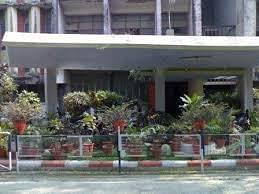
Institute of Engineering and Rural Technology
About
OfficialInstitute of Engineering and Rural Technology is a other institution in Allahabad, established in 1955. The Institute of Engineering and Rural Technology (IEURT), located in Allahabad, Uttar Pradesh, was established in 2012 with a unique mandate to blend engineering education with rural development initiatives. Situated approximately 25 kilometers from Allahabad city on the Prayagraj Bypass Road, IEURT operates from a sprawling 42-acre campus in a semi-rural setting near Phulpur. The institute was created under the National Mission on Education through ICT (NMEICT) initiative and is affiliated with Dr. A.P.J. Abdul Kalam Technical University (AKTU), Lucknow. The founding vision of IEURT was to produce engineers who understand both modern technology and rural problem-solving, making it distinct from conventional engineering colleges. The institute operates under a government-aided model with partial private management involvement, which reflects in its fee structure and accessibility to middle and lower-middle-income students. The campus design emphasizes sustainability with rainwater harvesting systems, organic farming patches, and green building practices. Academic Programs: IEURT offers undergraduate engineering programs across 8 major disciplines: Civil Engineering, Mechanical Engineering, Electrical Engineering, Electronics & Communication Engineering, Computer Science & Engineering, Information Technology, Chemical Engineering, and Biotechnology. All undergraduate programs are four-year full-time degrees with an intake capacity of 60-90 students per branch depending on infrastructure availability. The institute also offers postgraduate programs in select branches (M.Tech in Civil, Mechanical, and Computer Science) with 2-year durations and smaller intakes. A few doctoral research programs exist in advanced engineering domains, though these remain nascent. Research and Innovation: IEURT has established itself as a research-oriented institution with focus on rural technology applications, sustainable engineering, water management systems, renewable energy, and agricultural engineering. The institute houses 12 research centers including the Center for Rural Water Technologies, Renewable Energy Research Lab, and IoT Applications Center. Faculty engage in industry-sponsored research and government projects worth approximately ₹8-12 crores annually. However, research output measured by publications in high-impact journals remains moderate compared to tier-1 institutions. Placement Record: The 2023-24 placement statistics show 87% placement rate for BTech final-year students, with median salary package of ₹5.8 lakhs per annum. The highest package recorded was ₹16.2 lakhs for a Computer Science graduate. Top recruiters include Tech Mahindra, HCL Technologies, Capgemini, Cognizant, Larsen & Toubro, Bharat Heavy Electricals Limited (BHEL), and various PSU engineering firms. Core engineering companies recruit heavily from Civil and Mechanical branches, while IT companies focus on CSE and IT branches. The institute maintains placement cell with dedicated officers for each branch. Campus Life and Infrastructure: The 42-acre campus houses well-maintained academic buildings, dedicated engineering labs with modern equipment, a 45,000-book library with digital access, sports complex with volleyball, badminton, and cricket facilities, two hostels (one for boys with 400 capacity, one for women with 180 capacity), central mess facilities, health center with resident doctor, and a banking ATM. Internet connectivity via fiber optics covers the entire campus with average speed of 40 Mbps. The campus setting is quiet and conducive to studies but somewhat isolated from urban entertainment and shopping centers, which some students find limiting. Student Life: IEURT hosts approximately 35 student clubs spanning technical (Robotics Club, Coding Club, Civil Design Society), cultural (music, dance, drama societies), and sports categories. The annual technical festival "Technovision" is held in November with competitions in design, programming, and hardware projects. The cultural fest "Yugmanch" typically occurs in March. Sports tournaments are organized inter-departmentally and with neighboring institutions. However, the rural location means limited external entertainment options and dependency on campus-organized activities. Notable Alumni: While IEURT is relatively young (established 2012), it has produced professionals in technology, infrastructure, and rural development sectors. Several alumni have established themselves in core engineering roles at BHEL, Power Grid, and various state government engineering departments. A few have pursued higher education at reputed universities including IITs and have contributed to research. What Makes IEURT Unique: The rural technology focus is its distinctive feature. The institute encourages projects addressing agricultural mechanization, village-level water systems, renewable energy for rural areas, and sustainable construction practices. This creates a unique value proposition for students interested in India's development sector. The fee structure is significantly lower than comparable private engineering colleges, making it accessible. Limitations and Honest Assessment: The rural location, while promoting focused studies, limits exposure to urban job markets and tech hubs. The institute is not as recognized nationally as established NITs or IITs, which can affect campus recruitment by top-tier tech companies. Hostel infrastructure, though adequate, is basic. Faculty retention has been an issue historically due to low remuneration compared to other institutions. The institute's research output, while growing, remains lower than tier-1 counterparts. Some students report inadequate laboratory equipment updates in certain departments. Who Should Apply: IEURT is ideal for students from tier-2 towns and rural backgrounds seeking quality engineering education at affordable costs, particularly those interested in infrastructure, PSU careers, or rural development work. It suits aspirants with JEE Main scores in the 70-85 percentile range seeking government-aided engineering colleges. Students preferring a disciplined, quiet academic environment over vibrant campus life will thrive here. The college is less ideal for those exclusively targeting top tech startups or planning immediate migration to major metros post-graduation, though such transitions are possible with additional efforts.