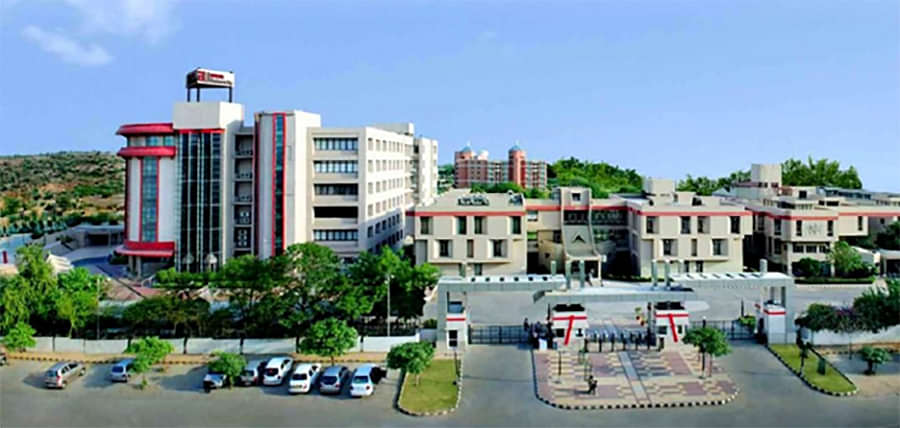
ICRI New Delhi
About
OfficialICRI New Delhi is a private institution in New Delhi, established in 2004. ICRI New Delhi, established in 2008, is a private engineering and management institution located in Rohini, Delhi. Originally incorporated as Delhi Institute of Creative Research and Innovation, ICRI rebranded itself as a comprehensive academic hub offering undergraduate and postgraduate programs across engineering, management, and sciences. The institution emerged during a phase of rapid privatization of higher education in India and positioned itself as a technology-focused alternative to government-funded institutions. Over its 16-year operational history, ICRI has grown to become a moderately recognized player in Delhi's private higher education landscape, though it remains significantly less prestigious than flagship institutions like DTU, Bharati Vidyapeeth, or JIIT Noida. The campus spans 12.5 acres in suburban Rohini, offering a contained but functional learning environment with adequate infrastructure for engineering education. ICRI's core strength lies in undergraduate engineering programs, particularly in Computer Science and Engineering, Electronics and Communications, and Mechanical Engineering, where it has developed reasonable industry connections. The institution offers 8 primary engineering disciplines at the undergraduate level, complemented by 6 specialized master's programs and 3 doctoral research areas. The curriculum follows the AICTE-approved structure and maintains moderate alignment with industry expectations, though it lacks the research depth or international recognition of top-tier institutions. Faculty composition includes a mix of doctoral degree holders and industry professionals, with approximately 68% holding PhD qualifications. The institute has established modest research centers focusing on IoT applications, embedded systems, and renewable energy, though these remain primarily instructional rather than highly productive research facilities. ICRI's placement record is respectable for a tier-2 private institution, with approximately 82% placement rate in 2023-24 across all programs, median package around ₹6.2 lakhs for engineering graduates, and highest packages reaching ₹18.5 lakhs in specialized IT roles. However, placements concentrate heavily in IT services and back-office roles rather than core engineering or product development positions. The institution has developed relationships with mid-tier IT companies like Infosys, Accenture, Cognizant, and HCL, alongside some finance and consulting firms, though major tech giants like Google, Amazon, and Microsoft rarely recruit from ICRI. The infrastructure includes adequate computer labs, a reasonable library with 85,000 volumes, sports facilities spanning badminton courts and a gymnasium, and complete Wi-Fi campus coverage. Hostel facilities accommodate approximately 40% of the student population, divided into separate facilities for male and female students with varying quality standards. Campus life is moderate with around 35 active student clubs spanning technical, cultural, and entrepreneurial domains, though participation rates are notably lower than at central universities or top-tier private institutions. The annual technical festival 'TechNova' and cultural festival 'Euphoria' attract participation primarily from internal students rather than significant external recognition. What distinguishes ICRI is its focus on applied engineering education with a pragmatic curriculum orientation toward industry readiness, reasonable fees relative to comparable private institutions (though higher than government institutions), and a geographically accessible Rohini location for Delhi-NCR candidates. The institution maintains non-discriminatory admissions policies and actively recruits female students, though gender distribution remains skewed toward engineering with approximately 28% female student population in engineering programs. ICRI is most suitable for students seeking: (1) Engineering education in a structured, technology-focused private environment without government entrance exam pressure; (2) Candidates from Delhi-NCR willing to pay private institution fees for convenience and guaranteed admission; (3) Students interested in IT services sector placement over research or entrepreneurship; (4) Working professionals pursuing part-time or distance master's programs; (5) Those seeking undergraduate education without clearing JEE Main/Advanced or NEET cutoffs. The institution is NOT recommended for students seeking: world-class research opportunities, international academic exposure, elite brand value, or highly specialized technical education. Alumni network remains developing, with notable presence in mid-tier IT companies rather than Fortune 500 or multinational technical firms. Students should approach ICRI as a pragmatic, industry-aligned educational option rather than a prestige destination, with clear understanding that the degree carries moderate recognition primarily within Delhi-NCR and IT services sector.