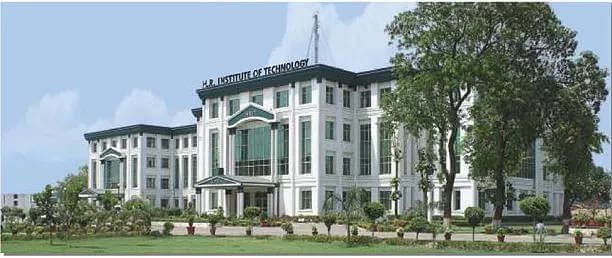
Hrit Group Of Institutions, Ghaziabad
About
OfficialHrit Group Of Institutions, Ghaziabad is a other institution in Ghaziabad, established in 2005. Hrit Group of Institutions (HRIT) was established in 2008 in Ghaziabad, Uttar Pradesh, with the vision of providing quality engineering and management education at affordable costs. Located on the GT Road near Meerut Road, the institution operates as a relatively autonomous engineering and management college, positioned between the major tier-1 institutions and smaller private colleges in the region. The institution is affiliated with Dr. A.P.J. Abdul Kalam Technical University (AKTU), Lucknow, and operates under UGC regulations. HRIT offers multiple undergraduate and postgraduate engineering programs including Computer Science & Engineering, Electronics & Communication Engineering, Mechanical Engineering, Civil Engineering, Electrical Engineering, Information Technology, and specialized programs like Artificial Intelligence. The management school within the group offers MBA programs with specializations in Finance, Marketing, Operations, and Human Resources. The college also offers B.Tech in emerging areas like AI and Data Science, reflecting efforts to stay contemporary with industry demands. Academically, the institution emphasizes a balanced curriculum combining theoretical foundation with practical training. The engineering programs follow the AKTU curriculum but supplement it with industry-relevant content through tie-ups with technology companies. Faculty members are primarily doctorate holders from reputed institutions, with an emphasis on industry experience. The institution has established partnerships with companies like TCS, Infosys, Wipro, HCL, Accenture, and others for training and recruitment purposes. Research initiatives are modest, with a few faculty members engaged in industry-sponsored projects and consultancy work, primarily in the areas of IoT, cloud computing, and automation. The campus infrastructure includes well-equipped computer labs with modern hardware, internet connectivity across the campus, a library with physical and digital resources, seminar halls, and classrooms with multimedia facilities. However, infrastructure standards are at the level of a developing private engineering college rather than top-tier institutions. The laboratories are functional but not state-of-the-art, and equipment updates happen periodically based on budget allocations. Placements have been a significant strength historically, with over 85% of final-year students securing jobs in recent years. The average package hovers around 5.5-6.5 LPA, with highest packages reaching 18-22 LPA in technology and consulting sectors. Top recruiters include companies from IT services, financial services, and core manufacturing sectors. However, placement figures must be contextualized: many placements are in tier-2 IT service companies rather than leading MNCs, and significant salary variation exists across branches. Computer Science Engineering (CSE) and Information Technology (IT) enjoy the best placement outcomes, with near 95% placement rates and higher average salaries (7-9 LPA). Mechanical and Civil Engineering branches face more modest placement outcomes (70-75% placement, 4-5 LPA average), reflecting broader market trends for core engineering branches. The campus life is relatively vibrant for a private engineering college in the region. Student clubs span technical, cultural, and sports domains. The institution hosts an annual technical fest and cultural event. However, compared to large universities or top-tier colleges, the scale and resources dedicated to extracurricular activities are limited. Sports facilities include a basketball court, volleyball court, badminton courts, and a small gymnasium, though a swimming pool and extensive athletic field are absent. The hostel infrastructure includes separate accommodations for boys and girls, with approximately 500-600 students living on campus. Hostels are adequately maintained with basic amenities including internet access, though the quality and comfort level are functional rather than luxurious. Mess food is Indian cuisine-centric with reasonable variety, and monthly mess charges range from 2000-2500 INR. The institution maintains strict policies against ragging, with documented anti-ragging committees and student grievance redressal mechanisms. Reported ragging incidents are rare, and the campus maintains a relatively safe environment. Safety for women students includes dedicated hostel blocks, campus security presence, and transportation arrangements. However, as a suburban campus, late-night movement requires awareness, and the surrounding area is not as well-developed as central Ghaziabad. Ghaziabad's location offers significant advantages and disadvantages. Positioned 35 km east of Delhi, the city provides proximity to India's national capital while maintaining lower living costs. Delhi's metro system does not extend to HRIT's campus directly, but the nearby Ghaziabad railway station and road connectivity to Delhi make it accessible for students seeking Delhi-based internships or events. The city itself is a manufacturing and industrial hub with a growing IT sector, offering local internship and employment opportunities. However, Ghaziabad has higher pollution levels than many Indian cities, a byproduct of its industrial activity and vehicular density on the GT Road. Air quality varies seasonally, with winter months (November-January) experiencing hazardous pollution levels, requiring masks for outdoor activities. Water quality in the region has been a historical concern, with many students preferring bottled water. The student community at HRIT is diverse, drawn primarily from North India (Delhi-NCR, Uttar Pradesh, Haryana), with representation from other parts of India. The admission process is transparent, based on entrance exam scores and AICTE norms for seat allocation. The institution's fee structure is competitive compared to other private engineering colleges in the region, positioned as more affordable than top-tier private institutions but more expensive than government colleges. Notable strengths include competitive fees, decent placement outcomes for CSE/IT branches, proximity to Delhi, and a functioning academic ecosystem. Significant limitations include modest research output, average infrastructure compared to top institutions, concentration of top placements in specific branches, limited resources for extracurricular development, and environmental challenges in the city location. The institution is particularly recommended for students seeking affordable engineering education in the Delhi-NCR region with reasonable placement prospects, especially for Computer Science and IT specializations. It suits students from middle-income families seeking value for investment and those targeting tier-2 IT services or core engineering roles. It is less suitable for students prioritizing cutting-edge research infrastructure, top-quartile placement outcomes, or those extremely sensitive to environmental factors like pollution.