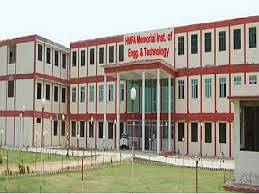
H.M.F.A. Memorial Institute Of Engineering & Technology
About
OfficialH.M.F.A. Memorial Institute Of Engineering & Technology is a other institution in Allahabad, established in 2008. H.M.F.A. Memorial Institute of Engineering & Technology (HMFAIET) was established in 1995 as a self-financed engineering college in Allahabad, Uttar Pradesh. Founded by the Hasni Memorial Foundation with the vision to provide quality technical education to students from diverse socioeconomic backgrounds, the institute has evolved into one of the more recognized private engineering colleges in UP. The college is located in the suburban Daraganj area, approximately 15 km from Allahabad city center, providing a semi-isolated yet accessible campus environment. HMFAIET is affiliated with Dr. A.P.J. Abdul Kalam Technical University (AKTU), making its degrees valid across northern India. The institution operates across engineering disciplines with a focus on core engineering branches alongside emerging technology domains. The college offers undergraduate programs in Civil, Mechanical, Electrical, Electronics & Communication, Computer Science & Engineering, and Information Technology, with selective postgraduate programs in select disciplines. The faculty base comprises approximately 185 members, with around 35-40% holding PhD qualifications, primarily from AKTU, VTU, and some from centrally funded institutions. Research at HMFAIET remains modest but growing, with faculty engaged in civil engineering research (infrastructure, sustainability), mechanical engineering (thermal systems, manufacturing), and computer science (cloud computing, IoT applications). However, HMFAIET is not recognized as a research-intensive institution; its primary focus remains undergraduate education and industry placements. The institute has partnered with organizations like TCS, Cognizant, Capgemini, and various manufacturing firms for training and recruitment. Campus infrastructure includes a library with approximately 45,000 books and digital resources, three computer labs with 400+ systems, sports facilities including a basketball court and volleyball court, a health center, separate hostel facilities for men and women, and a placement cell that coordinates recruitment. The campus underwent infrastructure expansion between 2015-2020, adding new academic blocks and hostel capacity. However, compared to tier-1 private engineering colleges, laboratory equipment and research facilities remain modest, with some labs sharing resources. The placement scenario at HMFAIET has been a significant strength. For 2023-24, the college reported 87-90% placement rates for engineering students, with median package around 5.0-5.5 LPA and highest packages reaching 12-14 LPA (primarily for top CS students placed in tech companies). Core engineering placements (Civil, Mechanical) average 3.5-4.5 LPA. A notable portion of placements comes from service-based IT companies (TCS, Cognizant, Tech Mahindra) and some core engineering companies. The college lacks significant MNC presence compared to tier-1 institutions, and mass recruitment has created scenarios where many students secure packages below 3.5 LPA. Approximately 8-12% of graduates pursue higher studies at GATE-based institutions or pursue MS abroad. The student body comprises primarily middle-class background students from UP and neighboring states seeking affordable engineering education. Admission is primarily through JEE Main scores, with cutoff ranks typically ranging from 80,000-120,000 for top branches (CS/IT) to 150,000-180,000 for other branches, though exact cutoffs vary annually. The college also maintains a merit-based scholarship scheme for high JEE performers and reserved category students. Campus life at HMFAIET is moderately vibrant. The college hosts annual technical fest (TechnoVerse), cultural fest (AchTech), and sports meet. Student clubs include coding clubs, robotics club, cultural societies, and entrepreneurship cells. However, compared to premier institutions, the scale of student engagement and inter-college competitions is smaller. Hostel facilities accommodate approximately 1,200 students (450 men, 300 women, 450 shared/visiting) with monthly rent ranging from 4,000-7,500 INR depending on room type and occupancy. Mess facilities provide average quality food at approximately 2,500-3,500 INR monthly. Internet connectivity is available campus-wide at moderate speeds (15-25 Mbps). Safety is generally good with reported low incidence of ragging in recent years, though like many engineering colleges, hazing during initial weeks remains a minor concern. The college has implemented anti-ragging committees and awareness programs. For women students, safety measures include dedicated hostel security, separate dining times, and escort services during evening hours; however, student feedback indicates varying experiences depending on hostel block and proactive management involvement. Notable alumni include graduates working in TCS, Wipro, HCL, Infosys, some establishing startups in renewable energy and software services, and some pursuing academic careers. However, HMFAIET lacks highly visible entrepreneurial success stories or prominent industry leaders compared to IITs/NITs. The institute serves a specific demographic: students seeking affordable engineering education in Allahabad region, those unable to clear competitive national entrance thresholds for premier institutions, and working professionals seeking part-time education (the college offers evening programs for select disciplines). HMFAIET is NOT positioned for students seeking world-class research exposure, heavy industry partnerships, or strong global network. It is well-suited for students prioritizing affordable quality technical education, stable placements in IT services sector, and location advantages near their hometown in northern India. The college's strength lies in its structured curriculum, regular placements, relatively small batch sizes enabling faculty attention, and affiliation with a recognized university. Weaknesses include limited research culture, modest international collaborations, heavy reliance on service-based IT recruitment model, average infrastructure compared to tier-1 private colleges, and limited alumni network depth in senior leadership positions. The fee structure remains significantly lower than comparable private engineering colleges (60-70% of peer costs), making it attractive for cost-conscious families. However, career outcomes, while respectable for tier-2 private colleges, do not match premier institutions, and the college's brand recognition outside UP region is limited.