Haldia Government College
About
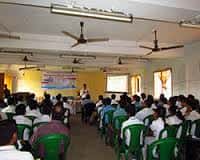
OfficialHaldia Government College is a public institution in Kharagpur, established in 1988. Haldia Government College, located in Kharagpur, West Bengal, is a premier state government institution established in 1997 with a mandate to provide quality undergraduate and postgraduate education in science, commerce, and humanities disciplines. Situated approximately 120 km from Kolkata, the college serves as an important educational hub for students from eastern India, particularly West Bengal and neighboring states. The institution operates under the governance of the Government of West Bengal and follows the academic framework of Vidyasagar University. Over 26 years of operation, HGC has evolved from a nascent institution into a recognized center for higher learning with a reputation for producing graduates who contribute meaningfully to various sectors of the Indian economy. The college admits approximately 700 students annually across its undergraduate and postgraduate programs, maintaining a diverse student body with representation from multiple states and socioeconomic backgrounds. The academic environment at Haldia Government College is characterized by a strong emphasis on foundational learning, critical thinking, and practical skill development. The institution offers 12 undergraduate programs spanning Science (Physics, Chemistry, Botany, Zoology, Mathematics), Commerce (Honors and General streams), and Humanities (History, Political Science, Geography, Economics), along with 8 postgraduate programs including MA in Economics, English, and History, MSc in Physics and Chemistry, and MBA programs. The faculty comprises dedicated educators, many of whom possess doctoral qualifications from reputable institutions like Delhi University, Banaras Hindu University, and Indian Institute of Technology. Faculty members are actively engaged in research, with several publishing papers in national and international journals. The college has established research centers focused on environmental science, sustainable development, and social studies, though research output remains modest compared to central universities. Campus infrastructure includes well-stocked libraries with over 45,000 books, chemistry and physics laboratories equipped with modern instruments, computer centers with internet connectivity, and sports facilities including cricket grounds, basketball courts, and a gymnasium. The college operates separate hostels for male and female students, though hostel accommodation is limited and available primarily for first-year students and those from remote areas. Academic life is structured around a semester system, with continuous internal assessment complementing semester-end examinations. The institution has implemented a choice-based credit system (CBCS) and offers digital learning platforms to supplement classroom instruction, particularly post-pandemic. Placement and career development represent key institutional priorities. The college maintains an active placement cell that coordinates with industries, NGOs, and government organizations to facilitate internships and job placements. In recent years, placement percentages have improved, with approximately 65-70% of graduating students securing placements or pursuing higher education. Top recruiters include companies like Infosys, TCS, Wipro, and various government departments. However, salary packages remain modest compared to centrally-funded institutions, with median packages in the range of 4-5 lakhs annually for engineering and IT roles, and 3-4 lakhs for commerce graduates. Many graduates pursue further studies through UPSC/WBPSC examinations, with notable success rates in civil service examinations. Student life at HGC is vibrant, with numerous clubs and societies catering to academic, cultural, and sporting interests. The college celebrates major events including Foundation Day, an annual technical fest called "Technovation," and cultural programs throughout the academic year. Gender representation is relatively balanced, with approximately 45% female student enrollment. The campus has a safe environment with reported low incidents of ragging, though awareness campaigns are regularly conducted. Women students appreciate dedicated safety measures, including female security personnel and women's common rooms. However, internet connectivity on campus remains inconsistent, and maintenance of infrastructure requires improvement. The college's strategic location near Kharagpur offers advantages—proximity to IIT Kharagpur facilitates guest lectures and collaborative research opportunities, and reasonable distance to Kolkata provides access to metropolitan resources. The academic culture emphasizes discipline and merit-based progression, though students note that opportunities for research and innovation are more limited than at central universities. The institution is particularly strong for students seeking to pursue civil service examinations, academic careers, or entry into PSU recruitment drives, as it provides structured coaching and mentoring in these areas. Notable aspects include the college's commitment to inclusive education, with reserved seats for SC/ST/OBC categories reflecting constitutional mandates, and accessibility for differently-abled students. The college is affiliated with Vidyasagar University, which sets curriculum standards while allowing some institutional autonomy in pedagogy. Financial accessibility is a significant strength—being a government institution, annual tuition fees are minimal (₹2,000-8,000 for undergraduate programs, depending on stream), making higher education accessible to economically disadvantaged students. However, the college faces infrastructure constraints typical of state government colleges in India: limited laboratory equipment, outdated library resources, overcrowded classrooms in some departments, and inconsistent administrative efficiency. The building infrastructure, while functional, shows signs of wear and would benefit from regular maintenance and refurbishment. Teaching methodology remains largely traditional lecture-based, with limited emphasis on experiential or project-based learning compared to autonomous colleges. Digital literacy among faculty varies, and the adoption of online learning tools has been gradual. The student body is predominantly from lower-middle-class and middle-class backgrounds, with many first-generation learners, creating a community oriented toward educational mobility and social aspiration. The college should appeal to students seeking affordable, quality education in a structured academic environment, particularly those preparing for competitive examinations or seeking foundational expertise in science, commerce, or humanities. It is ideal for students from West Bengal and eastern India who value proximity to home while accessing higher education, and for those who may not have cleared merit cutoffs for IITs or premier private universities but seek rigorous undergraduate training. The institution is less suitable for students seeking cutting-edge research opportunities, world-class infrastructure, or international exposure, as these remain areas of development. Overall, HGC represents a reliable option for serious students prioritizing academic foundation, affordability, and structured progression into civil services, government sectors, or further postgraduate studies.