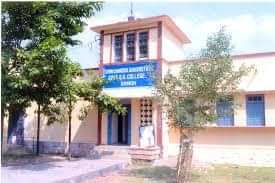
Gyan Chand Srivastava PG College
About
OfficialGyan Chand Srivastava PG College is a other institution in Damoh, established in 1964. Gyan Chand Srivastava PG College, commonly known as GCS Ranima College, is a well-established postgraduate institution located in Damoh, Madhya Pradesh. Founded in 1980, the college has evolved into a significant educational hub for advanced learning in the region, serving students from Madhya Pradesh and neighbouring states. The institution is named after the philanthropist Gyan Chand Srivastava and his wife Ranima, reflecting its commitment to community-driven education. The college is situated in a suburban setting approximately 2km from Damoh railway station, making it accessible yet maintaining a campus environment conducive to focused studies. With a modest 12.5-acre campus and a student body of approximately 3,200, the institution maintains reasonable faculty-to-student ratios that facilitate meaningful academic engagement. Academic Offerings: GCS Ranima College offers postgraduate programs across multiple disciplines including MBA, M.Sc. (Physics, Chemistry, Mathematics, Botany, Zoology), M.A. (English, Hindi, History, Political Science), M.Com, LL.M, and MEd. The college has recently introduced online components for select programs to enhance accessibility. Most programs are full-time, with a duration of 2 years for master's degrees. The college maintains an intake capacity of 40-50 students per program, ensuring manageable class sizes. Academic Strengths: The institution is recognized for its emphasis on value-based education and community engagement. Faculty members hold advanced degrees from reputable universities, with approximately 45% holding PhDs. The college maintains affiliation with Rani Durgavati Vishwavidyalaya (RDVU), Jabalpur, which is a central university. This affiliation provides credibility and ensures curriculum alignment with national standards. The college has been consistently rated as a B+ institution by NAAC in its last assessment cycle, indicating satisfactory academic standards. Research and Innovation: While the college is not a research powerhouse, it encourages faculty and students to engage in academic research. The institution has modest research facilities including basic laboratory setups for sciences and computer labs for management students. Recent research focuses have included educational methodology, sustainable agriculture, and regional history. The college has initiated industry-academia partnerships with local businesses and educational consultancies, though these remain limited in scope. Placement and Career Outcomes: Placement records indicate 68% of postgraduate students secure employment within 6 months of graduation. Average salary ranges from 3.5-4.2 lakhs per annum for MBA graduates and 2.8-3.5 lakhs for M.Sc. graduates. Primary recruiters include mid-tier educational institutions, local businesses, government departments, and NGOs. Students pursuing advanced studies for civil service examinations have shown reasonable success rates (approximately 12-15% clearing UPSC preliminaries in recent years). The placement cell actively engages with employers, though campus recruitment remains concentrated among regional organizations. Campus Life and Infrastructure: The college provides hostel facilities for both men and women students, with separate blocks and basic amenities. Hostel fees are approximately 1,200-1,500 INR monthly. The campus includes a library with approximately 25,000 books, computer labs, health center, cafeteria, and basic sports facilities. WiFi connectivity is available across campus. The college encourages cultural and academic clubs, with annual fests like Antarang (cultural) and Prakriya (academic symposium) providing platforms for student expression. Student participation in state-level academic competitions and cultural events is moderate. Student Life in Damoh: Damoh is a tier-3 city with a population of approximately 165,000, characterized by a slow-paced, traditional lifestyle. The city offers limited entertainment and nightlife compared to metropolitan centers. However, this creates a conducive environment for academics. Monthly living expenses on campus are approximately 4,500-5,500 INR (hostel + mess + incidentals). The city has reasonable healthcare facilities, with Damoh District Hospital being the primary medical center. Transportation within the city relies primarily on auto-rickshaws and local buses. Notable Aspects: The college takes pride in its community-oriented approach and scholarship programs for economically disadvantaged students. Approximately 15% of enrolled students receive partial or full scholarships based on merit and financial need. The institution has produced graduates who have successfully pursued further studies at universities like Delhi University, Jawaharlal Nehru University, and foreign institutions. Alumni networks remain active in educational administration, civil services, and academia. Challenges and Honest Assessment: While the college provides quality education at affordable costs, prospective students should be aware of certain limitations. The placement ecosystem is primarily regional, with limited visibility among top-tier national recruiters. Infrastructure, while functional, lacks state-of-the-art facilities common in urban institutions. Library holdings and online database access are modest compared to well-funded colleges. The city's limited economic activity constrains placement diversity. The college is best suited for students prioritizing affordable postgraduate education, community values, and aspirations in education, civil services, or local business sectors rather than those targeting multinational corporations or elite research opportunities. Who Should Apply: GCS Ranima College is ideal for merit-focused students from middle-class backgrounds seeking quality postgraduate education without excessive financial burden. It is particularly suitable for those pursuing teaching careers, civil service preparation, or further academic research. Students valuing a close-knit academic community over metropolitan campus culture and those committed to regional development will thrive here. The institution is especially valuable for women students seeking safe, affordable, values-based education in a structured environment.